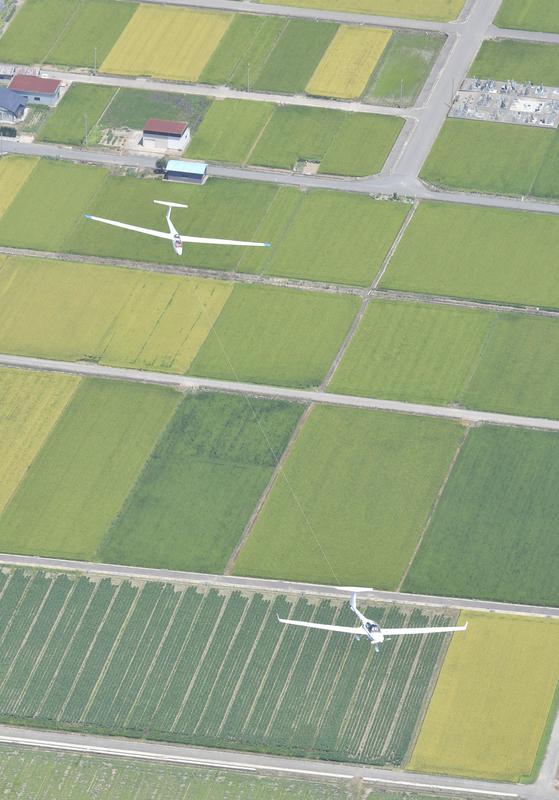
SAKAI, Fukui -- Fukui Airport is an unusual airport. Although it has been more than 40 years since regular flights stopped operating here, the number of landings in 2016 exceeded 3,700 -- ranking it 43rd among 115 airports and heliports. What makes this airport so remarkable is that nearly half of the landings are by student gliders.
Twenty-six students from five universities, including Osaka Prefecture University, stayed on a three-day joint training camp at Fukui Airport on a weekend in August.
Moeka Tanioka, 18, a first-year Kobe University student who belongs to the university's aviation club, was about to depart for her eighth flight.
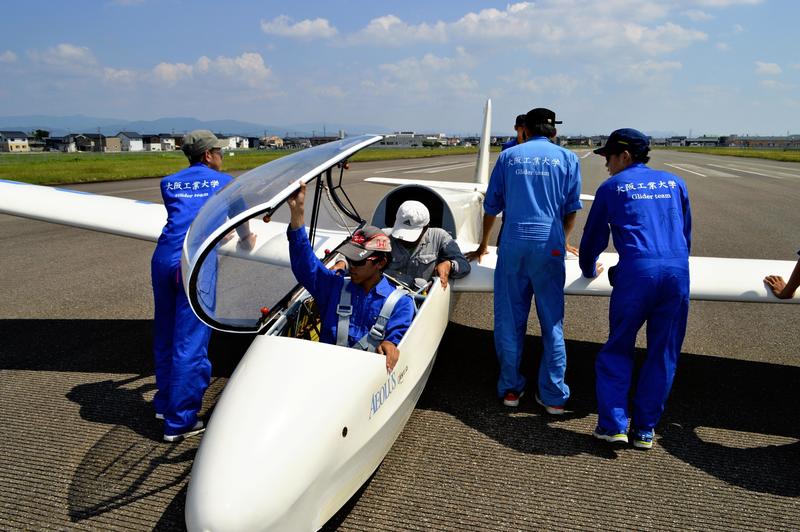
"It scared me at first, but now I love the view from the sky," she said with a smile on her suntanned face.
A two-seater training glider is about eight meters in length, with a wingspan of about 16 meters. Just like a paper plane, it has no engine or propellers, but if you are able to catch an ascending air current, you will be able to glide in the skies.
Fukui Airport opened in June 1966. Managed by the Fukui prefectural government, it was a fully operating airport with commercial flights regularly taking off and landing on its 1,200 meter-long runway. Glider training for university students started two months after the airport opened.
According to Noboru Taguchi, 62, director of the Fukui training school of the Japan Students Aviation League, universities from the Kansai region used to base themselves at airports such as Yao Airport in Osaka Prefecture. As air traffic increased at the airport, they started to look to other regional airports for places to conduct their training operations. It was around this time that an airport was being constructed in Fukui Prefecture.
"With only one return flight to Tokyo each day, there was no problem with availability, and it was also close to the Kansai region, so the students approached the prefecture to make it happen," Taguchi said.
There were 6,700 landings at Fukui Airport the following year, nearly 80 percent of which were glider landings. Regular flights came to an end just 10 years after the airport opened for service. Even though there is an increasing number of specialized glider airfields, such as those where gliders land on a riverbed, Fukui Airport transforms into a "glider airport" each weekend, when it is filled with university students from the Kansai and Tokai regions.
The Japan Students Aviation League has a training center on the site. The training camp starts at 6 a.m. each day. The students push their gliders by hand from the hangar to the runway. A student gets in the front seat while an instructor gets in the rear. They fasten their seat belts and are ready for takeoff.
Towed by a small aircraft connected with a 50-meter wire rope, the glider takes off from the runway and quickly rises up into the air. This is the main reason why the students love Fukui Airport so much.
Most other glider airfields in the country operate using a winch-tow system in which a rope is connected to the glider and it is launched into the air using a winch at ground level. The glider rises into the air like a kite and is disconnected from the rope once it is at an elevation of 300 to 400 meters. In contrast, the aerotow system at Fukui Airport allows the glider to be towed to an altitude of 900 meters, the highest altitude for a training session, so it can soar for 15 to 20 minutes, more than twice the amount of time compared with the winch-tow system.
Third-year student Hikaru Tsujinaka, 20, who heads Osaka Institute of Technology's aviation club, said: "We get the gliders towed to a spot that is likely to have rising air currents, like the area underneath a cumulus cloud, for example. If you can catch a current there, you can glide for a longer time at a higher altitude."
If you catch the right current, you can glide for four or five hours. Taguchi, who has clocked up about 49,000 flights, including those in the light aircraft that tow gliders, said, "Its location in the middle of a wide plain makes Fukui Airport a perfect spot for glider training."
Challenge of finding funds
The expense of gliding means raising funds is often a challenge. The training camps cost about 30,000 yen per person for two days. Most of the students pay for the course with money earned from part-time jobs.
The cost of purchasing gliders, which can be more than 10 million yen each, is supported by university alumni. Three universities each have a glider at Fukui Airport and the aircraft are also used by other universities. The prefecture also supports the students by discounting the landing fee by 90 percent, charging 1,080 yen per landing.
As glider takeoffs and landings are directed remotely by air-traffic control from Chubu Airport in the same way as other aircraft, such as disaster-prevention helicopters, the number of flights is limited to about 20 a day.
Kenichi Ogawa, 68, the coach of Osaka Institute of Technology's aviation club who has flown a glider for 49 years, said, "We'd like to increase the number of flights, as it also helps the students with their training."
Fukui Airport Office head Fumio Kobayashi said, "We want to think of ways in which the students can use the airport more often."
Access
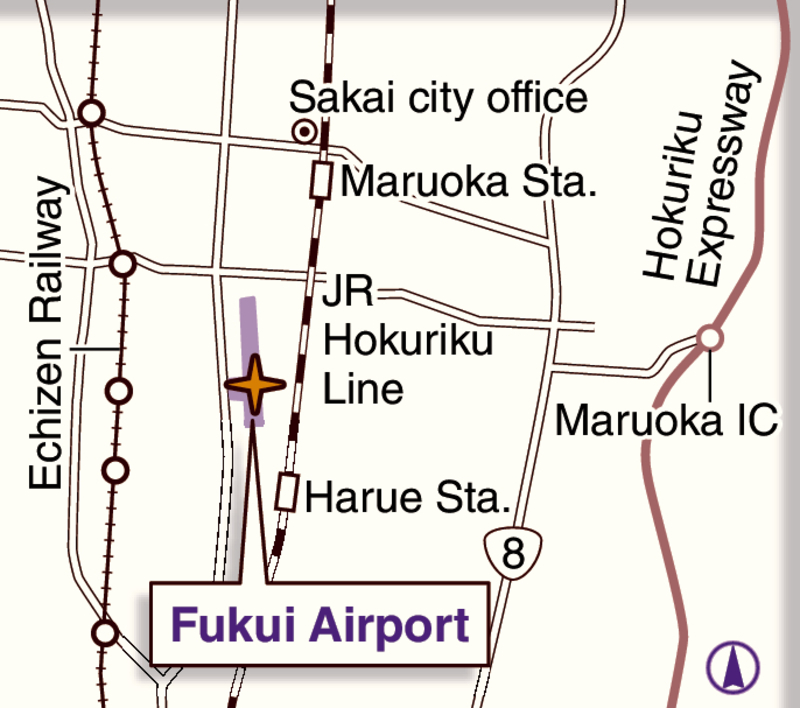
Fukui Airport is a 20-minute drive from JR Fukui Station or five minutes from Harue Station. Glider training can be viewed from the second-floor observation deck in the terminal building, as can takeoffs and landings by light aircraft and prefectural disaster-prevention helicopters on certain days. For more information, call Fukui Prefecture's Fukui Airport Office at (0776) 51-4066.
Read more from The Japan News at https://japannews.yomiuri.co.jp/