Wasting food isn’t usually associated with university students, who are often portrayed as scrounging for freebies at freshers’ fairs and keen to save money wherever they can.
But the global population is growing and climate change is threatening food security. This is an issue that affects everyone, particularly the young. One third of all food produced for human consumption is lost or wasted annually.
At the final of Food Saving BEC in Milan, a worldwide competition organised by Expo 2015 and Bocconi University, students devised new ways to reduce food waste – with 35 students from 13 countries presenting their ideas.

The entries
Judged by representatives of the UN’s food and agriculture organisation, the European Commission, the Barilla Centre for Food and Nutrition, and Bocconi University, the three winning teams, made up of 12 students from eight countries and 10 universities, tackled the issue from different angles.
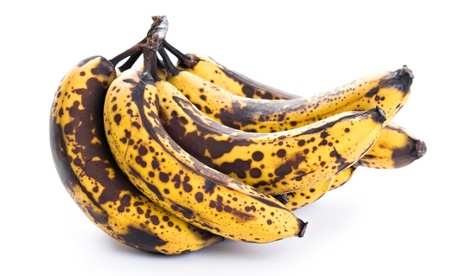
One group approached it from the supply side, designing a banana evaporative cooler – a low-tech refrigerating box to transport bananas in a developing country such as Kenya.
Giulia Marzetti, 23, an Italian student at the University of Aberdeen, put her chemical engineering degree to good use when she created the design. She says: “I waste so much food. Not on purpose, but you buy something then friends invite you to dinner so the food gets wasted.”
Another winning team designed Food Aid, a food planning app that acts as a shopping list, alerts users to expiration dates and recommends recipes to use up ingredients.

Team member Dorota Krysinska, 20, from Poland, who has just finished studying management at Bocconi University in Milan, says forward-planning can help students to save money when buying food. “It helps both in terms of buying less and using everything you’ve already bought. Even sharing recipes with my friends to use up odd amounts of produce works quite well.”
Krysinska’s own vegetarian food blog, Plants on the Plate, includes recipes for soup, jams, banana bread and even pierogi made from the unloved and often ugly produce lying at the bottom of her fridge.
Student attitudes towards food waste
By shining a spotlight on a very specific issue, the competition has encouraged many involved to change their behaviour.
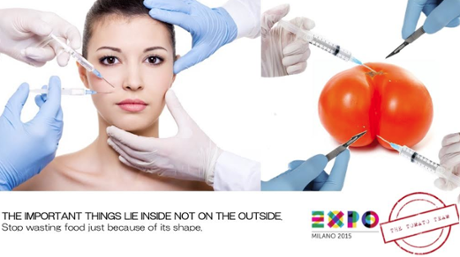
“I wasn’t hugely concerned about food waste before this,” says Francesco Ambroz, 20, a business student at Bocconi, whose team won for their communications campaign urging people to embrace misshapen fruit and vegetables by comparing the demand for more attractive food with the popularity of plastic surgery.

“I’d always try to cook the right amount, but didn’t care about other people’s habits,” says Ambroz, adding that he will now make a concerted effort to cook and waste less pasta.
Giulia Scammacca, 19, who studies international economics and finance at Bocconi and was in the winning app team, has re-evaluated her attitude towards food. “I now think much more consciously about what I throw away and how much I buy,” she says.
This – along with buying more items with minimal or recyclable packaging, such as water in glass bottles, and keeping her kitchen tidier to keep track of expiry dates – has enabled Scammacca to reduce her environmental impact.
Why it matters
If this all sounds like quite a lot of effort, the students are keen to point out why food waste is such a serious problem: it is likely to affect us all eventually.
The world’s population hit seven billion in 2011 and could reach 11 billion by 2100, putting a substantial strain on the global food supply.
“We are probably the first generation to grow up surrounded by such abundance of products,” says Krysinska, adding that young people should learn from previous generations by reducing the amount we consume when we leave the family home.

Tips for getting it right
Using your senses to detect whether or not food is still safe to eat is one of the easiest ways to do this, rather than sticking to best before dates religiously. Another way is by using less water, which is inherently linked to wasted food.
Buying produce each day at a time, while time-consuming, can also encourage you to buy only what you will use and is cost-effective if you have a hectic student lifestyle, says Krysinska.
Shifting to a more plant-based and local diet, as Krysinska did when she started university, can also help to reduce the amount of land used in food production and is more sustainable. Sustainable diets are also compatible with eating healthily.
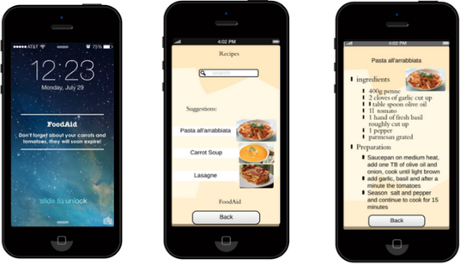
If you’re not ready to overhaul your diet completely though, existing apps such as Menu Planner, MealBoard and Love Food Hate Waste’s free app, can inspire and instruct you to create meals out of those blackened bananas and shriveled-up tomatoes.
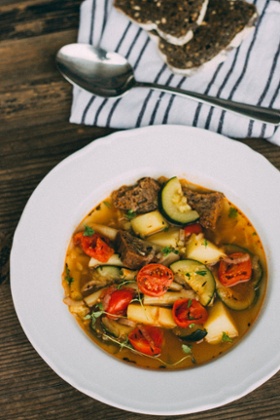
Summer stew recipe to fight food waste, by Dorota Krysinska
“Soups and stews are smart dishes to make if you’re trying to limit food waste in your kitchen. You can add weird quantities of vegetables to the pot and make everything come together with seasoning.
“This recipe uses the most common summer produce, but you can add or take away according to what you find in your fridge.”
(Serves 4)
- 1 tbsp neutral oil, such as grapeseed
- 1 large yellow onion, sliced
- 4 new potatoes, washed and quartered
- 300 g/2 cups trimmed green beans
- 1 large courgette, sliced into 1cm half-coins
- 1 cup cherry tomatoes, halved
- 1 tsp dried thyme
- Pinch of hot chilli powder
- 2 cloves of garlic, minced
- 235 ml/3 cups water
- Salt and pepper to taste
- 1 tbsp white wine vinegar or lemon juice
- Optional to finish: torn stale bread, fresh herbs
In a medium pot, heat up the oil and add the sliced onion. Sauté for eight minutes, until it becomes soft and translucent. Add the potatoes and fry for five more minutes, then add the remaining vegetables, spices, and garlic. Cook, stirring, until the garlic becomes fragrant.
Add the measured water and bring the whole lot to the boil. Lower the heat to medium-low and cook until the potatoes and green beans are soft, which should take about 15 minutes. Turn off the heat and stir in salt, pepper and the vinegar (or lemon juice). If using, add bits of bread and herbs. This soup will keep for three days if stored in the fridge.
Keep up with the latest on Guardian Students: follow us on Twitter at @GdnStudents – and become a member to receive exclusive benefits and our weekly newsletter.