Already reeling from the spread of the new coronavirus, the tourism industry has been dealt yet another blow by the government and the International Olympic Committee's decision to postpone the Tokyo Olympic Games by about a year.
Hoteliers and other members of the tourism industry had anticipated more visitors to Japan this summer. Now, however, they are deeply alarmed, as the postponement of the Games may bring massive cancellations of travel tickets and accommodations, and a decline in demand.
According to Tokyo Hotels & Ryokans Association, the Tokyo Organizing Committee of the Olympic and Paralympic Games has reserved numerous rooms at hotels and ryokan for related officials through major travel agencies, and made payments.
Several hundred rooms each have been reserved at the Imperial Hotel and the Keio Plaza Hotel in Tokyo. Should these reservations be canceled, the hotels will have to return the money already paid.
Demand on an equivalent scale may be generated a year from now. But a senior official of a leading hotel said: "We were able to take action for the Tokyo 2020 Games by spending a lot of time on the matter after it was decided that the Games would be held here. We can't tell right away whether we can manage to do the same a year from now."
Inquiries by the Land, Infrastructure, Transport and Tourism Ministry to 97 hoteliers and ryokan operators, released on Tuesday, found that reservations for March and April plunged 90% at some hotels and ryokan from the corresponding months a year earlier.
Depending on the scale of their operations, "Some operators may no longer be able to endure the hardship [by a year from now]," said Shigemi Sudo, secretary general of Tokyo Hotels & Ryokans Association.
Travel agencies are also struggling. According to the tourism ministry, 47 small and medium-sized travel agencies across the country have seen their reservations fall by 74% in March from a year earlier.
KNT-CT Holdings Co., which has Kinki Nippon Tourist companies and others under its wing, on Tuesday revised down its consolidated financial forecasts for the year ending on March 31, 2020, from 2 billion yen in net income to a deficit of 9.8 billion yen.
Cancellations will be inevitable for chartered buses secured to transport athletes and officials related to the events. According to a survey conducted by the Nihon Bus Association, the combined income of its 62 member companies in March is expected to decline by 79% from a year earlier.
Demand is also expected to fall long-term for airlines and railway services. The number of reserved seat holders for domestic airlines in March was down 60% on international flights and down 45% on domestic services.
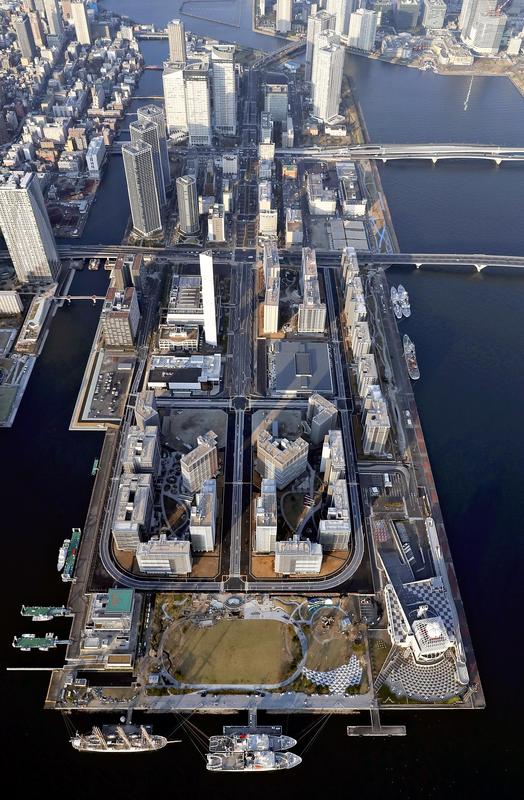
The Harumi Flag complex of condominiums is to be developed in the Harumi district in Tokyo, converting the Olympic village after the Games. However, 10 real estate companies handling the sale of the condominiums have postponed their second-phase sales, originally slated for later this month, until June or later.
Improvements are to be started after the Games, with residents scheduled to move in from around March 2023. However, their entry may be delayed because of the postponement of the Games.
An estimate by the Dai-ichi Life Research Institute Inc. deemed the Tokyo Games would push up Japan's gross domestic product in 2020 by about 1.7 trillion yen, based on the economic growth rates of countries that have hosted the Games in past years.
As the special demand from the Games is to be delayed, due to their postponement and the spread of the new coronavirus, the ill wind in the domestic economy is expected to blow even stronger in the days ahead.
Read more from The Japan News at https://japannews.yomiuri.co.jp/