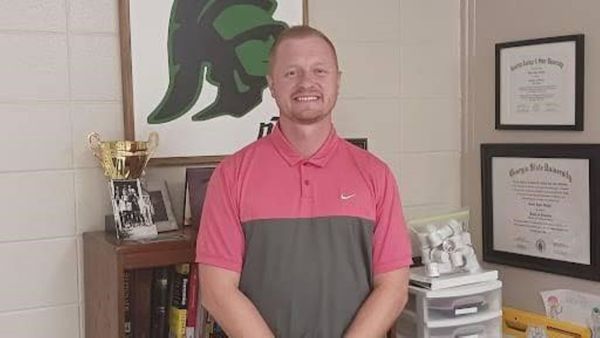
Saving a deposit for a house is the biggest hurdle facing young aspiring homeowners today, as Sam Marchant has discovered. However, Sam (26), and his wife, Vanessa (25), are not willing to give up the Great Australian Dream just yet. They have been saving for a deposit for the past few years, and hope to be in their own home before they turn 30.
But like many people of their generation, finding the money to put aside for a 20 per cent deposit, particularly when they are paying rent, is not easy.
“Home ownership is something we’d like to do, but the reality is it’s a long-term goal,” says Sam. “We looked into our borrowing capacity recently and it’s about $750,000, which is what we need to live where we want to live, so we’re probably looking at needing a deposit of about $100,000. It’s a lot of money but we are determined to get there.”
However, Sam and Vanessa are not prepared to sacrifice everything just to get into their own home sooner. Rather, for them it’s about choices. The couple are currently renting a two-bedroom apartment in Coogee, in Sydney’s eastern suburbs, for $575 per week. While they could potentially rent out their second bedroom to help grow their savings faster, Sam says they prefer their own space.

“It’s about trying to strike a balance between quality of life and saving money, which can be difficult sometimes,” he says. “Obviously you want to save as much as you can, but you also want a life while you’re doing it. We’ve considered having a flatmate, but we really like our own space. And we really don’t want to move back in with our parents to save, so we are prepared to save for longer to get into our own home.
“We work to a rough budget and we generally attempt to put away $200 each week. To do this we try to limit how much we eat out or go out drinking, so we try to cook at home as much as possible. And we’re pretty happy just doing cheaper entertainment at home, like Netflix, rather than going out to the movies.”
According to Bessie Hassan, money expert at finder.com.au, having a budget and sticking to it is important for any potential first-home buyer if they are to realise their goal of home ownership.
“It is so important to prioritise your budget,” she says. “And the most basic way to do that is to divide up your budget into ‘essentials’ and ‘non-essentials’, and to cut out the non-essentials whenever possible. The other important thing about a budget is to not set yourself up to fail – be very realistic so that you don’t disappoint yourself. Work with your budget and use it to make your life easier, rather than looking at it as a source of stress. Utilise your budget to help, not hinder, you.”
Hassan says there are a number of alternative ways of getting into the property market sooner, particularly for Gen Ys. And while she suggests some savings strategies (below), a fast-growing trend is the ‘Bank of Mum and Dad’. In fact, recent research found that almost one third of first-home buyers seek financial assistance from their parents.
“‘Mum and Dad’ banks are increasingly attractive as they are accessible from your lounge room and completely unregulated,” Hassan says. “Australia’s aging population has contributed to this, along with extremely high house prices. But this can be greatly beneficial to young, first-time home buyers as the cash is available immediately, often at low interest or interest free and the prospect of repaying the full amount is often negotiable.”
Even Prime Minister Malcolm Turnbull once commented on ABC radio (in an off-the-cuff remark) that wealthy parents should “shell out” and help buy their children houses. But while this might be great for some, Hassan says it is unrealistic for many and warns that taking a hand-out from mum and dad can have consequences.
“Children who have access to ‘Mum and Dad’ banks are at a greater risk of taking financial risks, as they feel secured by the financial support of their parents,” she says. “This can lead to longer-term adverse consequences like like making financially riskier decisions, which by nature, do not always pay off.”
But what about those who don’t have cashed-up parents ready and willing to offer financial assistance? Hassan says parents can help their children in ways other than shelling out cash, such as allowing them to live at home rent-free for longer, choosing to jointly buy a property with their children and share mortgage repayments, providing a low or interest-free loan, or going guarantor to their children’s home loan.
Indeed, Jade Roe, 23, says if it weren’t for her parents acting as guarantor on her home loan, she and her young family would still be renting. Jade and her husband, Jason, 26, were spring-boarded into the property market about 18 months ago – years before they would have been able to afford to buy if they had to save their own deposit.
However, with Jade’s parents acting as guarantors, the couple could not only secure a home loan but they also avoided having to pay lenders mortgage insurance. Thanks to Jade’s parent’s generosity, they now live in their own three-bedroom home, in San Remo on the NSW Central Coast, with their three-year-old daughter, Olivia, and baby, Charli.

“We feel incredibly lucky to be in this position when so many of are friends aren’t,” Jade says. “We had saved a little bit of money towards a deposit, but I was in my first year of a traineeship so I didn’t have a high wage. And while we had some savings behind us, it wasn’t enough for a deposit for a house.
“We were looking at houses in the $350,000 price range and we could never have saved enough for that, especially while we were renting. So that’s when my parents offered to act as guarantor. If we hadn’t taken up their offer, we wouldn’t have been able to buy our own home this quickly.”
Before buying their own home, the young family were paying just over $500 a week for a four-bedroom house in a nearby suburb – the same amount as their current mortgage repayments.
“Before we bought our own home we had recently moved to a larger (rental) place as we were having our second baby,” Jade says. “It was in a new estate and all very nice, but when we realised we could be paying off our own mortgage for the same amount we were paying in rent, we started to explore our options. In the end it meant buying an older, slightly smaller home to the one we were renting, but it meant we would be able to start paying off our own mortgage rather than someone else’s.
“It was also important to us to provide stability for the kids. Prior to having Charli (who is now five months old) we had lived in four different rental houses and it was too much. Having our own home meant not having to move around any more as well as giving us financial stability.”
Whether you get a helping hand from the folks or not, the good news is that by employing a few simple – and creative – strategies, it is possible for anyone to grow their savings faster (if they choose) and make home ownership a reality. Here’s how…
Source extra income
Be creative with your sources of income (other than your usual job) and think outside the box. Consider ways to pocket some extra savings such as selling any unwanted items including clothes, artwork, furniture, books etc or even spending time as an Uber driver in your local area.
Room to move
If you have a spare room, consider taking on a flatmate. Sure you may not have the place to yourself any longer, but think of the extra rent money going straight towards your growing deposit.
Shop around
Look for a high-interest savings account. It’s always worth shopping around to ensure you have a savings account that fits your individual needs and maximises returns so that your money is working as hard as you do. You might even consider investing your saving in shares or a managed fund, but keep in mind that investing is usually better suited to longer-term goals and as often accessing your savings once they’re locked up in assets into the easiest thing to do.
Split the bill
Consider splitting the cost of buying a home with someone else – a partner, friend, cousin or sibling. Choosing the right person (or people) is crucial, and it obviously needs to be someone you trust and feel comfortable with.
Broaden your horizons
Rural and regional areas can offer more affordable housing options than living in capital cities, so if a tree or sea change is something you might like, it’s worth investigating. You might just be in your own home sooner than you think.
Get online
Take advantage of property market data and loan comparison information freely available online. There are also many online offerings such as home loan calculators to determine what mortgage you can afford (along with repayments) and tools that can help you tailor a budget to suit your individual needs. Also check out if you are entitled to any first home-owner grants.
Look at rentvesting
Consider buying property in a less desirable suburb and renting it out while you continue to live and rent where you want to. This is an increasing popular option for first home buyers and also offers the benefit of some tax deductions.
Negotiate
Renegotiate all your living expenses. Contact your phone, internet, credit card, insurance and energy suppliers – even gym memberships – and ask for a better deal. There’s almost always room to move!
Regardless of the methods you use to own your first home or how long it takes you, Hassan says it’s important to stay committed and hang in there.
“Remember that owning a home is a privilege, not a right – it involves hard work and perseverance,” she says. “It’s also important for your long-term wealth. A house is an asset so be patient, cut back to the basics and you will be surprised at how much you can save.”
As Sam can attest:
“We’ve been to a million and one open homes – it’s almost a cheap form of entertainment for us now. We are in it for the long haul and doing our homework in the meantime. What we are not doing is eating $20 smashed avocado on toast!”
Bank with confidence and flexibility. With Greater Bank you can get Greater access anywhere, anytime. Online, in branch, our local contact centre or using our ATM network. Find out more here.