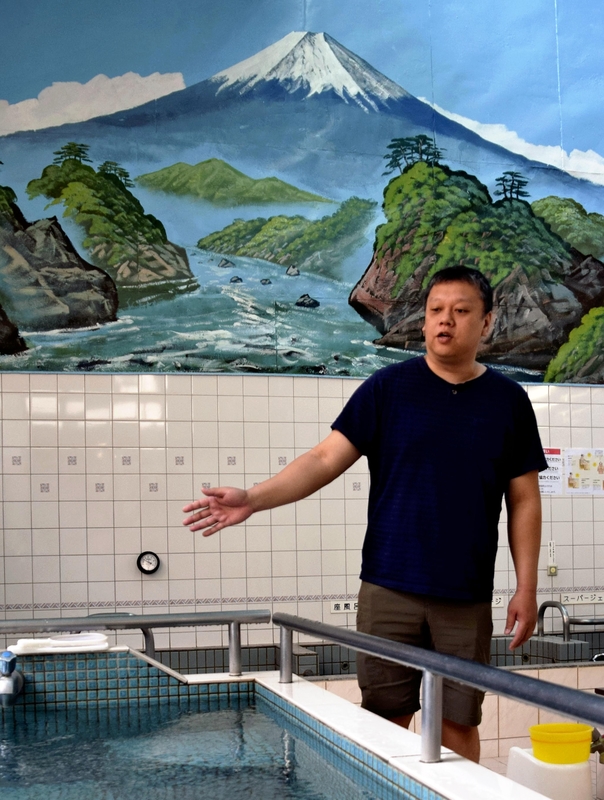
A public bathhouse owner in Sumida Ward, Tokyo, collected more than 6 million yen from a crowdfunding campaign to renovate a long-established sento, or public bathhouse.
Although the number of visitors to public bathhouses has decreased because of the new coronavirus, sento cannot reduce the cost of their utility bills, such as gas, electricity and water. Amid this adversity, Takuya Shinbo's wish to preserve the local sento culture has attracted a lot of support.
Shinbo, 40, succeeded the bathhouse in 2012 and became the third-generation owner of Daikoku-yu, which opened 71 years ago. To lure employees of restaurants and bars in the ward's Kinshicho area, he started keeping the bathhouse open all night three years ago. Daikoku-yu was popular among foreign tourists, too, who wanted to experience the traditional Japanese culture of sento.
But the pandemic completely changed the situation.
As public bathhouses are designated as a "necessity for the health and hygiene of local residents" under the Public Bath Houses Law, there were no requests from the authorities to close the baths even during a state of emergency. However, the number of customers has drastically dropped. Fewer restaurants stayed opened late at night, and there were no more tourists. Sales at Daikoku-yu fell by about 60%.
Nevertheless, fixed costs, such as water and gas, remained almost unchanged. Even after the state of emergency was lifted, the number of customers did not return to normal. Profits remained almost zero.
"We attracted many new customers by using various innovative ideas but the problem we are having now is something we've never faced before," Shinbo said.
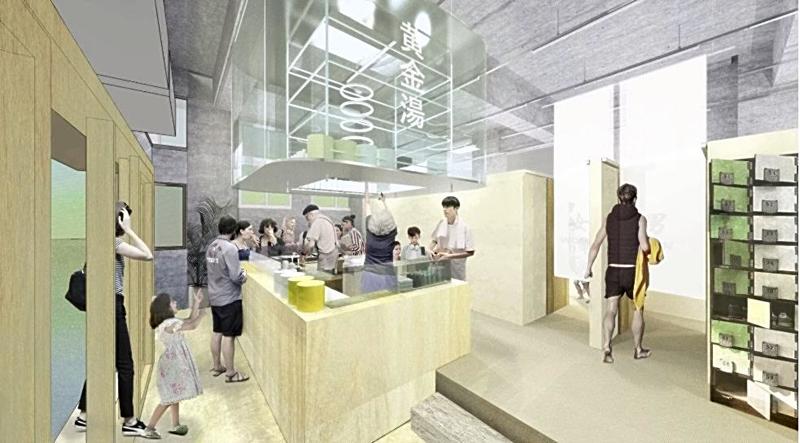
An even more difficult task he is undertaking is renovating Kogane-yu, a nearby public bath that opened 88 years ago. He took over the management of Kogane-yu two years ago when it was set to close because the owner was getting too old. The renovation started in February but the reopening of Kogane-yu, originally scheduled for June, was delayed by two months because of the virus, adding to more construction costs.
In May, Shinbo launched a crowdfunding campaign to cover the cost of the renovation, setting the deadline for July 7 and hoping to raise 3 million yen. He ended up collecting over 6 million yen, more than double the original goal.
Motoko Konno, a part-time worker in the ward who goes to a public bath three or four times a week, donated 10,000 yen.
"As a sento enthusiast, I support the cause because I expect that [Kogane-yu] will become a place where people will say positive things about sento." she said.
Kogane-yu has held DJ concerts and sold records to attract new guests to its baths. After the renovation, Shinbo is planning to open a bar at the sento so that customers can enjoy a beer after taking a bath.
"Through crowdfunding, I've realized that there are many people who want sento to stay," he said. "We have to work harder than ever to preserve the public bath culture."
Read more from The Japan News at https://japannews.yomiuri.co.jp/