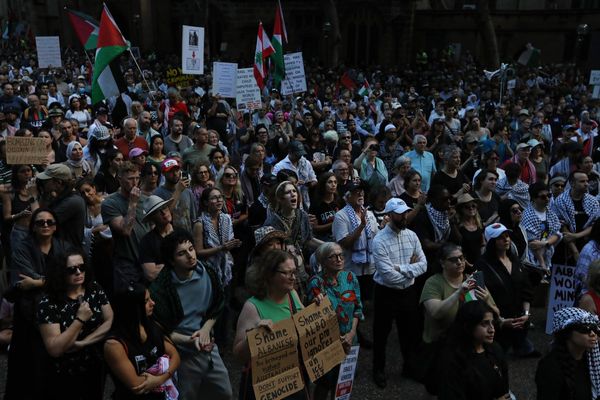
In the coming days - perhaps even hours - the destiny of Burma (also known as Myanmar), and the fates of over 50 million Burmese, will be decided. Today's crisis has been brewing for many years. But nobody knew with any precision just when open revolt against Burma's military dictatorship would erupt.
I fear that, with only a few exceptions, most countries have been surprised and caught off guard - once again - by the rapid course that events have taken in Burma. So they seem to be completely unprepared for the crisis and thus at a loss as to what to do.
How many times and in how many places has this now happened? Worse, however, is the number of countries that find it convenient to avert their eyes and ears from the deathly silence with which this Asian country chooses to present itself to the outside world.
In Burma, the power of educated Buddhist monks - people who are unarmed and peace loving by their very nature - has risen up against the military regime. That monks are leading the protests is no great surprise to those who have taken a long-term interest in the situation in Burma.
An overwhelming number of Burma's Buddhist monks have found it difficult to bear the central and regional governments' efforts to corrupt their monastic orders, and to misuse the example of the monks' self-restraint to increase the pressure on other believers. Of course, without universal and coordinated international political, economic, and media support for these brave monks, all development in Burma may quickly be put back nearly 20 years.
On a daily basis, at a great many international and scholarly conferences all over the world, we can hear learned debates about human rights and emotional proclamations in their defense. So how is it possible that the international community remains incapable of responding effectively to dissuade Burma's military rulers from escalating the force that they have begun to unleash in Rangoon and its Buddhist temples?
For dozens of years, the international community has been arguing over how it should reform the United Nations so that it can better secure civic and human dignity in the face of conflicts such as those now taking place in Burma or Darfur, Sudan. It is not the innocent victims of repression who are losing their dignity, but rather the international community, whose failure to act means watching helplessly as the victims are consigned to their fate.
The world's dictators, of course, know exactly what to make of the international community's failure of will and inability to coordinate effective measures. How else can they explain it than as a complete confirmation of the status quo and of their own ability to act with impunity?
In cooperation with Project Syndicate, 2007.