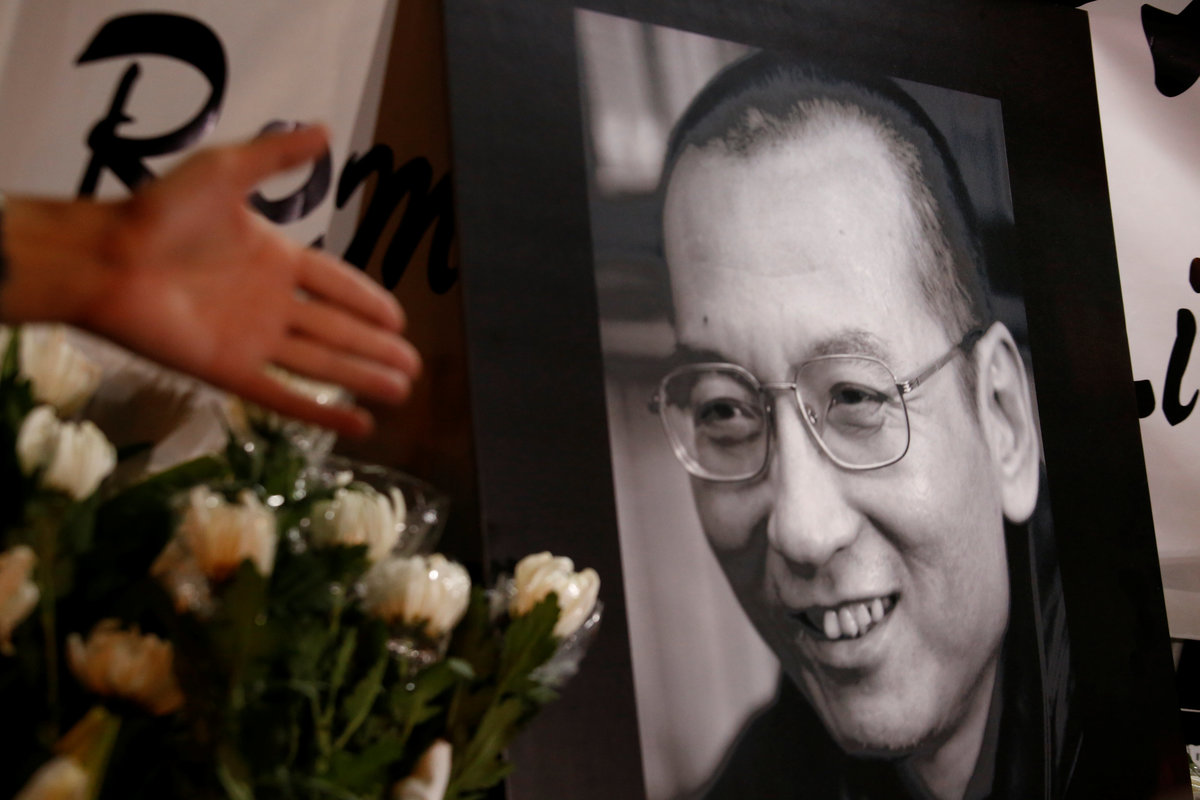
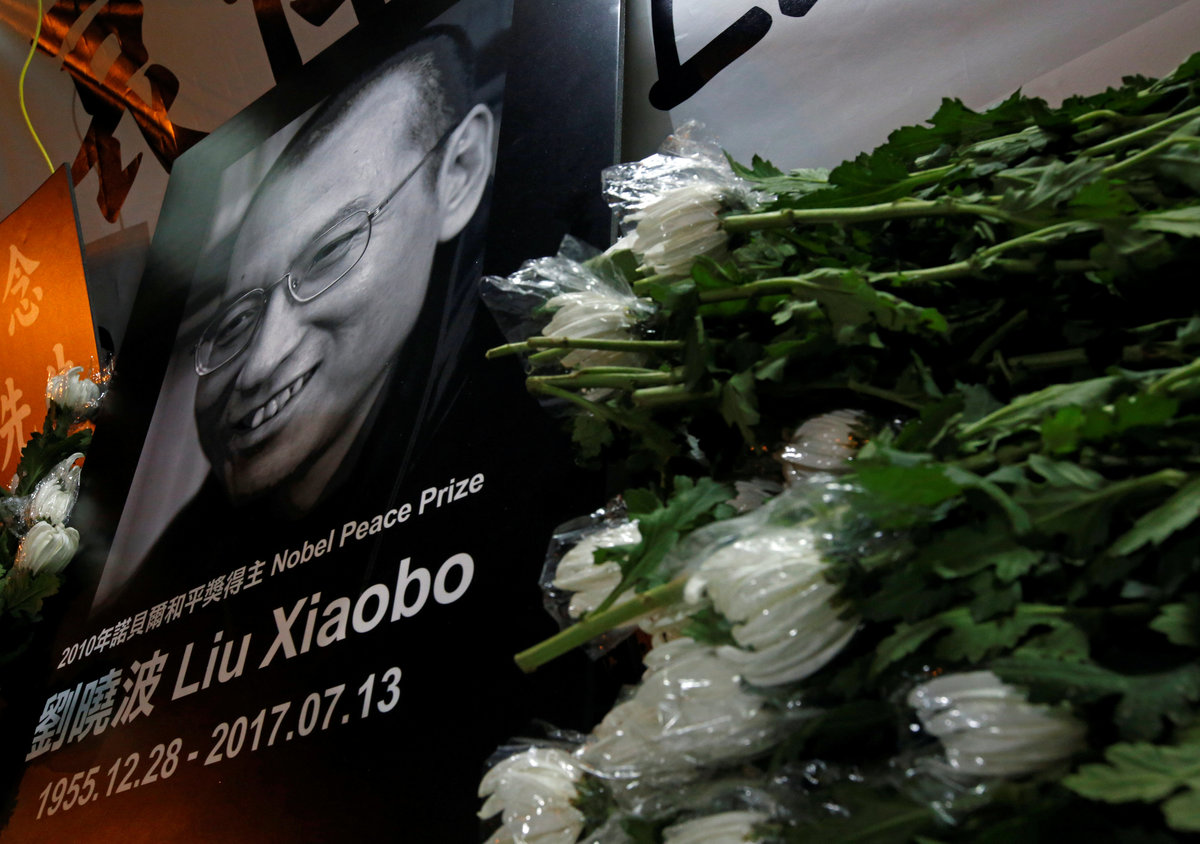
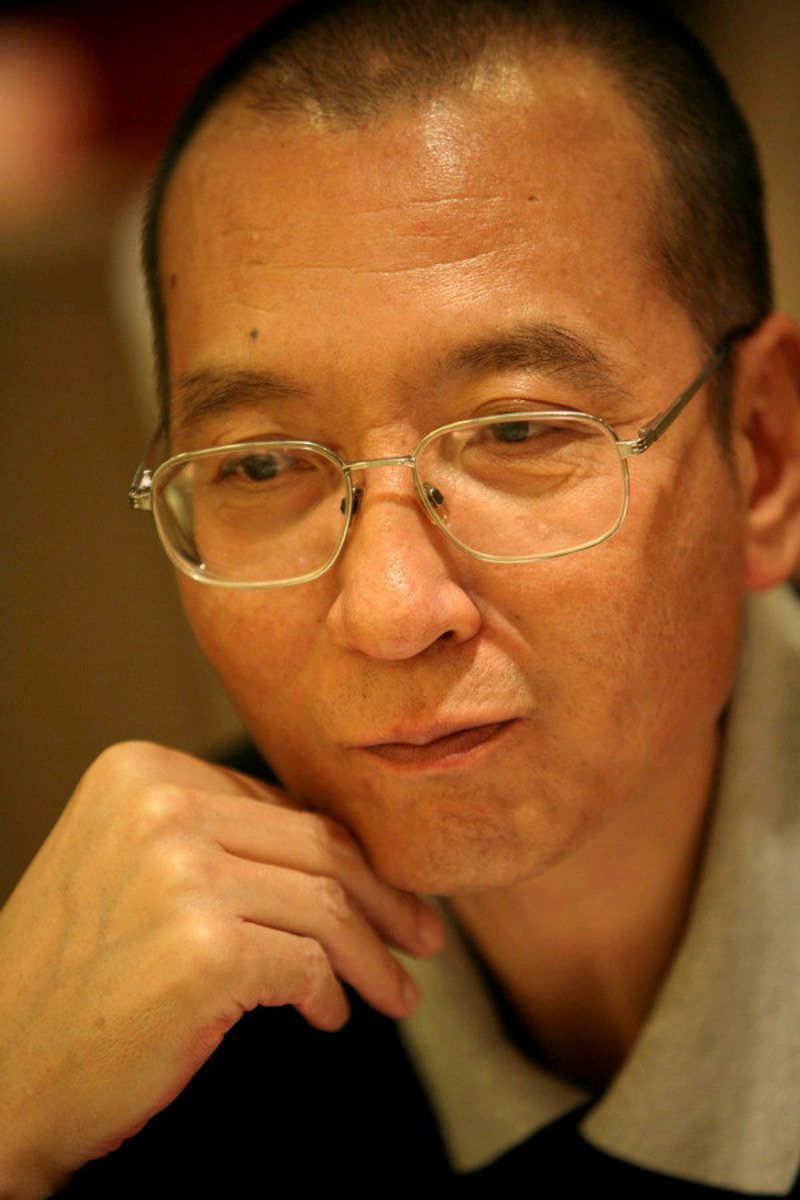
SHENYANG, China (Reuters) - Chinese Nobel Peace Prize laureate Liu Xiaobo, a prominent dissident since the 1989 Tiananmen Square pro-democracy protests, died on Thursday after being denied permission to leave the country for treatment for late-stage liver cancer.
Liu, 61, was jailed for 11 years in 2009 for "inciting subversion of state power" after he helped write a petition known as "Charter 08" calling for sweeping political reforms.
Mourning his death, German Chancellor Angela Merkel said Liu was a "courageous fighter for civil rights and freedom of expression", while the French, British and U.S. governments called on China to allow Liu's family to move around freely.
Already seriously ill, Liu, a thorn in the ruling Communist Party's side since he helped negotiate a deal to allow protesters to leave Tiananmen Square before troops and tanks rolled in, was moved last month from prison to a hospital in the northeastern city of Shenyang.
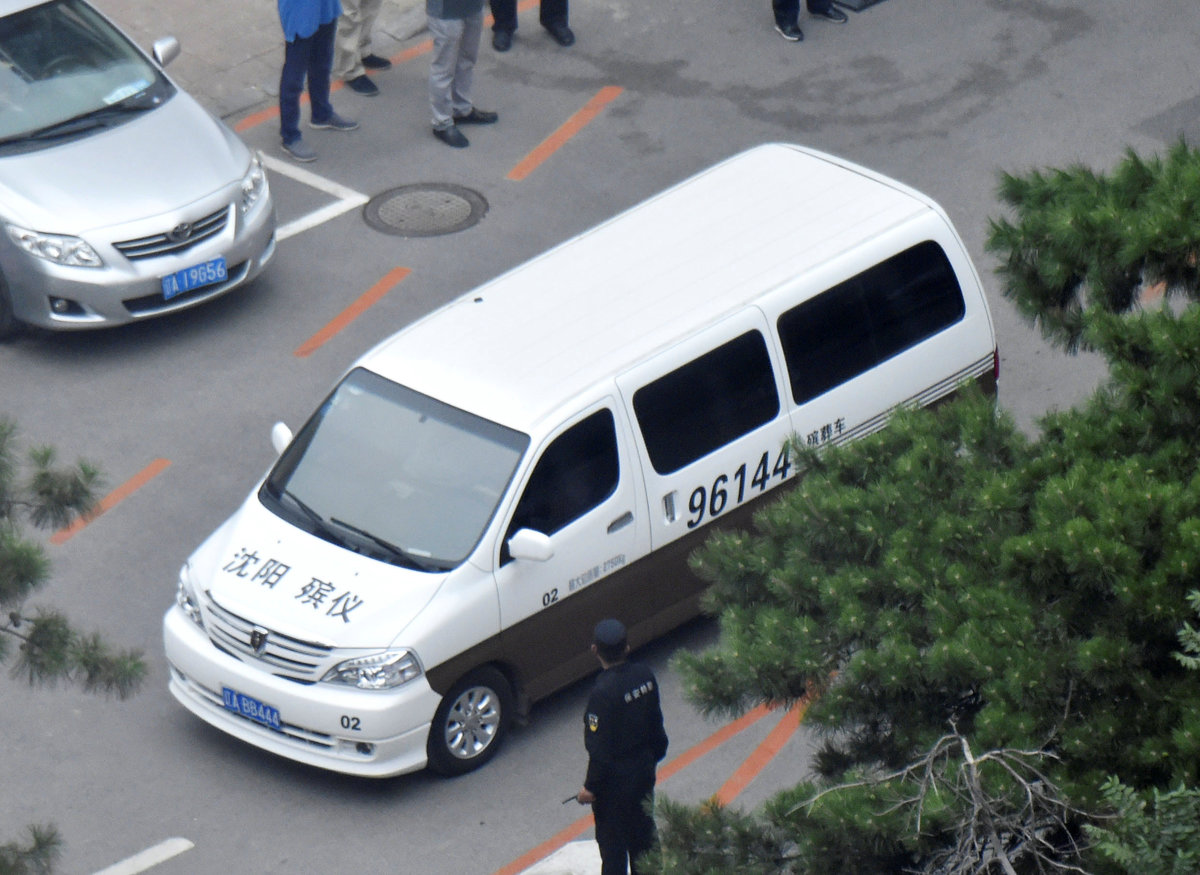
The Shenyang Bureau of Justice said in a brief statement on its website that Liu had suffered multiple organ failure and efforts to save him had failed. Though allowed out on medical parole he was never freed, spending his final days in the hospital surrounded by security guards.
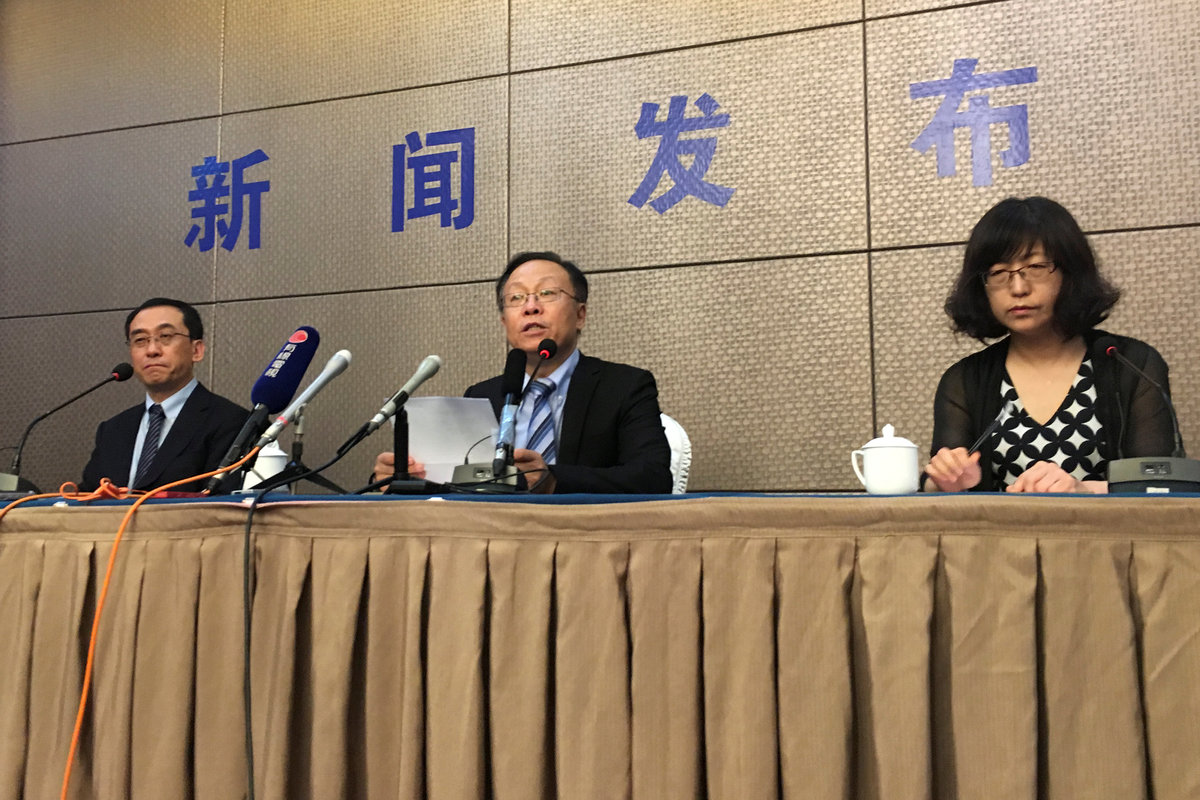
Teng Yue'e, the chief doctor treating Liu, told a news conference in a nearby hotel that Liu died at 5:35 PM (0935 GMT) surrounded by his family.
"When Mr. Liu Xiaobo died, he was not in any pain at that moment, he was very much at peace, because all of his relatives said their goodbyes beforehand. So when we saw him we thought he was very much at peace," Teng said.
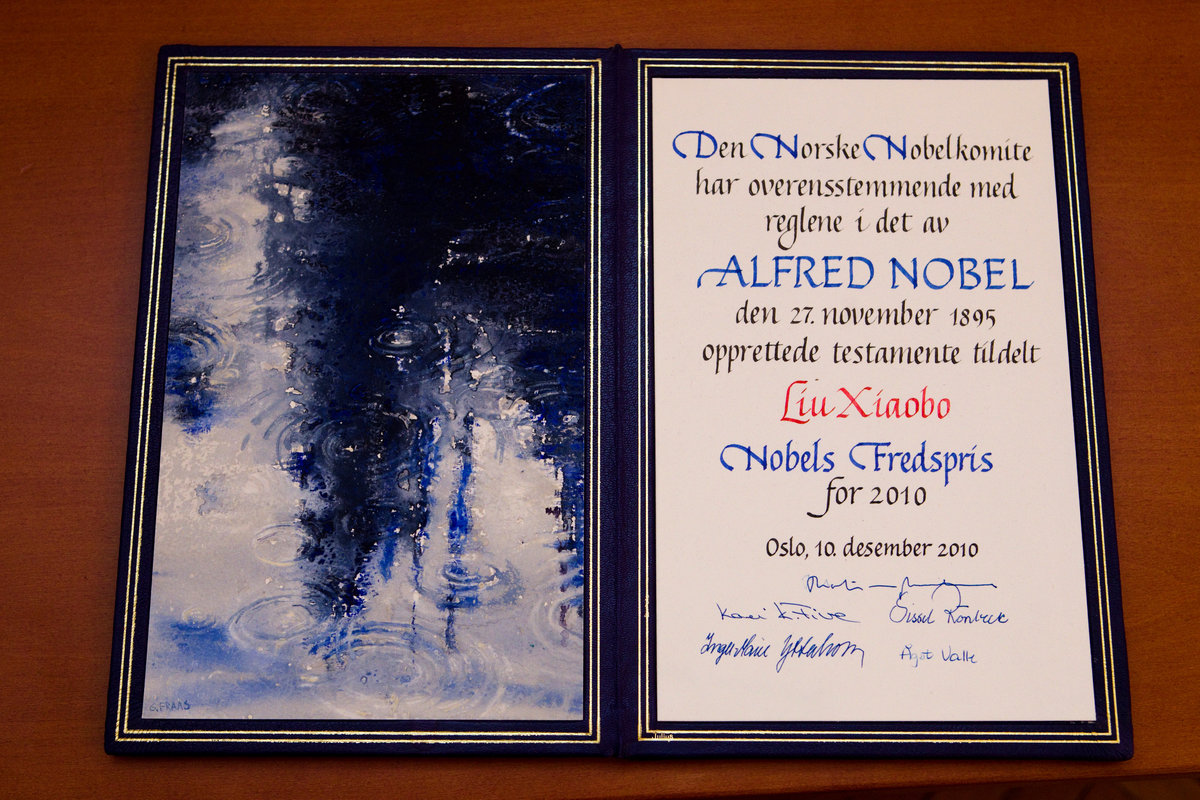
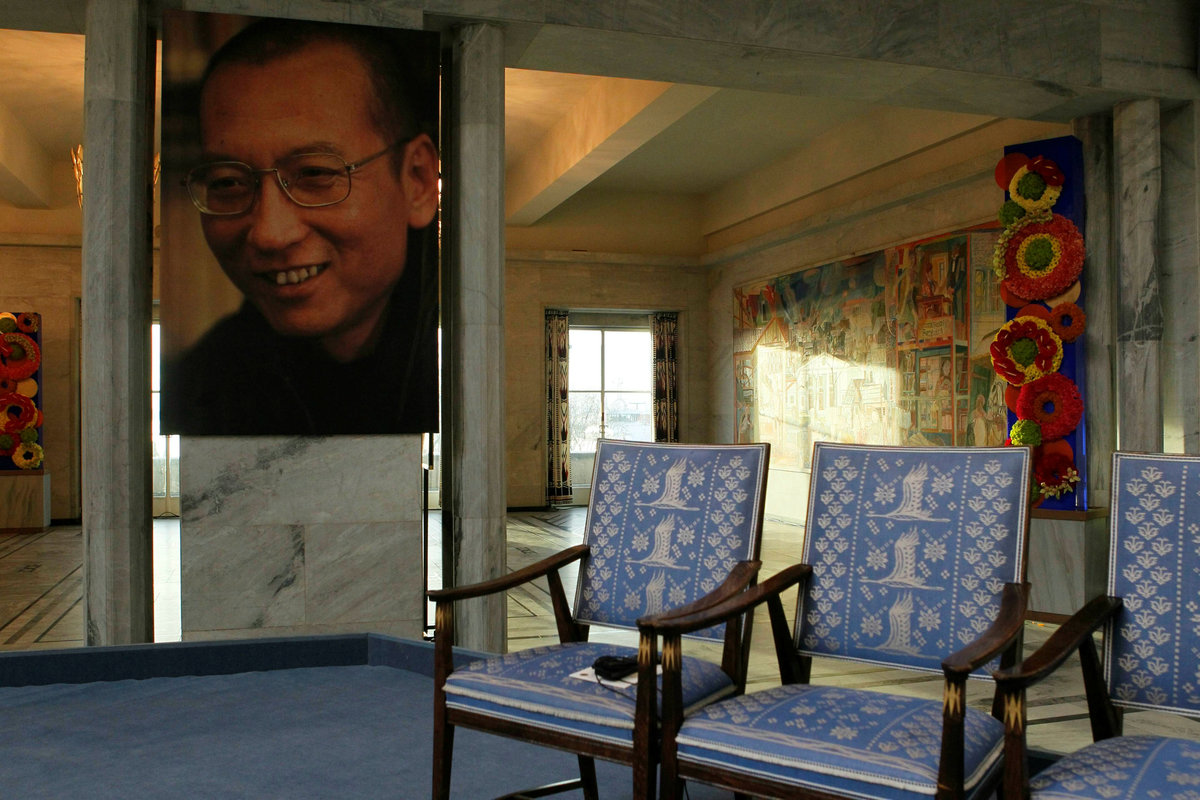
The leader of the Norwegian Nobel Committee which, to Beijing's ire, awarded Liu the peace prize in 2010, said the Chinese government bore a heavy responsibility for his death.
"We find it deeply disturbing that Liu Xiaobo was not transferred to a facility where he could receive adequate medical treatment before he became terminally ill," said Berit Reiss-Andersen in an emailed statement.
China said at the time that Liu's award was an "obscenity" that should not have gone to a man it called a criminal and a subversive.
Carl von Ossietzky, a pacifist who died in 1938 in Nazi Germany's Berlin, was the last Nobel Peace Prize winner to live out his dying days under state surveillance.
REFORM CALL
Western governments criticised Beijing for not allowing him to seek treatment for his cancer overseas and called on China to loosen its restrictions on dissent.
"China has lost a deeply principled role model who deserved our respect and adulation, not the prison sentences to which he was subjected," said U.S. ambassador to China Terry Branstad.
Tsai Ing-wen, the president of self-ruled Taiwan which China regards as a wayward province, said on her Facebook page the island hoped China could now show self-confidence and promote political reform.
"Only through democracy, in which every Chinese person has freedom and respect, can China truly become a proud and important country," she said.
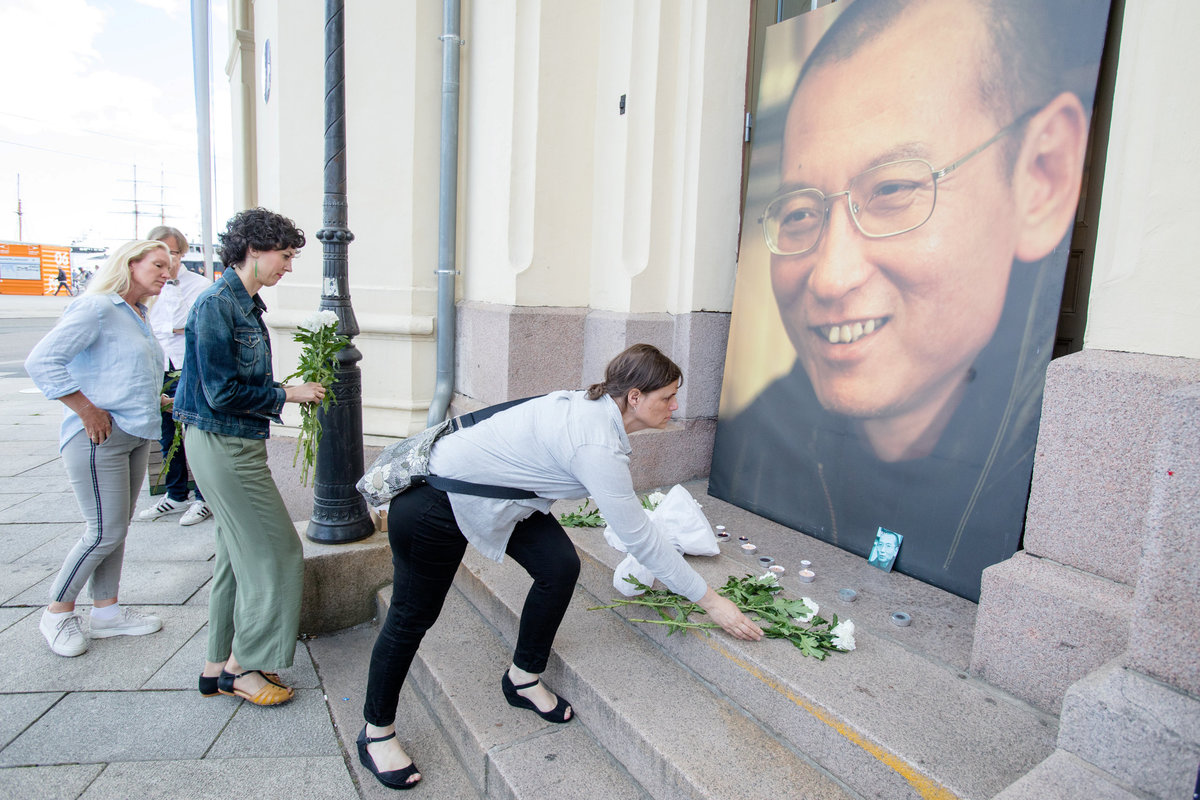
In China, while mention of Liu's passing was swiftly removed from Weibo, the country's answer to Twitter, images and comments were shared on the WeChat messaging service.
Some activists shared a picture of a black screen with the years 1955-2017 - his lifespan - or of a single candle superimposed over his face.
"Mr. Liu, rest in peace," wrote rights lawyer Zhang Peihong on his WeChat account.
State news agency Xinhua reported the death only in English in a brief story that noted he had been seen by "China's top-rated cancer experts".
State-run tabloid the Global Times said in an English-language editorial on its website early Friday morning that Liu's last days were politicised by overseas forces.
"They used Liu's illness as a tool to boost their image and demonise China," it said. "While Chinese doctors were doing their best to save Liu, they clamoured and asked the critically ill patient to be transferred abroad only to show their so-called 'sympathy'."
FREEDOM OF MOVEMENT
United Nations High Commissioner for Human Rights Zeid Ra'ad Al Hussein urged China to guarantee his widow, Liu Xia, freedom of movement, and allow her to travel abroad should she want to. Liu Xia has lived under house arrest since 2010.
"Despite the imprisonment and separation from the wife he adored that could have fuelled anger and bitterness, Liu Xiaobo declared that he had no hatred for those who pursued and prosecuted him," Zeid said.
Rights groups and Western governments had urged China to allow Liu and his wife to leave the country to be treated abroad, as Liu had said he wanted.
But the government said Liu was being treated by renowned Chinese cancer experts and the hospital said he was too sick to travel.
Beijing did allow two foreign doctors, from the United States and Germany, to visit Liu on Saturday. They later said they considered it was safe for him to be moved overseas.
Family friend and fellow dissident Hu Jia said the authorities would not let him die in peace.
"To some extent, this was an attempt by the Party to show their strength, to show that they control your life if you live in China," he told Reuters.
"But I think the historic message they are leaving is very different. By letting a Nobel peace prize winner die in custody they lost a chance to show humanity and instead proved their cold-blooded nature."
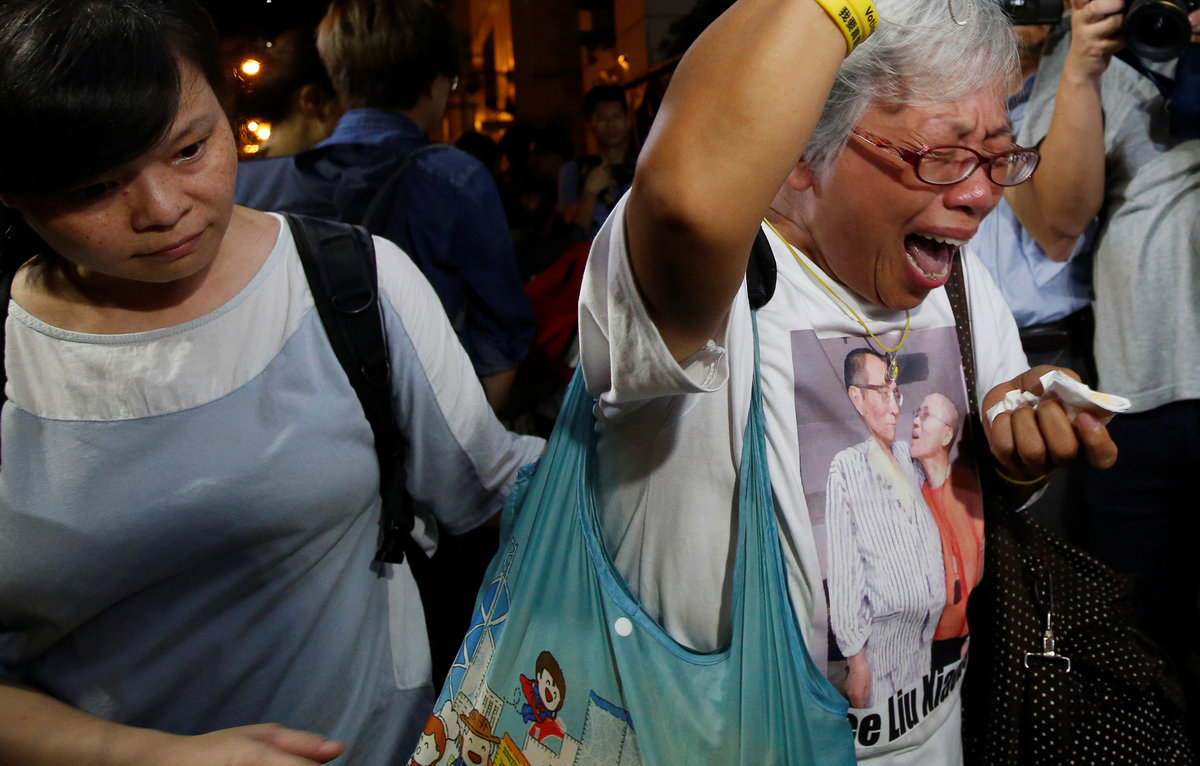
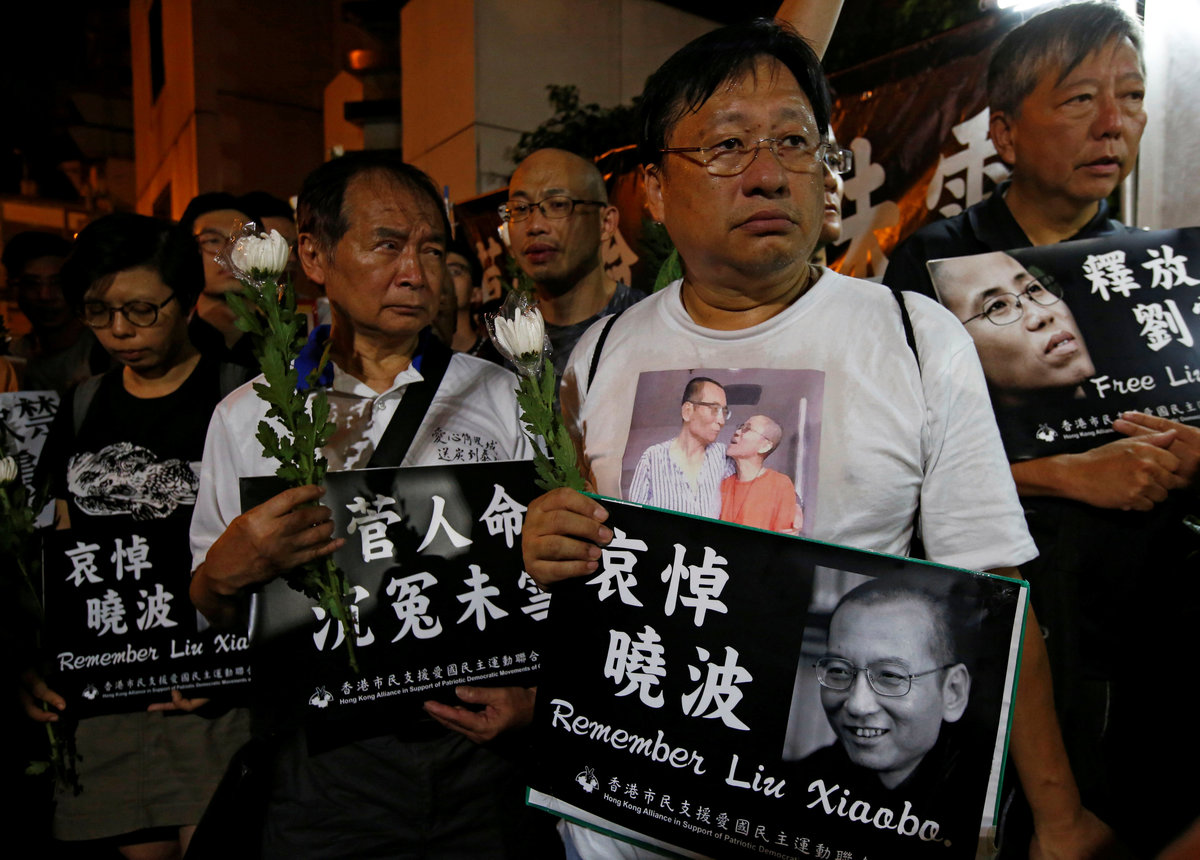
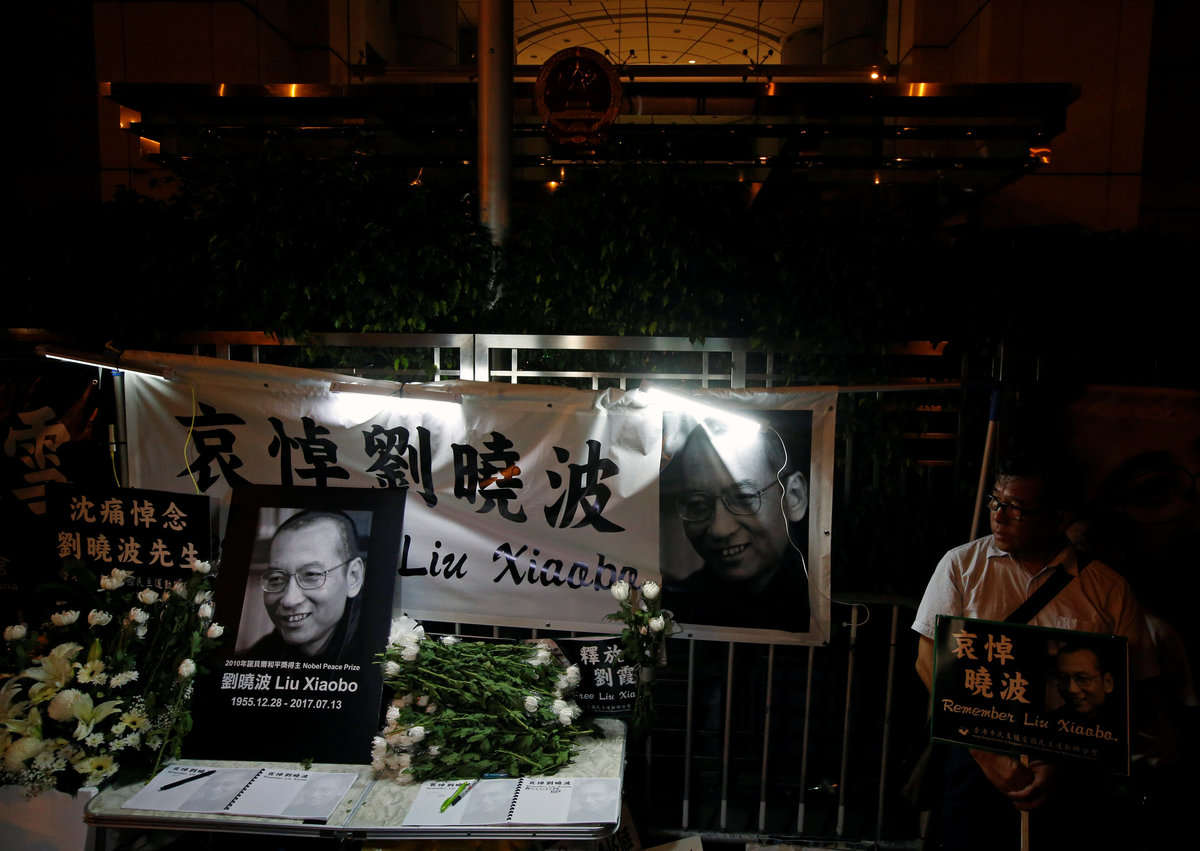
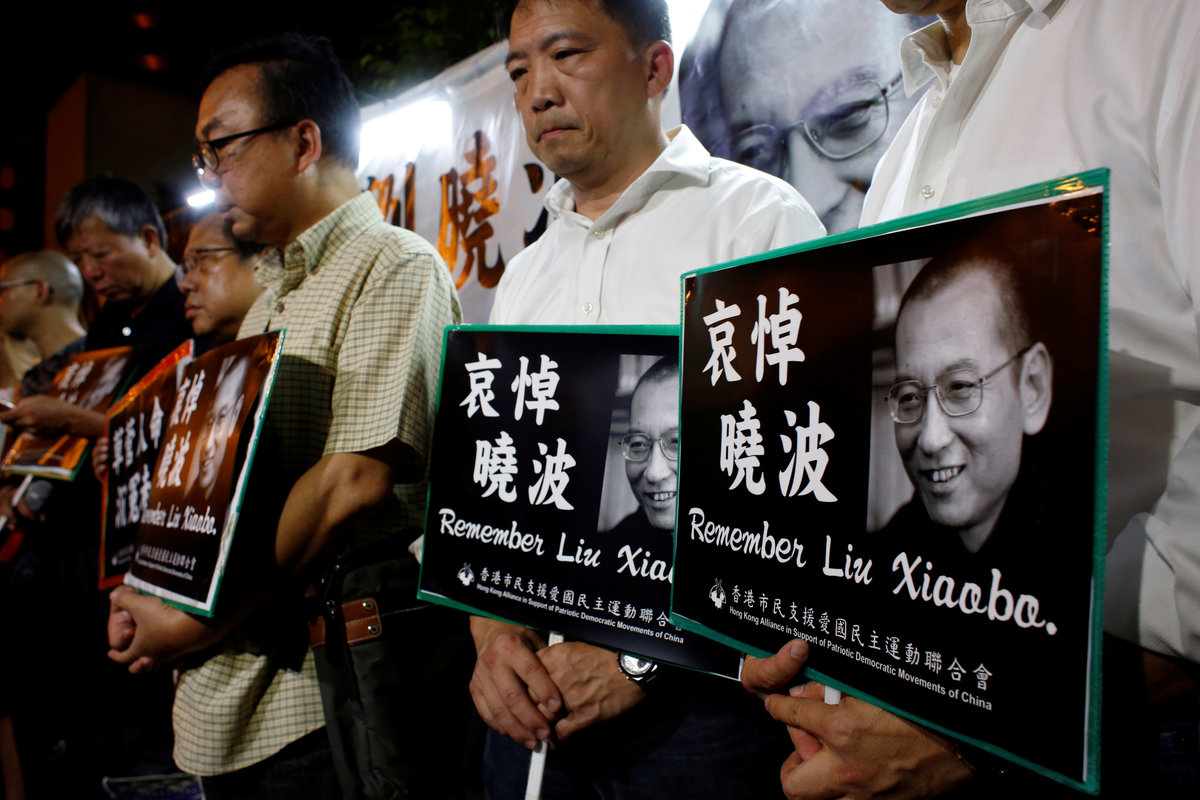
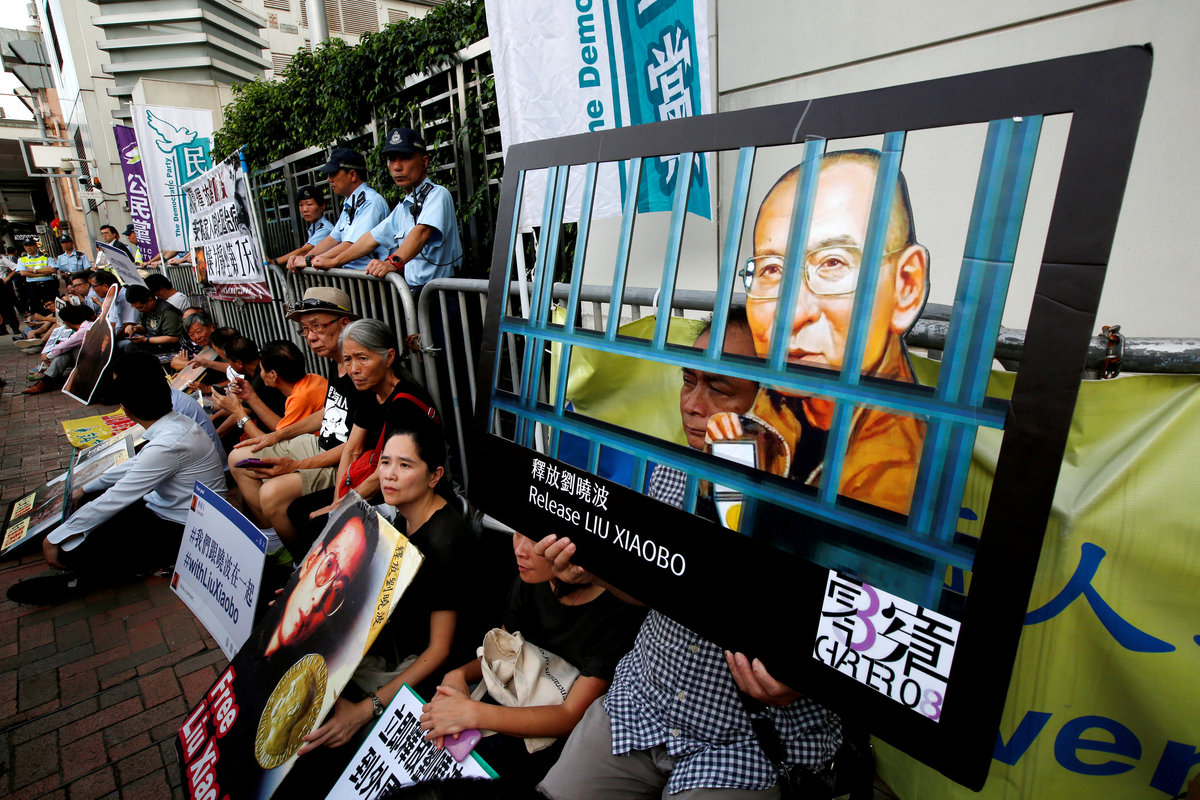
In the Chinese territory of Hong Kong, which enjoys broad freedoms not granted in mainland China, around 100 protesters gathered in silence outside Beijing's representative office, some quietly sobbing and others with their heads bowed.
Many held signs reading "The people's hero, he'll always be remembered," "the murder of a dissident" and "free Liu Xia".
A White House statement on Thursday said President Donald Trump was "deeply saddened" to learn of Liu's death.
At an earlier news conference during a visit to Paris, Trump made no mention of Liu when asked about the U.S.-China relationship, but instead chose to praise Chinese President Xi Jinping as a “great leader,” a “very talented man” and a “very good man.”
“President Xi is a terrific guy. I like being with him a lot. And he’s a very special person,” Trump said.
Earlier on Thursday, U.S. Secretary of State Rex Tillerson called Liu’s death “tragic” and called on China to free his widow.
A White House official said on Wednesday that Trump raised Liu's case in a July 2 telephone call with Xi, while the U.S. national security adviser, H.R. McMaster, raised it with his Chinese counterpart at the G20 meeting last week.
(This version of the story has been refiled to insert dropped word "bowed" in paragraph 30)
(Additional reporting by Christian Shepherd, and James Pomfret and Venus Wu in Hong Kong, J.R. Wu in Taipei, Tom Miles in Geneva, Gwladys Fouche in Oslo, Madeline Chambers in Berlin, and Ayesha Rascoe, Roberta Rampton and David Brunnstrom; Writing by Ben Blanchard; Editing by Alex Richardson, Cynthia Osterman and Neil Fullick)