Football may not be able to ignore the law any more, as the cases of Bosman and Webster and the ongoing 6+5 struggle show, but it can still tweak principles to suit its unique circumstances. Take the Peter principle, the idea that an employee tends to rise to a level of incompetence, and then stay there. In football it can still apply in its basic sense, as the manager of FC Twente might reluctantly agree, but there are also deviations. Incompetents do not stay in a role for which they are ill-suited; they are sacked or sold elsewhere. More importantly, the perception of a player's or manager's competence is forever changing in accordance with the quality of the opposition. So it is that managers who overachieve significantly by, say, getting their side promoted to the Premier League often appear the most incompetent.
In the last few days, Phil Brown has been booed by his own fans and Tony Mowbray has dignified suggestions that he might be sacked with a response. In the Observer on Sunday, a West Brom fan wrote: "There's more chance of a colourblind person solving the Rubik's cube than Mowbray keeping Albion in the Premier League." Should it really have come to this for men who were largely idolised by their club's fans last May?
It shouldn't, but it does: this is an annual routine for the managers of clubs promoted to the Premier League. With 11 games to go, West Brom and Stoke make up the bottom two, while Hull are in freefall. All three could feasibly go down and, if they do, it would be a surprise if all three of Mowbray, Brown and Tony Pulis were still in place at the start of next season. Since football began in 1992, teams have been relegated at the first attempt from the Premier League on 23 occasions; of those 23, only 12 were still managed by the person who achieved promotion when they began their next season in the second tier. That survival ratio of 52% plummets to 20% since 2005; in that time, only Watford's Aidy Boothroyd has lived to tell a tale of promotion, instant relegation and an abnormal number of appearances of Setanta's Football Matters.
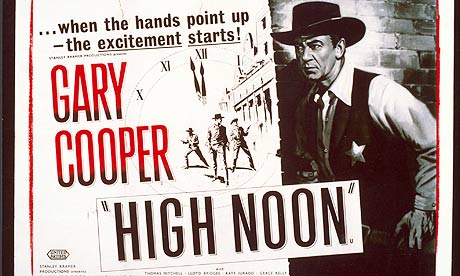
That figure of 20% is criminally low, and it seems logical to conclude that football is suffering from its own take on spoiled child syndrome. Such managers as Billy Davies and Mick McCarthy, who took Derby and Sunderland up in 2007 and 2005 respectively and did not last the season, were being punished for nothing other than their own success. By getting such modest teams promoted through outstanding management, they accelerated their club's progress and created unrealistic expectations that would ultimately cost them. It's a societal thing, too: we are, let's be honest, a complete shambles, a collection of brats who wah-wah until they get what they want. Tony Soprano frequently wondered what had happened to Gary Cooper – "the strong, silent type". Gary Cooper would never have booed his manager.
He might have been a Stoke fan. They might not seem a desirable model on the field, such is their prehistoric style of play, but off it they have handled this season splendidly: expectations have been reasonably managed and their fans have a pragmatic acceptance that they probably will go down, but that they are going to enjoy it fully come what may. If that sounds patronising, it's because the reality of the promoted club in the Premier League age is very difficult not to patronise. In defence of Hull, they might have had a similar attitude to Stoke's but they had no hope of keeping their feet on the ground after their spectacular start. That also created a unique problem for Brown because, after that dramatic beginning, their inevitable regression to the mean was always going to be spectacular. The smaller they are, the harder they fall.
Hull have basically abridged second-season syndrome, making it second-half-of-the-season syndrome, and Brown has looked entirely incapable of dealing with that descent. If his ostentatious, media-friendly behaviour was perfect for the good times, then his ostentatious sulkiness and wannabe-Clough eccentricity, starting with that on-pitch team-talk at Eastlands and culminating in his wildly inappropriate comments about Geovanni on Sunday, have surely accentuated an increasingly damaging mood of instability. Right now he looks like he has been promoted beyond his level of competence. But we shouldn't forget who got Hull promoted in the first place.


.png?w=600)