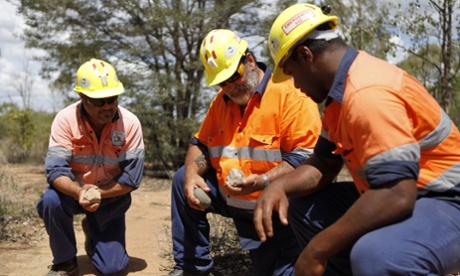
Hundreds of years of mining experience is valuable. Thousands of years of local knowledge is invaluable. The question, then – for businesses like Anglo American and the mining industry as a whole – is how to join the two.
For miners, a global community of increasing importance are those who identify as indigenous peoples. Mining-related activities often take place on, or near, indigenous land. In Australia, for instance, it’s estimated that 60% of mining operations neighbour aboriginal communities. The scale and nature of mining activities can vary over the course of a project, so how a company approaches these relationships determines a legacy that can last a lifetime.
Respecting indigenous peoples’ rights and interests is, first and foremost, an ethical responsibility for Anglo American. But there are also strong business reasons for mining companies to strive for good practice in this area - and awareness of this business case could strengthen their resolve to deliver better outcomes. By demonstrating strong partnerships with indigenous communities, the mining industry can improve relations with governments and international organisations, as well as boost constructive engagement with civil society groups.
Celebrating indigenous culture in Australia
In May 2014, the business stated its intention through the Reconciliation Action Plan, which outlined Anglo American’s commitment to create an environment that supports diversity and inclusion for indigenous people who interact with Anglo American operations in Australia.
The plan was followed by a series of initiatives which reflected Anglo American’s approach as a whole: to make meaningful contributions and a real difference to the indigenous communities of Australia.
Last week for example, in the mining town of Middlemount, the proud traditions of a rugby league and local indigenous culture were brought together. In one of several events surrounding the National Aboriginal and Islander Day Observance Committee (NAIDOC) celebrations, Anglo American’s Capcoal and Foxleigh operations brought representatives from the much loved Brisbane Broncos to host the annual Indigenous All Stars v Middlemount All Stars match.
“Anglo American has a strong partnership and deep respect for the traditional owners of the land on which we operate,” said Kiri Branch, community officer. “This was a great opportunity to recognise the strong connection they have to this land.”
Perhaps the best example of building trust comes fromt Skye Davis, Foxleigh’s environmental superintendent, who began a process of engagement with the southern Barada and Kabalbara people. Her work included facilitating meetings at Foxleigh, where the groups were able to share their culture through art and stories. Skye also helped to create onsite employment and training opportunities for traditional landowners. Her collaborative approach meant that these groups trusted her to complete cultural heritage clearances directly, when in past these would have only been completed by traditional land owners.
The achievement is virtually unprecedented in Australian mining. And a shining example of how good Indigenous relations makes good business sense.
Strengthening traditional knowledge in Canada
220 kilometres away from the closest city, and next to the remote lake from which it takes its name, the De Beers’ Snap Lake Mine is bringing together traditional knowledge and modern engineering in Canada’s Arctic.
Local traditional knowledge and insight plays an important part in De Beers’ approach to environmental monitoring in the Arctic.
This summer, elders who live in communities close to the mine shared their traditional knowledge about local tundra plants, helping De Beers advance its work on revegetation, as part of the mine’s closure and reclamation plan. Annually, elders take part in a fish tasting gathering at the mine, assessing the overall appearance and quality of fish caught from Snap Lake, as a complement to the information gathered by modern science.
“If we work together, everything will work out fine,” said Lutsel K’e elder Madeline Drybones, who has participated in the environmental programmes.
De Beers
is committed to incorporating traditional knowledge
into its environmental monitoring programmes and partners with local aboriginal communities. This commitment is a core part of their community investment – underpinned through four Impact and Benefit Agreements (IBAs) – and environmental stewardship of the land.
By prioritising trust, respect and tradition, Anglo American and other mining companies can not only have the honour of sharing in traditional knowledge, but can also raise the bar for best practice in the industry.
Indigenous peoples and mining guide
In 2010, the ICMM (International Council on Mining & Metals) created the Indigenous Peoples and Mining guide (pdf)with the aim to provide mining companies with positive, practical and comprehensive approaches to develop successful relationships with indigenous peoples.
Content on this page is paid for and provided by Anglo American, sponsor of the social impact hub