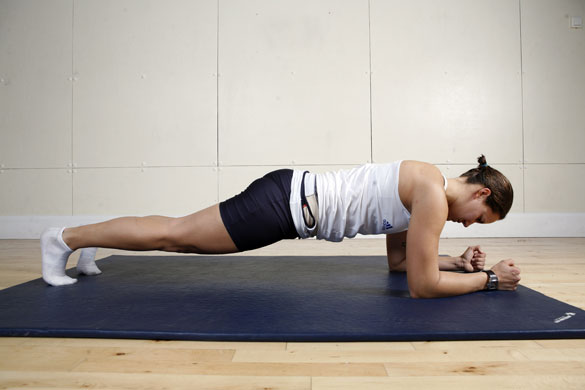
Core stability is important for applying power correctly during the stroke and for preventing injuries. Once warmed up, lie on your front and lift yourself on to your forearms and toes. Keep your back flat and your hips and neck aligned with your spine. Engage your lower abs and switch off your hamstrings to keep your body in line.
Routine: Hold for 3 x 20 seconds, gradually building up to a full minute as you improve Photograph: Gary Calton/Gary Calton
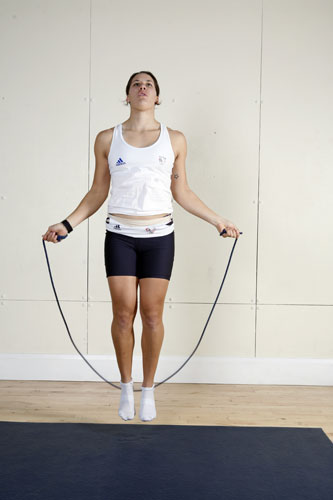
One of the most challenging endurance exercises is skipping. If you're starting to skip for the first time, bear in mind that it can take a lot of co-ordination and patience to synchronise your jump over the rope. Make sure you have the right length rope and a high ceiling.
Routine: Aim to start with 5 x 30 seconds skipping and build up towards 5 x one minute over 2-4 weeks. Eventually, combine this with other endurance activities Photograph: Gary Calton/Gary Calton
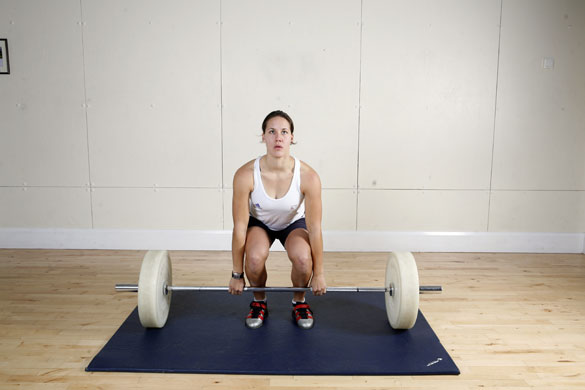
The power clean is the closest lift to a rowing stroke. Routine: Getting the right technique for cleans requires time; you should seek expert advice before lifting any weights. However, you can practise without a bar. Start with your feet shoulder-width apart and squat as if you are sitting on a chair. Hold an imaginary bar around your shins. Keeping your back flat, stand up slowly - then repeat several times. Photograph: Gary Calton/Gary Calton