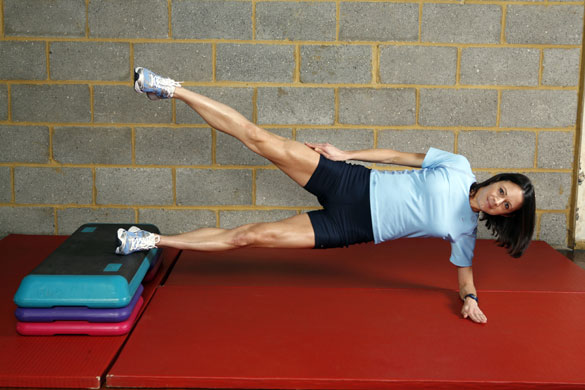
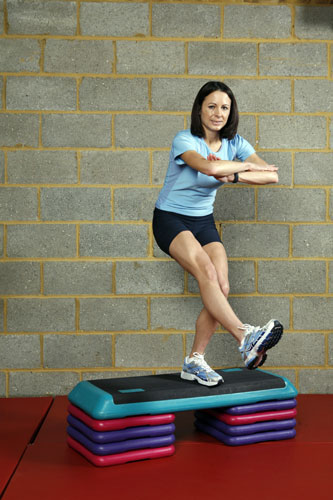
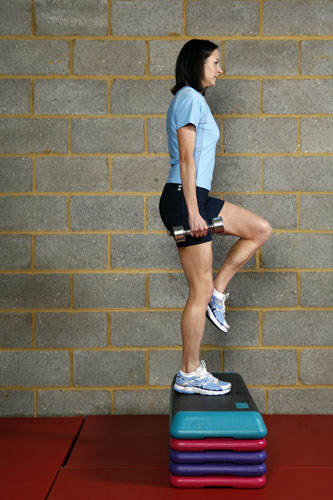
Side-lying leg lifts To improve core stability and encourage the correct position of the pelvis when running. Lie on your side with your feet raised on a step. Keeping your elbow under your shoulder, push yourself up until your body is in a straight line. While maintaining this position, lift the top leg up and down with control. Then lower, and repeat on the other side. Routine: Six reps on each side. Rest for a minute and repeatPhotograph: Gary Calton/Gary CaltonSingle leg squat To build strength, encourage good hip/knee alignment, and improve proprioception. Stand on a step on one foot. Hold the other foot out in front of you, leg straight at about 45 degrees. Fold your arms and hold them out in front of you. Squat down, making sure that your supporting knee does not go in front of your foot, and that it stays aligned. Return to the start position. Repeat. Routine: Eight reps on each leg. Rest for one minute and repeatPhotograph: Gary Calton/Gary CaltonStep-up with dumbbells To increase strength and promote good hip/knee alignment. Holding a dumbbell in each hand, place one foot on a bench, so that your knee is bent to about 90 degrees. Now straighten the leg, driving up with the opposite knee to hip height, so that you are balancing on one foot on the step. Don't "push off" the foot on the floor - use the foot on the step to power the movement. Routine: Eight reps on each leg. Rest for one minute and repeatPhotograph: Gary Calton/Gary Calton
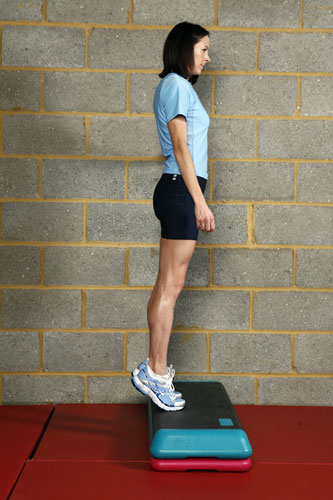
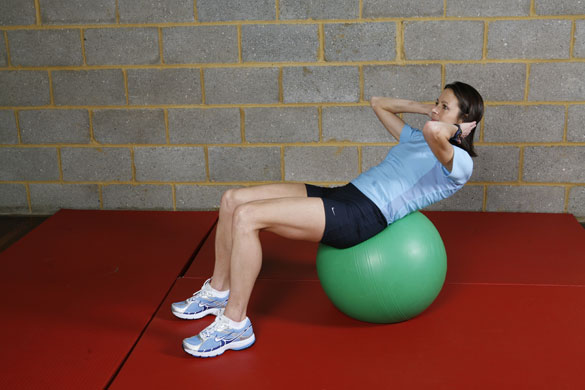
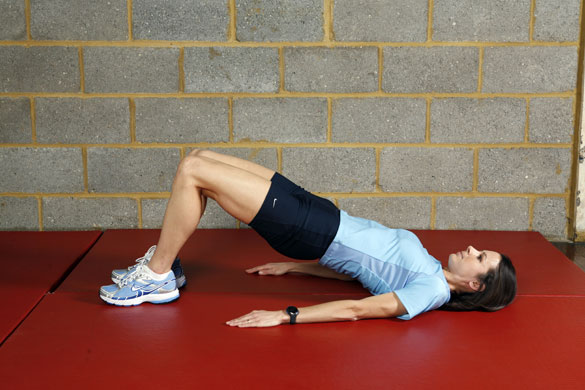
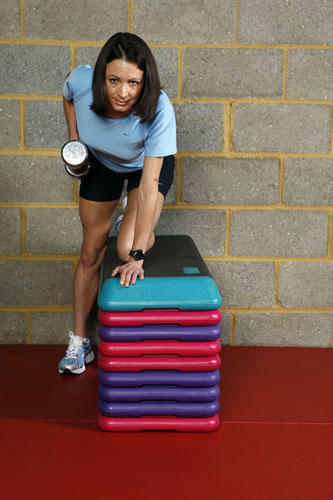
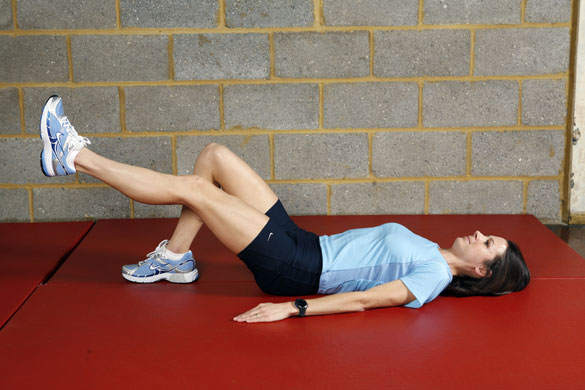
Calf raises To develop strength in the calf muscles and achilles tendon. Stand with your toes on the edge of a step, facing towards the step, so that your heels are hanging off the back. Use a wall for support. Keep your ankles, knees and hips in alignment. Push up through your toes on to the balls of your feet, hold for a moment, then lower in a slow, controlled movement. Routine: Two sets of 10 reps with two minutes' rest between setsPhotograph: Gary Calton/Gary CaltonSwiss ball sit-up This is more challenging than a normal sit-up because the instability of the ball forces the core muscles to work harder. Lie on a Swiss ball with your knees bent and feet flat on the floor. Place your hands behind your head. Engage your core muscles, then curl your upper body towards a sitting position. Return slowly to the start position and repeat. Be careful not to overarch the spine. Routine: Two sets of 10. Rest for one minute then repeatPhotograph: Gary Calton/Gary CaltonBridging To improve core stability and encourage use of the gluteal muscles to avoid the quadriceps dominating. Lie on your back with your knees bent and feet flat on the floor. Engage your core. Keep your shoulders down, and contract your gluteal muscles to push your hips up in the air. Do not go beyond a straight line. Hold for a couple of seconds, then lower down slowly. Routine: Two sets of eight with two minutes' recovery between setsPhotograph: Gary Calton/Gary CaltonSingle-arm row To strengthen the upper body and encourage good shoulder alignment. Stand side-on to a bench with your closest hand and knee on the bench, back parallel to the floor (neck in line) and a dumbbell in your other hand, arm hanging straight down. Bend the arm to bring the weight up to the front of the shoulder. Keep the core engaged and don't twist the body around. Recommended routine: Eight reps on each side. Rest for one minute and repeatPhotograph: Gary Calton/Gary CaltonAlternating leg extension To encourage good use of of the core stability muscles. Lie on your back, arms by your sides. Bend your knees with feet flat on the floor. Engage your core muscles. Lift one foot off the floor keeping your core engaged and spine in neutral. Extend the leg out slowly, then return to the start position. Repeat on the other leg. Routine: Two sets of 10, alternating legsPhotograph: Gary Calton/Gary Calton
Sign up to read this article
Read news from 100’s of titles, curated specifically for you.