ABA PREFECTURE, China _ It was a road trip through one of China's most tightly controlled regions.
We drove uphill and deeper into the Aba Tibetan and Qiang Autonomous Prefecture, an area of southwestern China's Sichuan province, adjacent to Tibet, where more than half the residents are Tibetan.
There were five of us foreign journalists, packed into two minibuses along with camera crews, interpreters and scores of Chinese journalists, all seated shoulder to shoulder with the people in control: party officials from Sichuan and Shanghai. We passed scattered villages, high-altitude grasslands and towering peaks.
Countless propaganda billboards, some many stories high, lined the highway.
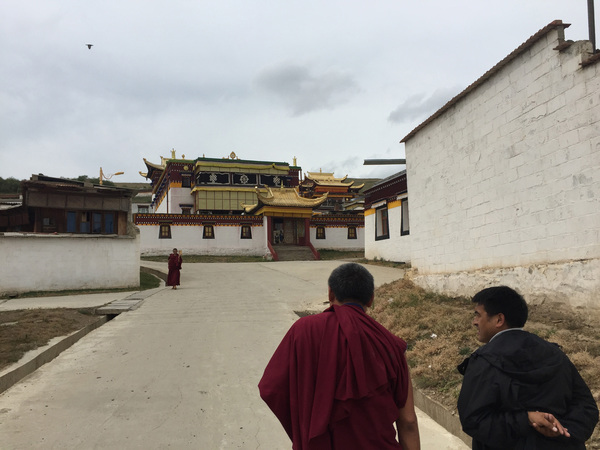
"Religious Belief Must Be in Accordance With Socialism," said one. "Love the Country, Love the Party, Love Religion," said another. "Construct an Excellent Political Environment," said a third.
In 2016, the Chinese government embarked on a Tibet publicity blitz, hosting several delegations of foreign journalists to previously closed areas.
Tibetan advocacy groups often cast China's sovereignty over Tibet _ and surrounding areas like Aba _ as a brutal, exploitative occupation by a foreign power. The Communist Party is trying to take back the narrative _ to show that China has improved life for Tibetans by giving them roads, electricity, health care, education and other portals to modern affluence.
Aba has a long history of unrest, and though it falls outside the highly restricted Tibet Autonomous Region, swaths of the prefecture have also been off-limits to foreigners and little is known to the outside world about daily life there.
In 2008, anti-Chinese riots rocked China's Tibetan regions. Authorities responded with mass detentions, shows of force, and "patriotic reeducation campaigns," demanding that monks hang portraits of Chinese leaders in their monasteries. Since 2009, more than 140 Tibetans have self-immolated in protest. About a third of them lived in Aba.
We would be on the road for eight days, traveling 1,000 miles through the prefecture and meeting some of its 920,000 people.
Every day stretched out over 12 jam-packed hours or longer; we were forbidden to eat any meals on our own or conduct unchaperoned interviews. But the trip offered a rare chance to report on Aba without risk of government retaliation.
We toured a solar power facility, a Tibetan medicine factory and a yak milk powder processing plant. Each boasted of high productivity figures, but all we saw were long sterile corridors without workers, and pristine metal machines.
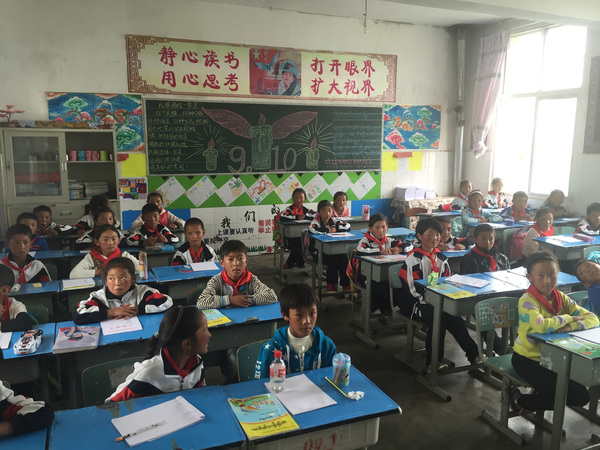
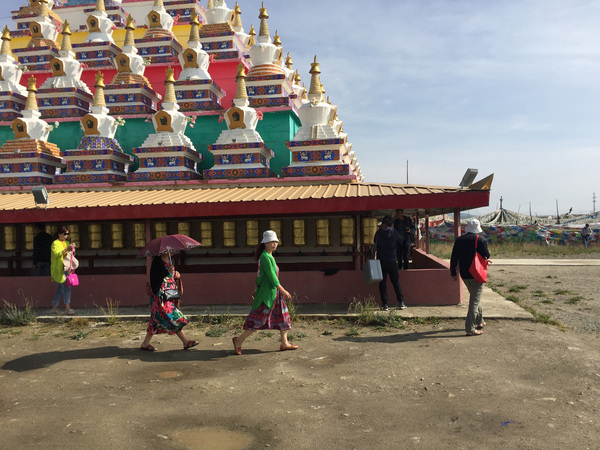
We visited a home for Tibetan elders, a school for Tibetan children, and several tourism encampments, where Han Chinese urbanites come to ride horses and sleep in tents, paying top dollar for a taste of nomadic life.
We most looked forward to the interview with a "living Buddha" _ our opportunity to ask about the religious repression that Tibetans in China often face.
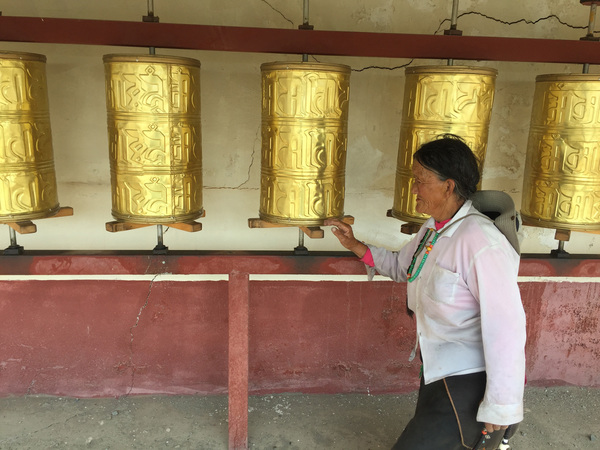
Living Buddhas are highly respected, government-sanctioned practitioners of Buddhism in China. Officials on the trip repeatedly emphasized that Tibetans are free to worship as they please _ and the interview, planned for our fourth day, was their chance to prove it.
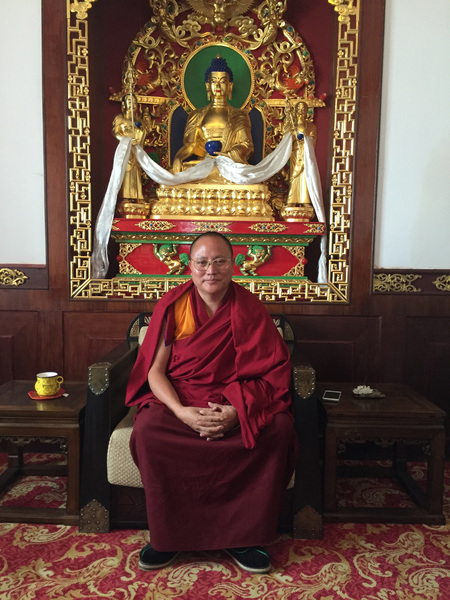
A 49-year-old Tibetan monk at the Dazha Monastery blew into the monastery meeting room on a cloud of effortless charm, wearing a burgundy robe and spectacles. He was so affable that even the Chinese Communist Party officials, ill-humored and imperious, seemed to bow a bit in his presence. He gave his name in Chinese as Zhada.
He approached the journalists and officials and shook our hands. "I'm a fan of German soccer," he told a German reporter and feigned a kick with his right foot. The reporter laughed. Then the monk sat at the front of the room, and we picked up our notebooks.
He began the interview on script. He praised the government for donating books to the monastery library. He said the area's new highways and cellphone towers have improved monks' lives by enabling them to share Tibetan culture with the world.
"What do you think of the Dalai Lama?" a Singaporean reporter asked.
The question was extraordinarily charged. Many Tibetans adore the Dalai Lama as their spiritual leader; he fled the Himalayan region in 1959 after a failed uprising, and Chinese authorities, who revile him as a "separatist," won't let him return. In China, publicly praising the 81-year-old monk could result in a visit from state security or even a jail term.
The living Buddha took a breath, and the room fell quiet.
His response was peculiar. "The Dalai Lama, the Panchen Lama and many other Lamas are all living Buddhas," he said. "We have respect for all of them."
Was this Zhada's way, under extreme pressure, of expressing support for the spiritual leader? Had he crossed a line?
The reporters stared quizzically. Other people we had encountered on the trip _ both officials and Tibetans _ had refused to speak about the Dalai Lama or branded him a separatist in keeping with the party line.
Answers were not forthcoming. Soon afterward, the living Buddha stood, and the officials shuffled us out of the room.