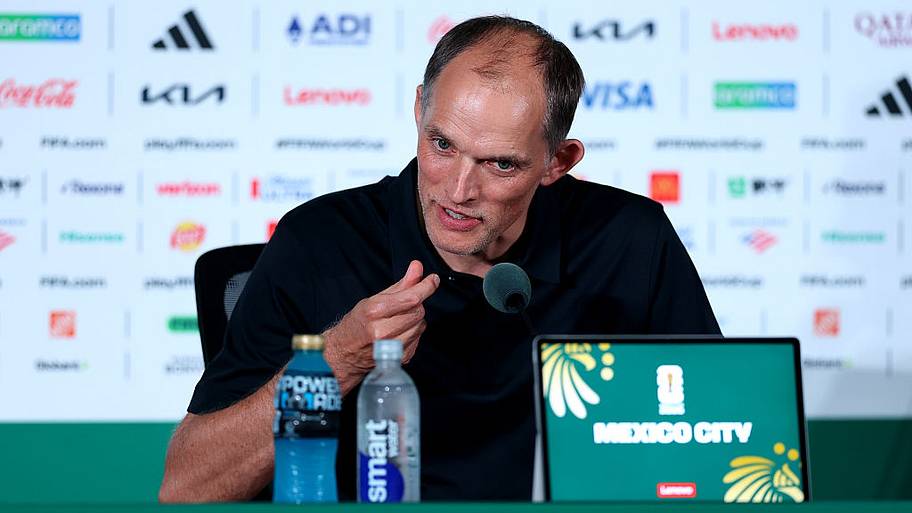
Thomas Tuchel jokingly agreed England could lobby U.S. President Donald Trump to have Jarell Quansah’s one-match ban suspended as part of a wider, more serious conversation about FIFA’s intervention that allows Folarin Balogun to play for the USMNT against Belgium.
Quansah was sent off for a dangerous tackle on Mexico’s Jesús Gallardo with 54 minutes of the match played. CBS News reported that Balogun’s ban becoming suspended came after Trump called FIFA president Gianni Infantino to speak about the red card and the suspension, while the New York Times suggested he specifically asked for the suspension to be reviewed.
The Guadian cited sources to say there were as many as three calls between Trump and FIFA. Trump then publicly thanked FIFA for “doing what was right” in a social media post that came after the surprise announcement that Balogun can play. Belgium claims that FIFA has made it so that an appeal from them to counter the reversal is “inadmissible.”
Asked if England could turn to Trump over Quansah following the final whistle of a pulsating match in the Azteca, Tuchel replied: “Maybe, that’s a good starting point.”
Tuchel, Quansah and England could have little argument over the red card, shown to the Bayer Leverkusen defender for a challenge that was out of control and endangered his opponent. However, Tuchel’s bigger issue is that the Balogun case opens the door and sets a precedent for FIFA to rule retroactively on any incident or decision that a team is not happy with.
It was understood that red cards at a World Cup are not open to appeal, which FIFA itself confirmed to news outlets in the immediate wake of Balogun being sent off. However, the existence of Article 27 in FIFA’s disciplinary code basically overrides anything else because world soccer’s governing body can use it to “fully or partially suspend the implementation of a disciplinary measure.”
WIN FIFA WORLD CUP 2026™ FINAL TICKETS & OTHER PRIZES

Tuchel Asks ‘Where Does This End?’
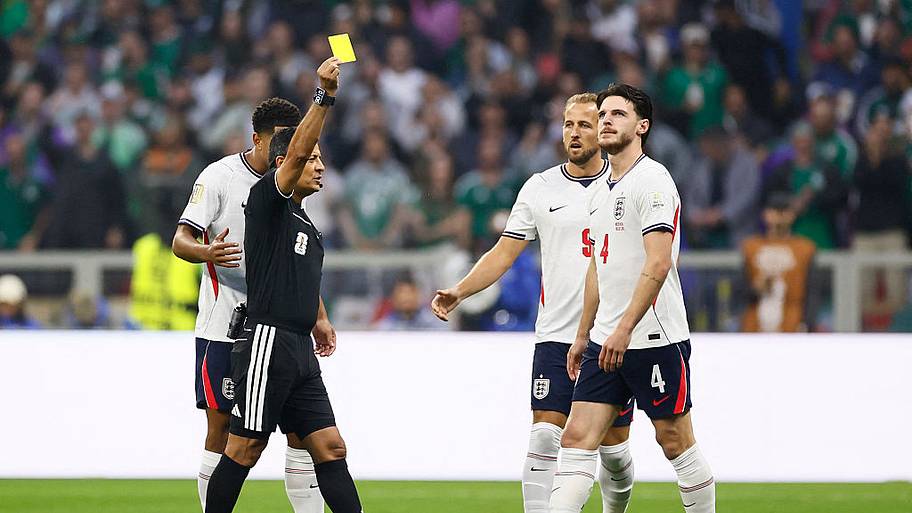
Tuchel made “very clear” his belief that Balogun did not deserve a red card for the incident against Bosnia and Herzegovina, but pointed out that a VAR check and a referee review in the moment at least gave it some validity.
“Who overturns this decision and when and on what grounds? And how far does this go now?” the England boss asked.
“It is just strange for me. We just want to have consistency in the decisions. So, is our yellow card after the first minute against Declan Rice ... we can now debate endlessly. I think it is not a yellow card. Do we get this [rescinded]? Where does this end? I don’t know the rules.
“Where does this start and where does this end now? Can we overturn it or not overturn it? What’s going on? Where to draw the line is the question that I ask. I have no answer to that. Where does this end now? Do we appeal if a yellow card is not a yellow card. Do we think it is not a red card or who thinks it? Where does this start and where does this end?”
England Left Plugging Holes in Defense
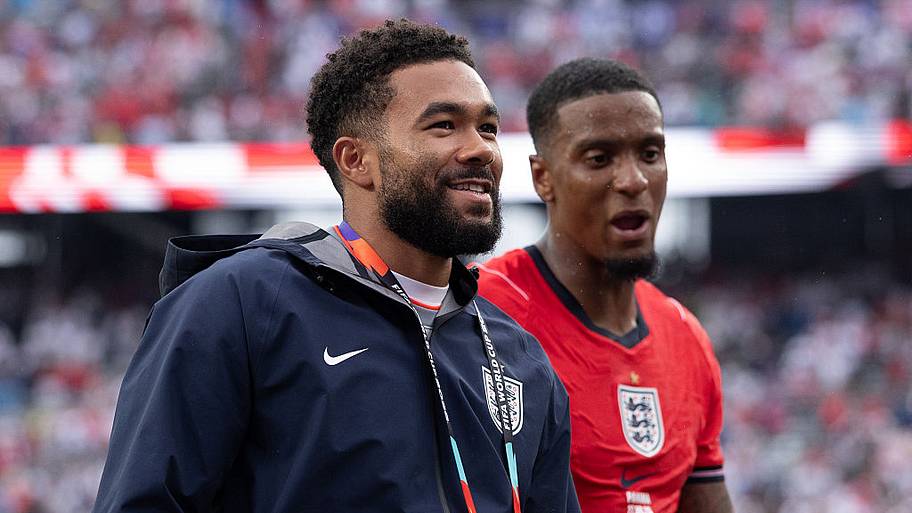
Right back has been a cursed position for England this summer. Reece James is nursing a hamstring injury with no set return date, Tino Livramento didn’t even make the start of the tournament because of a calf injury that required surgery.
Quansah, not even a natural right back, is now suspended for the quarterfinal. Trent Alexander-Arnold is some place else wondering how on earth he wasn’t selected for the World Cup.
If James is not ready to play against Norway, Ezri Konsa is the likely starter. The Aston Villa defender has started every match so far in the center of defense, but shifted onto the right as soon as Quansah was dismissed, with John Stones coming off the bench to go into the middle.