Stranded polar bears at Kaktovik, Barter Island, Alaska - in pictures
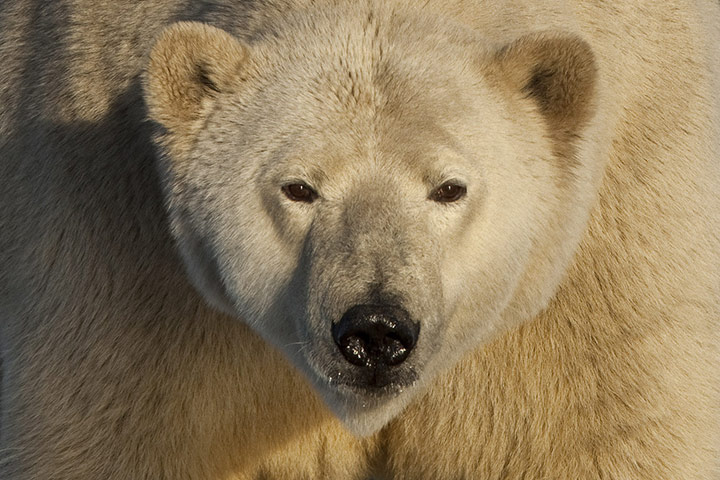
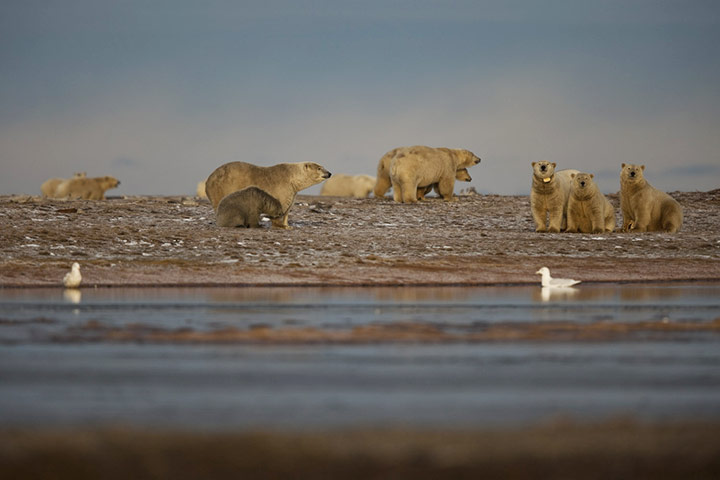
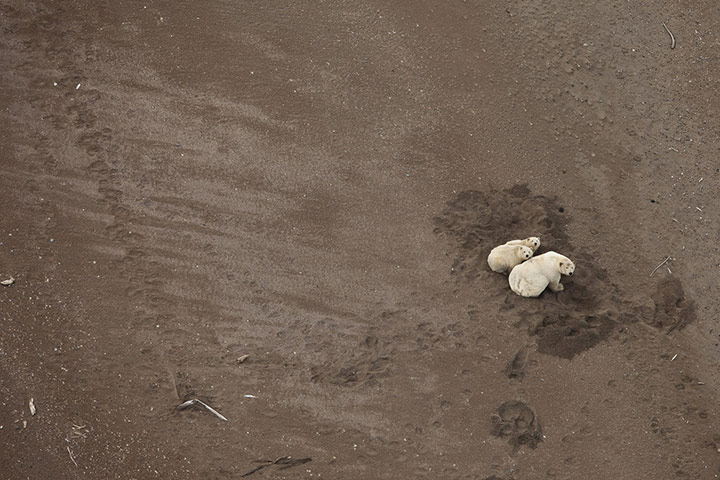
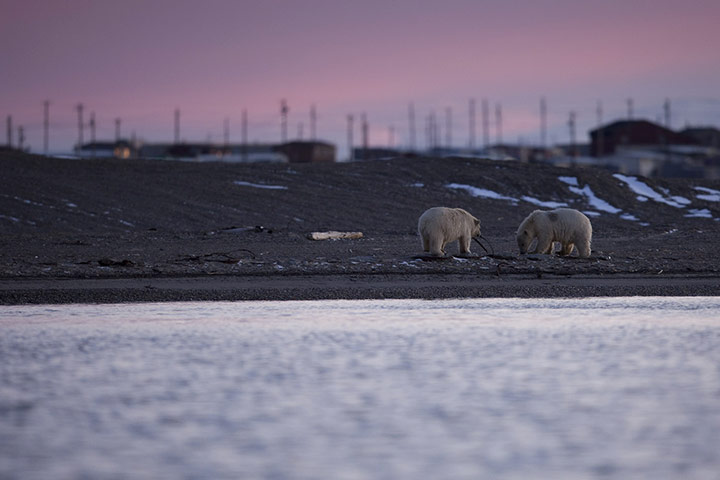
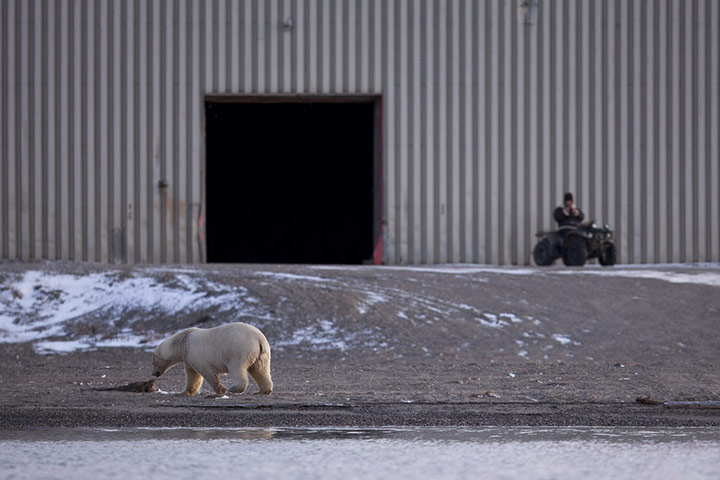
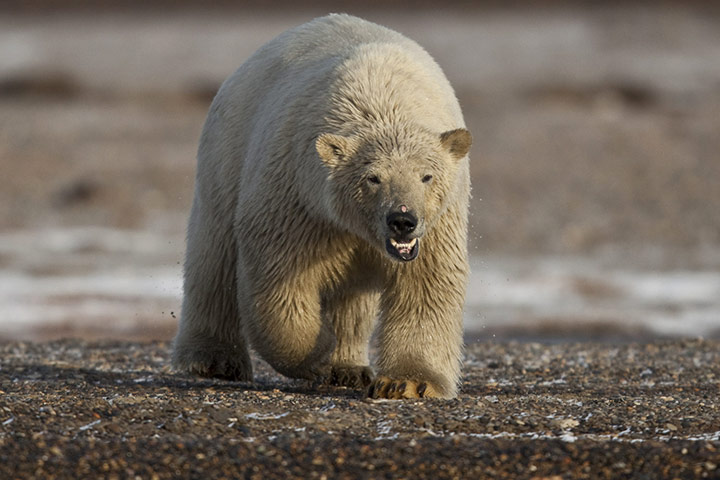
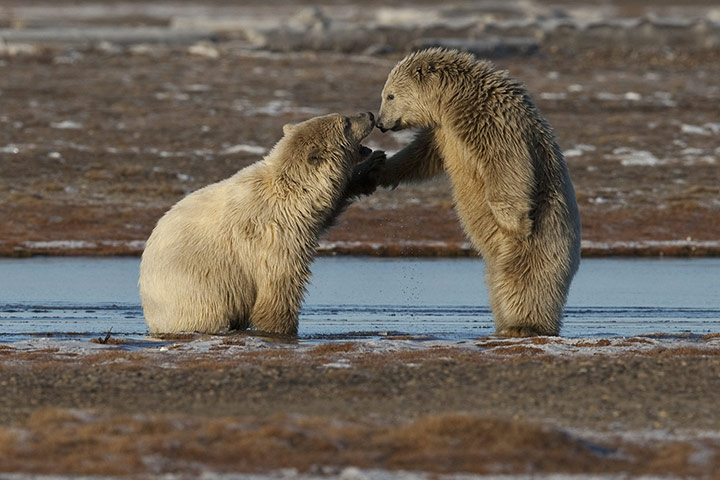
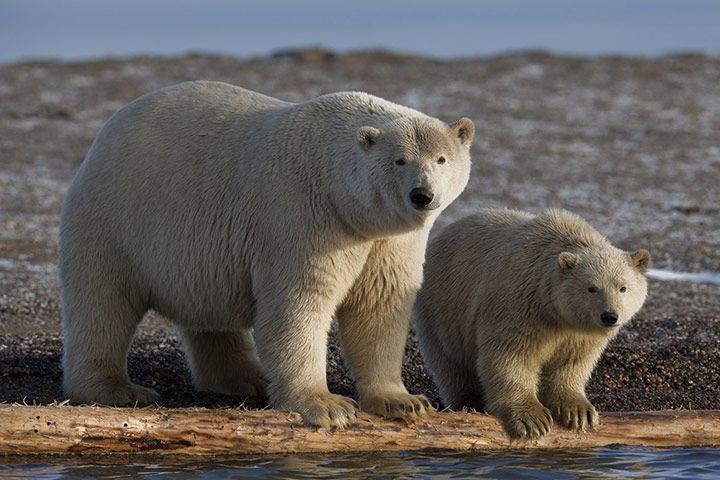
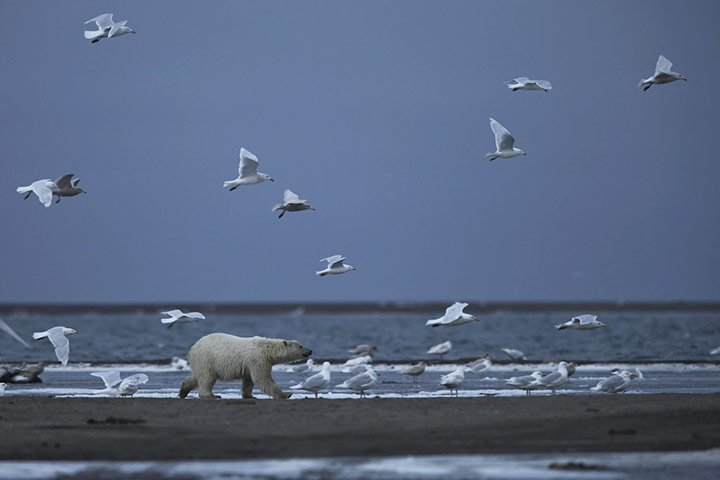
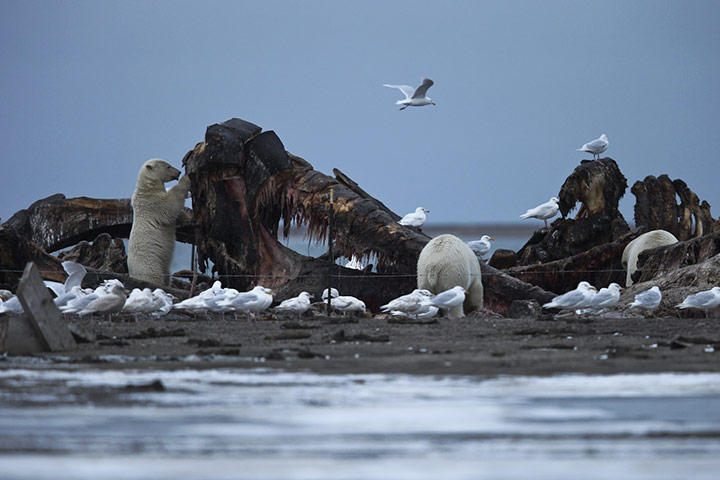
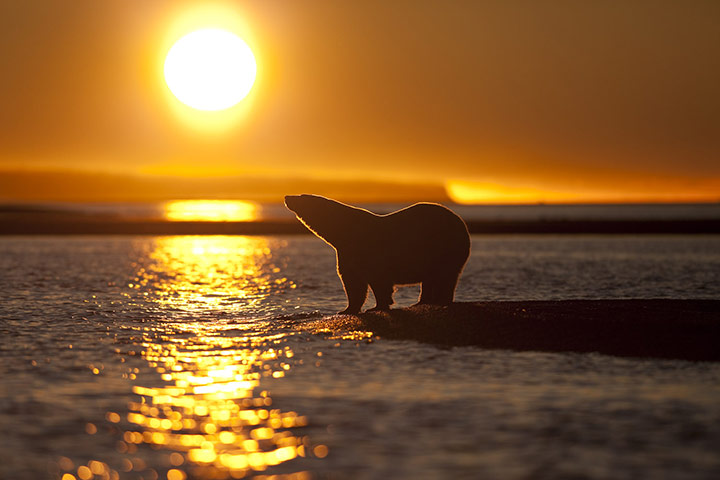
A stranded female polar bear and mother of two cubs waits for the sea ice to return to be able to hunt. As the Arctic sea ice minimum retreats over 700 miles from the shore, bears must either head north or swim south to land as the ice breaks up in the spring. The US Fish and Wildlife service working in the area have counted 49 bears within 10 miles of the Arctic city of Kaktovik, the largest concentration of bears out of the estimated 70-80 currently along Alaska's Beaufort sea coastlinePhotograph: Will Rose and Kajsa Sjölander/70° North/GreenpeaceThe bears currently onshore represent 5-10% of the southern Beaufort population, estimated in 2006 by US Geological Survey to be 1,500 bears. Bears have always come to this part of the world but the large increase in numbers has only started in the past decadePhotograph: Will Rose and Kajsa Sjölander/70° North/GreenpeaceA whale carcass left by Inupiaq whale hunters provides food for the stranded polar bears. For thousands of years the native people living above the Arctic circle in Alaska have depended on hunting bowhead whales and other mammals for their subsistence. The whale hunting happens twice a year in the spring and autumnPhotograph: Will Rose and Kajsa Sjölander/70° North/Greenpeace
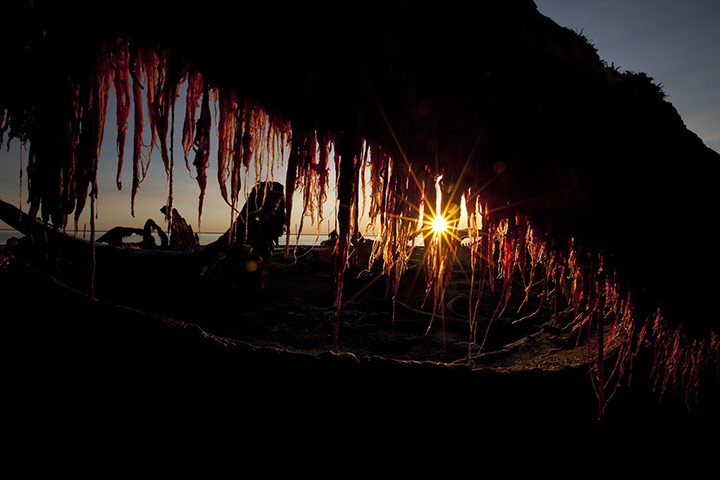
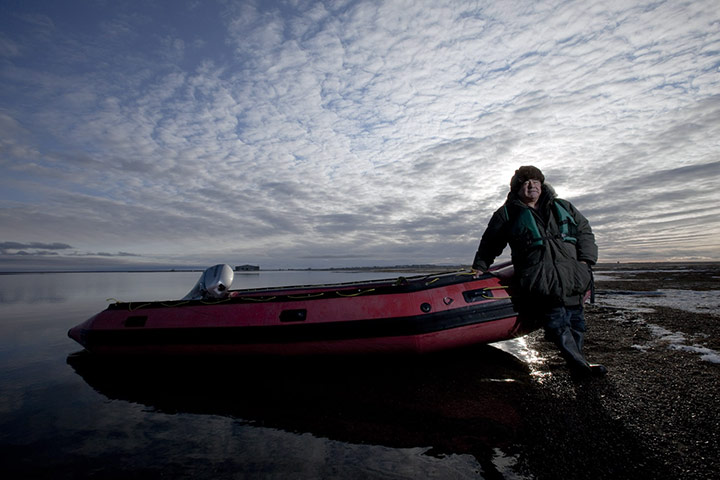
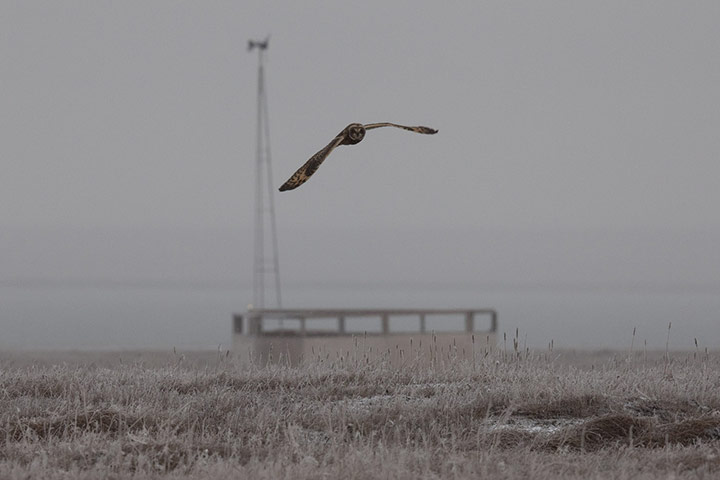
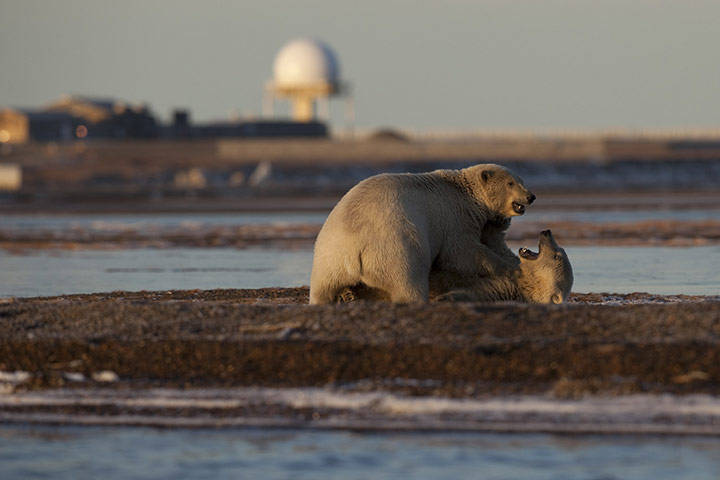
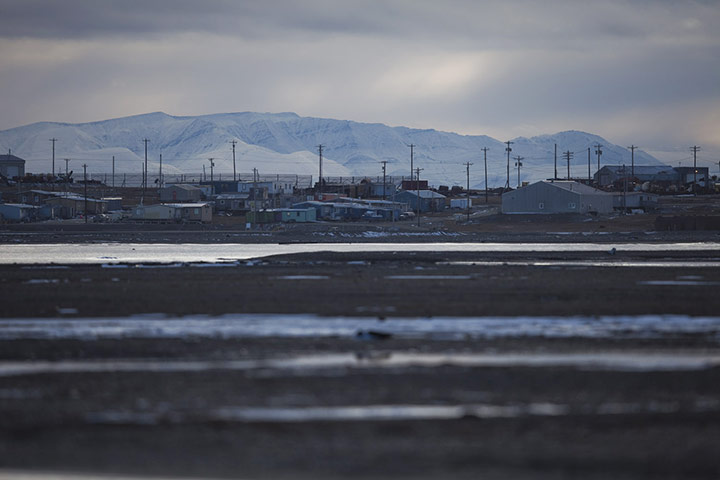
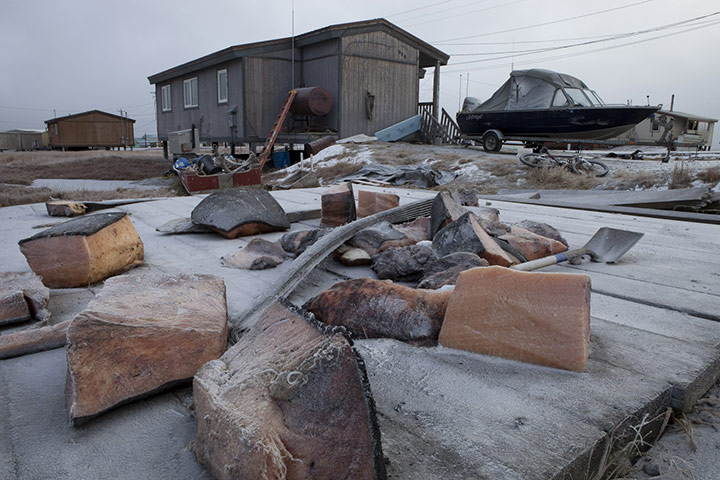
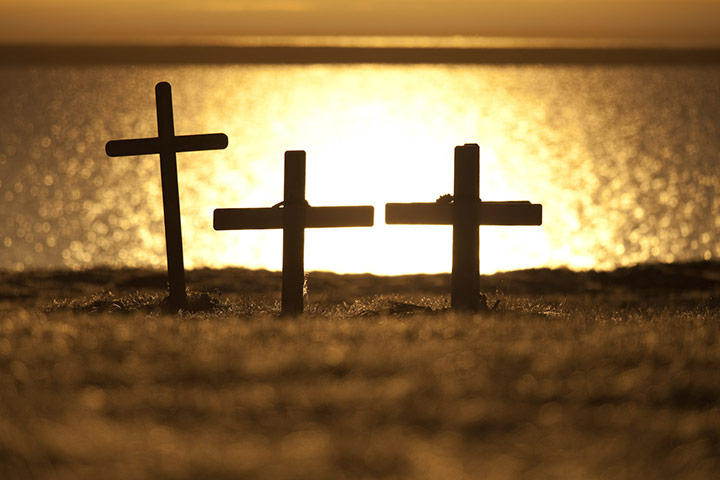
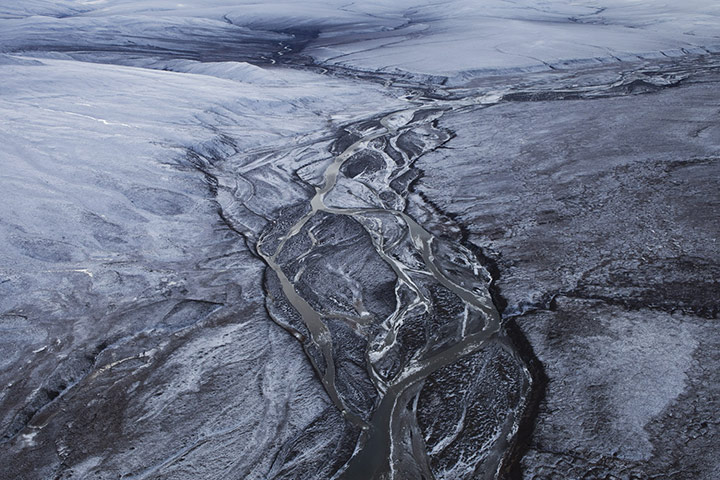
Stranded polar bears on Cross Island outside Prudhoe Bay. Oil giant Shell recently received permits from the US government to operate two drilling rigs in the Chukchi and Beaufort Seas starting in 2012. Environmentalists are concerned that if Shell is allowed to go ahead and open up these icy seas to its oil rigs, this untouched wilderness will be irrevocably tarnished. Cleaning up an oil spill in Arctic waters has not been proven possible, despite this Shell still claim that they will be able to clean up 95% of any oil spilledPhotograph: Will Rose and Kajsa Sjölander/70° North/GreenpeaceKaktovik resident and polar bear guide Robert Thompson is concerned for the future. 'If things don’t change the polar bears might be extinct in 50 years. They can't catch food on land and are here because of the shrinking sea ice.' Thompson also fears that Shell does not have the capability to clean up a spill in Arctic waters. 'They don’t have the equipment, they don’t have the people, they don’t even have a coast guard and they certainly do not have the in frastructure. It is an impossible situation,' he says. Thompson is worried by the fact that no one has ever been able to clean up spilled oil in sea ice conditions. 'Less than 10% was recovered in the Gulf of Mexico and the conditions here are totally different,' Thompson addsPhotograph: Will Rose and Kajsa Sjölander/70° North/GreenpeaceA short eared owl flies infront of Kaktovik's wind turbine. The group called Resisting Environmental Destruction On Indigenous Lands claims this wind turbine is the farthest north in America. 'It is just to show we can get our energy from other sources. Just this village of 300 residents alone burns $2m of fossil fuels every year for electricity. Wind energy is clean and will be cheaper,' says Thompson. 'When I, an eskimo in northernmost Alaska is rained on in February, there is something wrong,' he adds. 'In Kaktovik we are experiencing the serious effects of climate change, which is occurring twice as fast here in the Arctic'Photograph: Will Rose and Kajsa Sjölander/70° North/GreenpeaceTwo polar bears play in front of Kaktovik's old defence early warning site used during the cold war. Climate change is now opening up the Arctic for potential oil and gas exploration as the sea ice retreats. The question of who owns the Arctic is still very much unclear with the five Arctic powers the US, Canada, Russia, Denmark and Norway all jostling for 'pole' position. Countries are once again stepping up their military presence in the far north. Russia has already planted a flag on the sea bed at the North pole while Canada has increased funding for cold weather training centres and new patrol vesselsPhotograph: Will Rose and Kajsa Sjölander/70° North/GreenpeaceThe city of Kaktovik with the Brooks Range behind. Not all residents are in opposition to the offshore oil plans. Some people welcome the development in hope it will bring them jobs and money. George Ahmaogak, former North Slope borough mayor and current candidate, thinks the biggest concern for the future is the federal government debts. 'I have always spoken out against offshore drilling and personally I don’t think they are ready for it yet. But on the other hand new oil has to be found, our society is dependent on taxes from the industry for our services. It is very expensive to live up here,' he saysPhotograph: Will Rose and Kajsa Sjölander/70° North/GreenpeaceTwo polar bear cubs play with rubbish along the Barter Island shore. The relationship between the local community and the bears could be described as being amicable, however neither party forget that one is the world's largest four-legged predator. Many fear the delicate balance will be tipped in the future as more bears arrive and become used to interacting with humansPhotograph: Will Rose and Kajsa Sjölander/70° North/Greenpeace10. Polar bear patrols are carried out daily by the local community and the US Fish and Wildlife Service. FWS are the agency responsible for the management of the bears and participate in training the locals to avoid conflict with the animals. A particular concern is the association of humans with food; food conditioning could result in nuisance bears being killed for the safety concerns of the local residents.Photograph: Will Rose and Kajsa Sjölander/70° North/GreenpeaceUrsus maritimus, the largest of all living bear species to adapt to the Arctic. According to the US Fish and Wildlife Service: 'The primary threat to the polar bears is the loss of sea ice habitat due to climate change.' Bears are incredibly adaptive but unlikely to survive as a species onshore. Polar bears are the biggest four-legged carnivore on land, almost three times bigger than the brown bears that dominate Alaska's interior. Food onshore is very limited and there is simply nothing comparable to a seal that provides a polar bear with fat and energy. Although some bears will adapt and survive, according to Eric Regehr from FWS, 'It is inconceivable that 1,500 bears can survive and find enough nutrition on shore'Photograph: Will Rose and Kajsa Sjölander/70° North/GreenpeaceThe local community of Kaktovik is benefiting as tourists arrive to see the bears during the summer monthsPhotograph: Will Rose and Kajsa Sjölander/70° North/GreenpeaceA female polar bear and her two-year-old cub wait for the sea ice to return. The US Fish and Wildlife Service have started a new hair snare DNA sampling programme to try to understand the bear’s fidelity, using a snare attempts to sample individuals without physically capturing or harming the bears. The US Geological Survey is now genotyping from archive samples, creating a genetic ID of every bear captured over the past 20 years. Patterns of when and where individual animals have been observed are used to estimate survival and population sizePhotograph: Will Rose and Kajsa Sjölander/70° North/GreenpeaceThe whale carcass left by the Inupiaq whale hunters is surrounded by a barbed wire fence. As the bears feed they snag against the fence leaving hair samples that are then taken for DNA analysis. It will however be years before scientists understand if the same bears are returning to land, if it is by chance, possible food source or whether some bears are changing their behaviour to adapt to the declining sea icePhotograph: Will Rose and Kajsa Sjölander/70° North/GreenpeaceA polar bear returns to the whale carcass to feed at dusk. The conservation goal of the Fish and Wildlife Service over the next five years is to prevent further decline of Alaska's two polar bear populations, the southern in Beaufort and in the ChukchiPhotograph: Will Rose and Kajsa Sjölander/70° North/Greenpeace16. “We do subsistence whaling here so these bears have some remains to feed from, otherwise they would be starving now.” say Robert Thompson while sat in his car watching the activity at the bone pile. “40 years ago the pack ice was visible from the shore all year, but the latest 10-12 years it has changed dramatically and the last years there has been no ice visible at all in the summer,” he adds. The polar bears are not without competition at the bone pile. Grizzly bears have found this food source and scraps between the different bears have been witnessed.Photograph: Will Rose and Kajsa Sjölander/70° North/GreenpeaceLife is becoming increasingly difficult for polar bears. As the climate is getting warmer their sea ice habitat is disappearing. 'A lot of the polar bears showed up here after a big storm. Biologists told me they saw eight dead polar bears floating in the water when they flew over the sea in a helicopter. The bears couldn’t make it to shore, as the sea ice was several hundred miles offshore when it ice broke up. It is a pretty sad situation,' says ThompsonPhotograph: Will Rose and Kajsa Sjölander/70° North/GreenpeaceFrozen whale blubber is stored outside a house in Kaktovik. The community was the first on the coast to catch a whale this autumn as the bowhead whale’s migration route south passes here firstPhotograph: Will Rose and Kajsa Sjölander/70° North/GreenpeaceSunrise over Christian graves outside the city of Kaktovik, the most remote community in the United StatesPhotograph: Will Rose and Kajsa Sjölander/70° North/GreenpeaceThe storms are getting heavier as the sea ice retreats. Despite its northern location far above the Arctic circle, permafrost has started to thaw around Kaktovik. Erosion and collapsing ground are creating big problems for infrastructure in Kaktovik and other villages along Alaska’s northern coast every yearPhotograph: Will Rose and Kajsa Sjölander/70° North/Greenpeace
Sign up to read this article
Read news from 100's of titles, curated specifically for you.