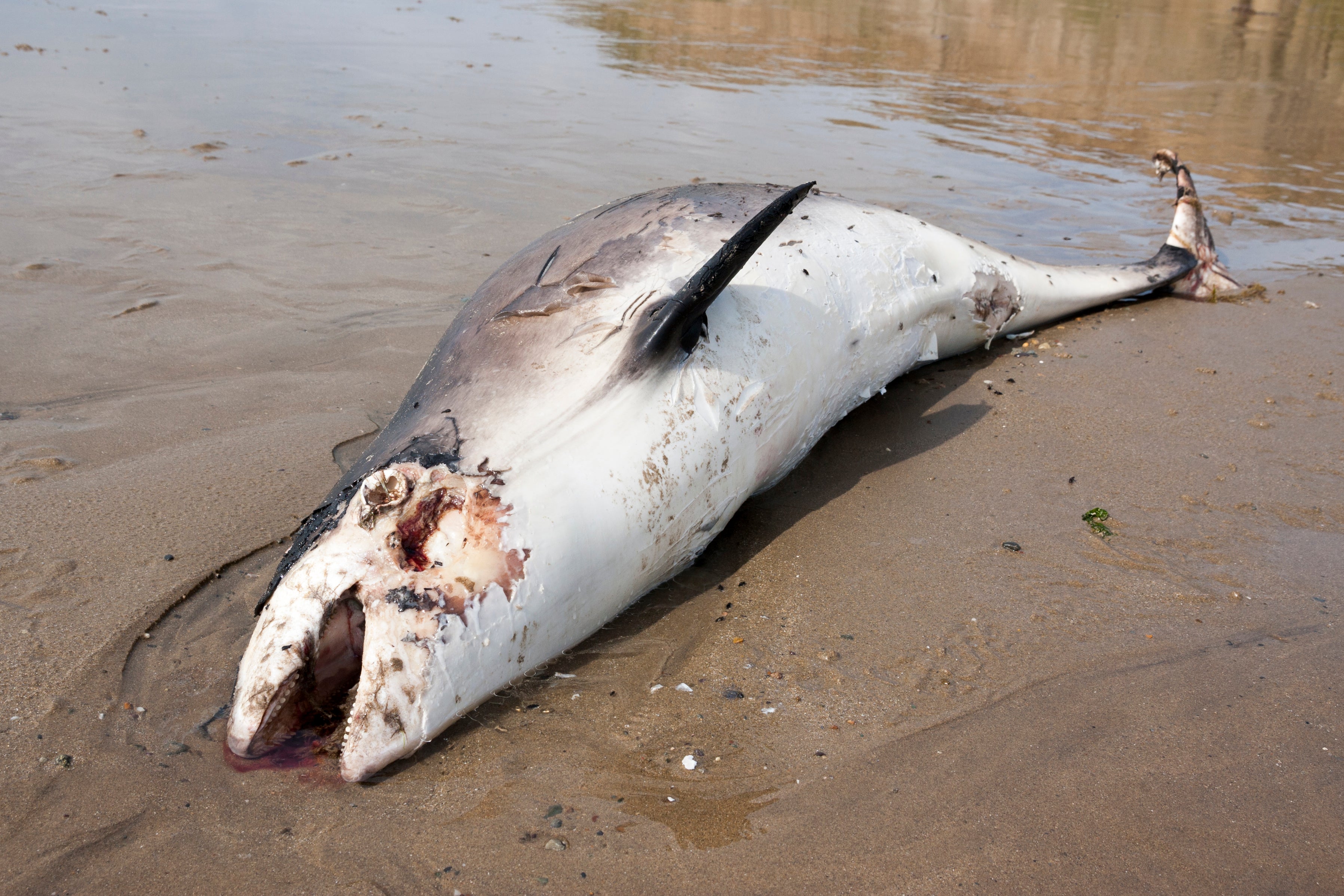
Porpoises in UK waters are being found with record rates of mercury in their livers, scientists have found.
New research has found that mercury levels in British waters have increased over time, and that animals with higher levels are more likely to die from infectious disease.
Analysing liver samples form 738 harbour porpoises found stranded on UK coastlines between 1990 and 2021, scientists found mercury concentrations in porpoise livers rose by 1 per cent each year.
By 2021, the average mercury concentration was almost double that of early 1990s.
Alongside the increase in mercury concentrations in porpoise livers, scientists saw an increase in the proportion of porpoises dying from infectious disease and a corresponding decline in deaths from trauma.
Rosie Williams, the study’s author and postdoctoral researcher at the Zoological Society of London, said that while this doesn’t conclusively prove mercury is the sole cause of the rise in infectious disease deaths, the study “strongly suggests that mercury is part of the problem”.
The harbour porpoise is a marine mammal related to dolphins and whales and is regarded as a “sentinel species” – animals which indicate the health of an ecosystem and point to potential risks.
Authors of the recent study in the journal Environmental Science and Technology also warned the findings could also have implications for humans.
“Harbour porpoises are small, shy and easily overlooked. But their tissues are quietly recording the story of our chemical footprint in the sea,” Ms Williams said, writing in The Conversation.
“If top predators in UK coastal waters are becoming more contaminated, the same processes may be affecting some of the fish and shellfish we eat.”
Mercury levels have tripled in shallow ocean waters since the industrial revolution due to human activities such as burning fossil fuels.
Mercury is then accumulated through the food chain, particularly affecting predators such as porpoises who build up levels of mercury in their tissues.
Ms Williams said: “A safer ocean for porpoises and for people can be achieved by phasing out coal more quickly, reducing industrial emissions and moving away from mercury-containing products wherever safer alternatives exist.”
Final delivery dates for top UK retailers for last-minute Christmas gifts
‘I travelled 10 hours’: Desperate learner drivers taking extreme measures over tests
David Walliams dropped from Waterstones Children’s Book Festival
UK couple in Iran prison ‘living off rice and gristle in kitchen filled with rats’
Lush boss says people who disagree with his Gaza stance ‘shouldn’t come into shop’
‘Little miracle’ premature baby who defied odds set for first Christmas at home