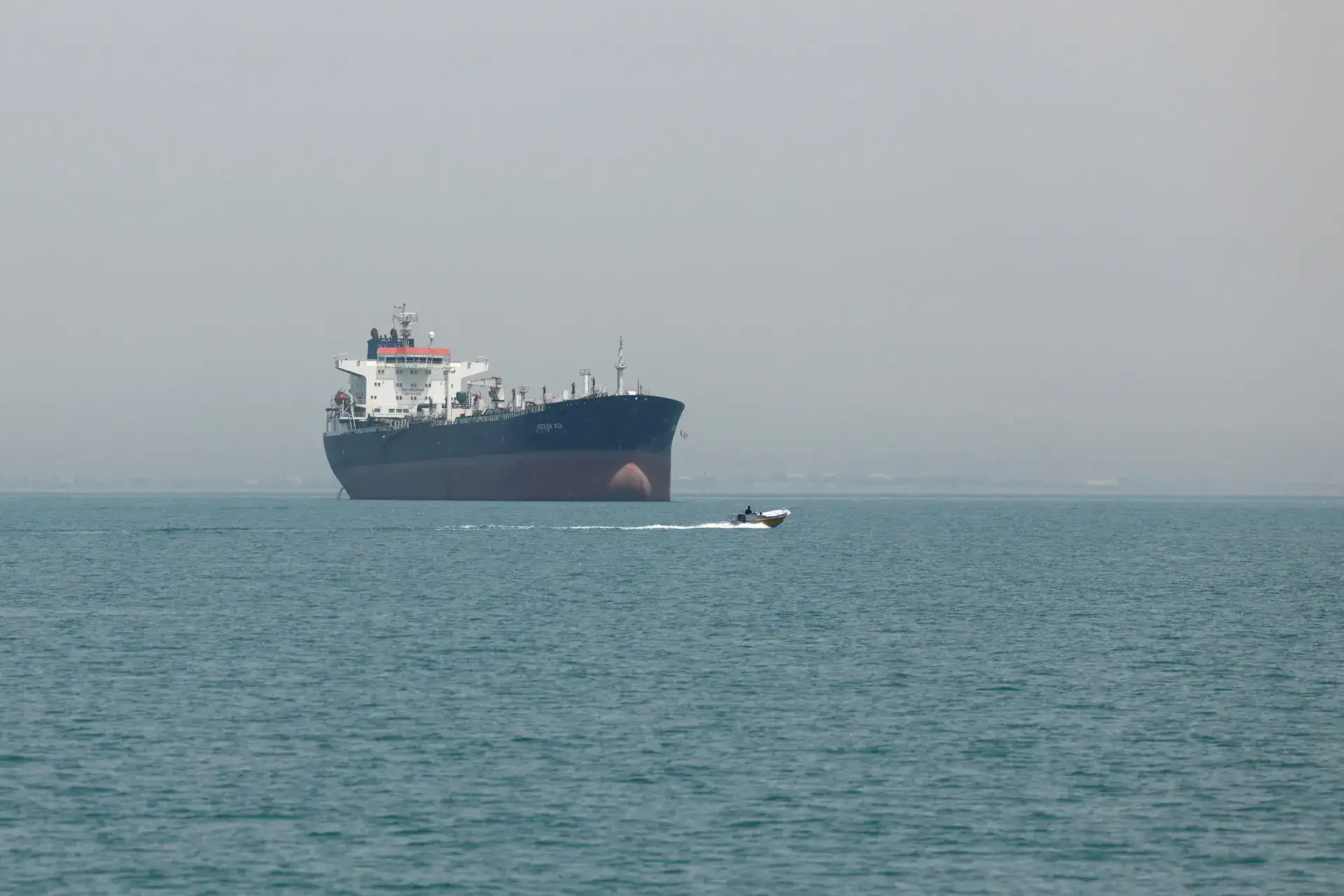
Strait of Hormuz remains the focal point as the U.S. and Iran have "largely negotiated" a memorandum of understanding on a peace deal, U.S. President Donald Trump said, as expectations rose that a breakthrough might be imminent in the three-month-old war. Trump said the emerging agreement being brokered by Pakistan would reopen the strait, the vital shipping passage whose closure has sparked a global energy crisis since the U.S. and Israel launched their war on Iran in February. He did not say what else would be included in an agreement.
Strait of Hormuz to Reopen?
Mohsen Rezaei, a military adviser to Iran's supreme leader, said on Sunday that managing the Strait of Hormuz was Tehran's "legal right" in order to ensure national security. "Iran's management of Hormuz Strait ends 50 years of insecurity in the Persian Gulf," Iranian news agencies quoted Rezaei as saying.
Various media in the U.S. and Iran said the memorandum sets out a framework for ending months of fighting, lifting a U.S. blockade on Iranian shipping and reopening the waterway, which Iran has shut with threats to attack shipping.
Plans for Iran's stockpile of highly enriched uranium, which Washington has insisted it give up, would be negotiated within 30 to 60 days, the reports said.
U.S. Secretary of State Marco Rubio, on a visit to India, said more news could come on Sunday. A senior Iranian source told Reuters that if Iran's Supreme National Security Council approved the memorandum, it would be sent to Supreme Leader Ayatollah Mojtaba Khamenei for final approval.
But Iran's Tasnim news agency said differences remained over one or two clauses. Tasnim cited a source as saying there would be no final understanding if the U.S. continued to create obstacles.
Sources have told Reuters the proposed framework would unfold in three stages: formally ending the war, resolving the crisis in the Strait of Hormuz and launching a 30-day window for negotiations on a broader agreement, which can be extended.
Two Pakistani sources said that, according to the memorandum, the Strait would be opened immediately after the U.S. lifted its blockade. Rubio said that, if the outline was agreed on, it would mean "completely open straits", and "without tolls".
Tasnim said any changes in navigation through the Strait of Hormuz were conditional on implementation of other commitments by the U.S. It also said some Iranian funds that have been frozen globally as part of sanctions must be released in the first phase of the deal.
One of the Pakistani sources said if the U.S. accepted the memorandum, further talks could take place after the Muslim Eid holiday ends on Friday.