Iranian gun boats reportedly attacked a tanker in the Strait of Hormuz hours after Tehran closed the vital waterway for shipping again.
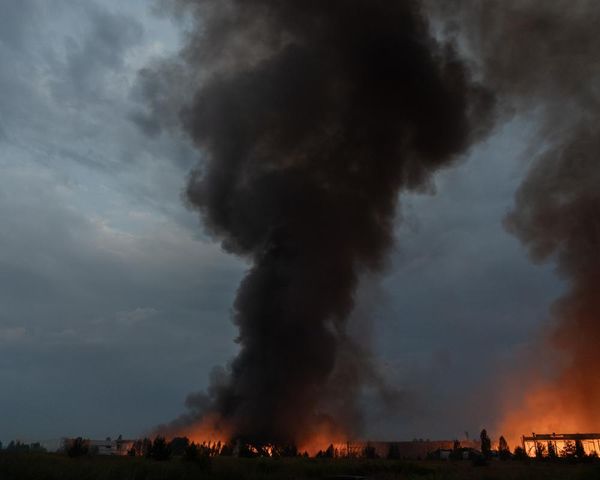
The United Kingdom Maritime Trade Operations said troops on two IRGC vessels opened fire on a ship 20 nautical miles north-east of Oman, without warning the crew. The vessel and its crew were reported safe.
In a separate incident, UKMTO said it had received a report of a container ship being hit by an unknown projectile 25 nautical miles northeast of Oman.
The attack caused damage to some containers on board, but no fires or environmental impact were reported, and there were no immediate reports of casualties, UKMTO said.
The incidents came after the waterway was closed by Iran on Saturday hours after the first tankers managed to pass through since its reopening due to the ceasefire.
The country’s joint military command said that it’s “control of the Strait of Hormuz has returned to its previous state … under strict management and control of the armed forces.”
A military spokesperson accused the US of not meeting its obligations after US President Donald Trump refused to lift America's own blockade of Iranian ports.
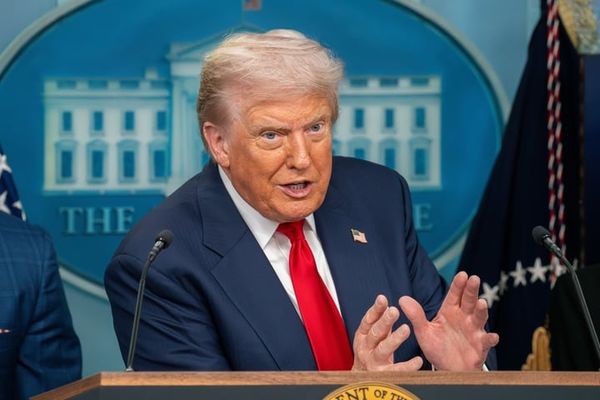
But Trump said the Us would not let Tehran “blackmail us” by shutting the waterway. He said there are "very good conversations going on" with Iran, and described them as acting "a little cute as they have for 47 years".
The key shipping lane had seen the "first major movement" of ships since the start of the war this morning.
But Tehran has since warned it will continue to block transit through the vital trade route as long as the US blockade of Iranian ports continued.
Iran's state broadcaster IRIB said the key shipping lane "is now closed again and passage requires Iran approval."
The attack on the tanker put yet further strain on the fragile ceasefire between Iran and the US and Israel.
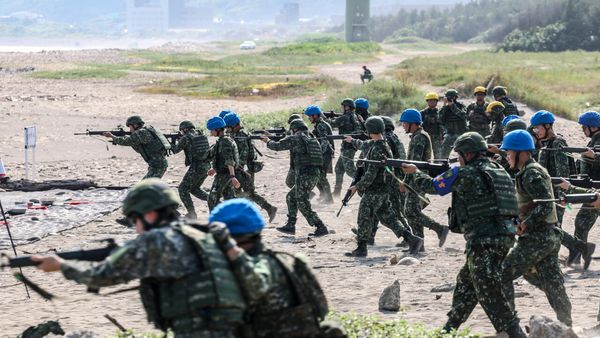
It came as Mojtaba Khamenei, Iran’s supreme leader, pledged to “make the enemies taste the bitterness of new defeats” in a rare statement.
The statement from Khamenei, who has not been seen publicly since before the war claimed that Iranian forces had already exposed the “weakness and humiliation” of the US and Israel to the world.
He said: “Just as [Iran’s] drones strike like lightning upon the American and Zionist aggressors, its valiant navy is ready to make the enemies taste the bitterness of new defeats.”
It comes after Trump warned the US will resume its bombing campaign in Iran if peace is not reached by Wednesday – and vowed to keep the Strait of Hormuz blockade “in full force”.
Tehran had said the key trade route would remain “fully open” for the final few days of the two-week ceasefire, with tracking data showing a fleet of oil tankers sail through.
But Trump threatened to start “dropping bombs” if the regime doesn’t renounce their nuclear ambitions and accept Washington‘s terms by the middle of next week.
The US president appeared optimistic that a deal would be reached, telling reporters on Air Force One that he had received some “pretty good news” on the state of a deal.
“It seems to be going very well in the Middle East with Iran," he said.
“You’ll hear about. I just think it’s something that should happen. It’s something that only makes sense to happen. And I think it will.”

“We're negotiating over the weekend. I expect things to go well”, he added.
"The main thing is that Iran will not have a nuclear weapon. You cannot let Iran have a nuclear weapon, and that supersedes everything else."
The White House was considering releasing $20billion (£14.75bn) in frozen Iranian assets to entice the cash-strapped regime to give up its entire stockpile of enriched uranium.
The war with Iran, which began on February 28 with a US-Israeli attack on the Islamic Republic, has killed thousands, spread to Israeli attacks in Lebanon and sent oil prices surging because of the de facto closure of the strait.
Despite the initial movement of ships and Trump’s assertion, prospects remained unclear on a resumption of high-level US-Iran talks or any agreement over Iran's nuclear ambitions, a key sticking point
Some diplomats said talksthis weekend were unlikely given the logistics of gathering in Islamabad, where the talks are expected to take place.
There were no signs of preparations early on Saturday for talks in the Pakistani capital, where the highest-level US-Iran negotiations since the 1979 Islamic Revolution ended without agreement last weekend.
The key Pakistani mediator, army chief Field Marshal Asim Munir, has concluded three days of talks in Tehran, the Pakistani military said. Pakistani Prime Minister Shehbaz Sharif was also returning to Islamabad after talks this week in Qatar, Saudi Arabia and Turkey.
A Pakistani source aware of mediation efforts said a meeting between Iran and the US could produce an initial memorandum of understanding, followed by a comprehensive peace agreement within 60 days.