There is a statue thousands walk past every day in the centre of Liverpool but very few know of its important history.
Captain Frederic John ‘Johnnie’ Walker was the hero of the Battle of the Atlantic during the WWII. His statue looking out to sea on the Pier Head is a tribute to the local hero who sank more U-boats during the Battle than any other British or Allied commander.
In October 1998, the statue of Captain Walker, created by Liverpool sculptor Tom Murphy, was unveiled by HRH the Duke of Edinburgh. We walk by statues and monuments every day but rarely take the time to admire them and learn more.
READ MORE: Life on ‘hidden treasure’ street where there's only one way in and out
Jane Hedger, Captain Walker’s granddaughter, attended the annual ceremony in his honour at the Pier Head on Saturday, July 9 along with her 83-year-old father, the Captain’s eldest son. She said when visiting the statue “it’s always lovely when people stop” to look and admire it.
She added that although the statue’s “relevance [may be] detached from the younger generations”, the family are “grateful to the people of Liverpool for their warmth and for keeping his memory alive.” As long as people continue to visit the statue and pass on Captain Walker’s tale, his remembrance will live on for years to come.
Ted Bemand, who also attended the ceremony, said: "It was a moving tribute for, to many people, an unknown statue”. When attending the ceremony he was happy to appreciate what was done by Captain Walker in the War and wished that more people would take the time to learn about his part in history.
Mr Bemand added that it was “very refreshing to highlight a local hero" alongside others at the Pier Head, such as The Beatles statue. For those interested in looking further into Captain Walker’s history, the waistcoat he’s wearing in the statue that followed him across the globe will be displayed in the Liverpool Western Approaches Museum from September.
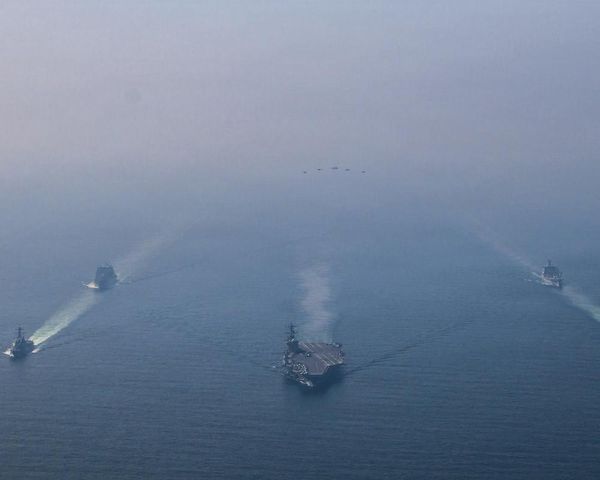
National Museums Liverpool has a page dedicated to the Liverpool Hero, they said: "In 1944 came the infamous D-Day landings in Normandy and, as it turned out, Walker’s last contribution to the war effort. For two weeks, he helped to protect all ships heading to France – not one U-boat made it past his vessels.
"His work was constant and the strain never-ending; he took no rest or respite and knew that the war had cost him his son, Timothy. Shortly after returning home from this mission, it all became too much for his body to take and on July 9, Captain ‘Johnnie’ Walker died aged only 48.
"To his crewmates and officers, alarmed at the change in him towards the end, he had looked a much older man. His funeral was attended by 1000 people and his coffin was taken through the streets of Liverpool, down to the river where HMS Hesperus was waiting to take him back to the sea one last time – to his final resting place in Liverpool Bay.
"The ultimate sailor had made the ultimate sacrifice for us all and asked nothing in return; the true embodiment of the word ‘hero’."
READ NEXT:
- Tiny village which started with just nine homes eventually had its own airport
- We visited the picturesque canal-side village only a train ride away from Liverpool
- Merseyside's 'poshest' village that has one road in and out
- Living in the shadow of derelict estate on Liverpool's 'quality streets'
- Life in 'forgotten' and 'neglected' town where Lidl and B&M have just opened