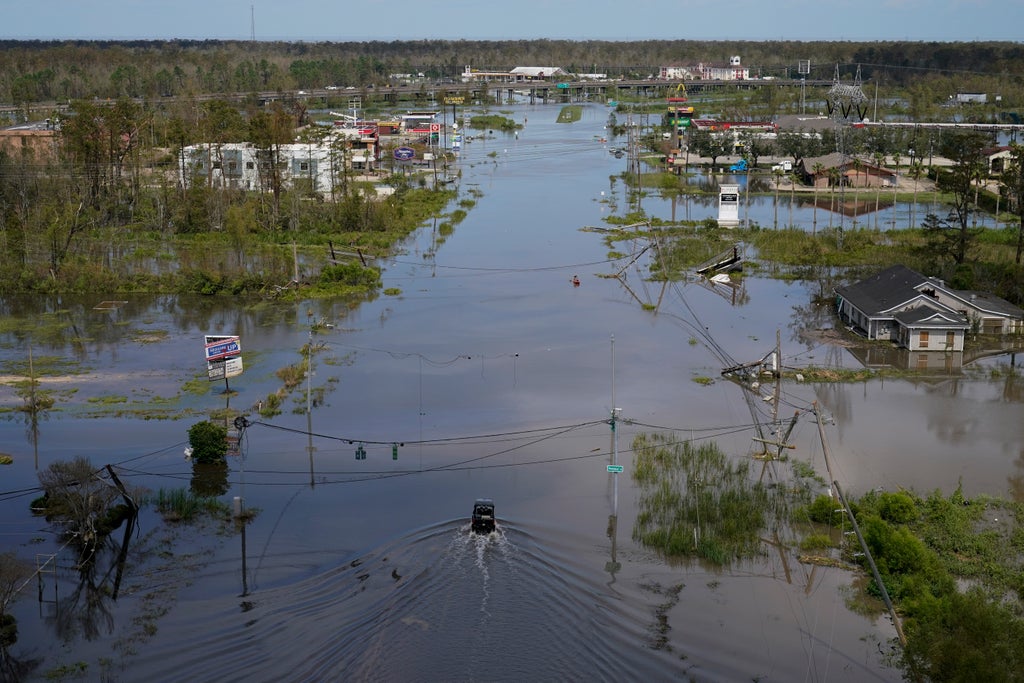
As emergency response crews begin to survey the damage in the aftermath of Hurricane Ida, thousands of homes in Louisiana’s coastal communities are left unrecognisable from the impact of the storm, which made landfall on 29 August as a category 4 hurricane with 150 mph winds.
As flood waters recede and damage is cleared from roadways across several parishes and low-lying communities in the storm’s path, residents and emergency personnel have assessed catastrophic damage – collapsed homes, battered roofs and flooded homes.
President Joe Biden will visit the state on 3 September and stay through the weekend to meet with state and local officials and survey damage in hard-hit areas.
More than 1 million residents in the state remain without power, as officials and utility companies dispatch thousands of workers to repair lines, transformers and critical electric infrastructure damaged by the storm.
In New Orleans, where roughly 200,000 residents stayed during the storm’s impact, utility company Entergy restored power to a sliver of New Orleans East on Wednesday morning, the company announced, adding that “full restoration will still take time given the significant damage across the region.”
Governor John Bel Edwards said he spoke with the White House several times over fuel concerns, as residents queue in hours-long lines in the heat to fill gas cans, or form equally long queues in their cars, in hopes of fuelling generators or filling up their tanks to get out of town.
“Louisiana provides fuel for the rest of the country, and now we need the rest of the country to give up a little bit of their fuel,” the governor said on Wednesday.
New Orleans Mayor LaToya Cantrell also said she is urging FEMA for fuel.
Residents and restaurants have meanwhile organised massive food and water drives, used generator power to open community device-charging stations, and supported statewide mutual aid efforts to help fund relocation efforts and support vulnerable residents stuck in hot and humid conditions.
State and federal emergency responders have also opened pick-up points for supplies and cooling stations to avoid the heat.
Officials have urged residents who evacuated to avoid re-entering the state until crews have made more progress in clean-up and rebuilding efforts.
The remnants of Ida, which dissipated into a tropical depression as it moved inland, also brought flooding, thunderstorms and heavy rainfall across the northeastern US on 1 September.
Follow for updates