Books are often like people.
Some are intrinsically sexy.
This one is like your (past or future) teenage self, celibate by circumstance and not entirely choice; non-practising, but with every intention of joining those illustrious ranks.
Stoner is the gawky teenager at that fun, fabulous literary party: their nose is long; their features are in sharp relief; their brain appears to be a complex origami of cleverness. After adolescent wilderness-years of being out of sight (print), it once again graces bookshelves with a delicate, paper-like awkward. Guaranteed, it’s not nearly as trippy as Nausea by Sartre, which reeks of that acquaintance, trying to look like they can still hang onto reality; Stoner is infinitely more subtle in its humanity.
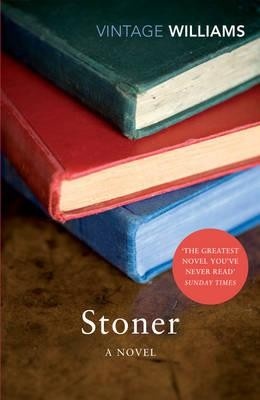
Set predominantly in early to mid-1900s Missouri, John Williams is the puppeteer behind the whole setup. William Stoner (titular character) is a farm boy. Initially studying agriculture at university, he has to take a compulsory English class – think woeful, GCSE days – and is touched to the point of epiphany by Shakespeare’s sonnets. Something inside him is awakened. He opens his eyes for the first time. He knows that if he grasps it with both hands, there will be a monumental change in his foundations. And, purely on the intuition of that moment he decides to take the first step. Literature becomes his life; life stretches before him.
Williams, though, is like a vengeful god. He uses suffering to strip back the layers of Stoner’s existence, until all that remains is the enduring ‘dignity of art that has little to do with his foolishness or weakness or inadequacy as a man’. Stoner is probably the prototype human (as built by an ungraceful, geeky teenager): not quite as good as they’d hope to be; vaguely realising that that is the case; not sure what to do about it. Stoner reaches the point where he’s good enough to know he’s not good. He’s wonderful at that human clumsiness: forgetting to say true thoughts to people who are your friends, retreating instead of meeting something head-on, not side-stepping problems but tripping over them… His difficulties are transferable to any day, or any age.
John Williams’ style is dry and ironic, but with that austere beauty that you can’t quite tear your eyes from. The plot is extremely academe-centric, but don’t let that put you off. Williams isn’t judgemental; there is no expectation that you know oodles of Shakespeare and French to truly get it. It’s all about a quiet, internal conversation: human to human – how does your life measure up? Should it even need to measure up (what is there to measure)?
Ultimately, the novel is a stage: the characters come and go; people change, marry and die; academia remains as a legacy that will live on, but not accurately represent your life. Everything slowly fragments after death, until all that remains is a few words, or sentences.
Stoner was thoroughly depressing, but diplomatic in how it destroys the essence of your being; killed by your own incompetence. Miraculously, you close the book and survive.
How are you going to live, as another Stoner?
-
Buy this book at the Guardian Bookshop