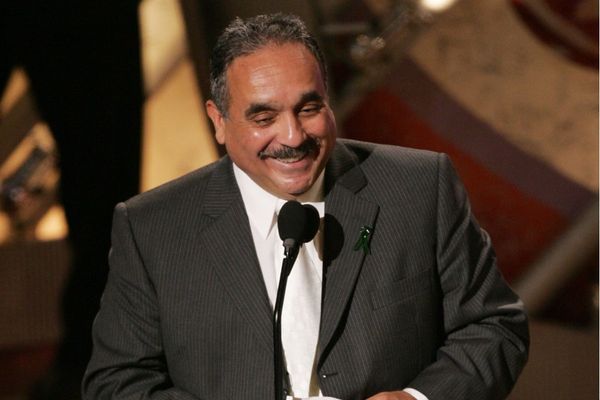
The Indigenous actor Uncle Jack Charles says Australia is on the verge of creating “an island prison for the next generation of Aboriginal people” because of a failure to bring about redress for victims and survivors of the stolen generations and institutional abuse.
On the eve of the ninth anniversary of former prime minister Kevin Rudd’s apology to the stolen generations, Charles is calling on Victoria to implement a redress scheme for survivors of institutional abuse.
He wants any scheme to include redress for Aboriginal people who lost their culture, language and community when they were forcibly removed from their parents.
Victoria remains the only state with no form of redress for survivors of institutional abuse.
Born to a Bunurong mother and Wiradjuri father at Cummeragunja Mission on the Murray river, on the Victorian border near Barmah, Charles was forcibly taken from his parents when he was just a few months old under the assimilation policy. He spent most of his childhood in a Salvation Army boys home, where he was sexually and physically abused.
“A note from the babies home to the boys home said ‘We are sorry to see our favourite Aboriginal boy Jacky leave but he is too big’,” said Charles, a respected elder in Melbourne’s northern suburbs.

“The traumatic effect of being stolen is long-reaching, it goes on and on forever and ever. Many of us develop criminal records, and my own is extensive. Organisations are ill-equipped to address that trauma because they don’t have people who were stolen running them.
“Those of us in the stolen generations and our protégés are suffering from what happened and my belief is that we need to be redressing them and that needs bringing in with advice from elders in the community, and I mean the ridgy-didge elders, not the ones in high positions.”
He said the high Aboriginal incarceration rate would not be addressed in Victoria until the government committed to redress. The Tasmanian government launched its long-awaited Stolen Generations Redress Scheme early last year, while late last year the New South Wales government announced it would offer one-off financial payments to survivors.
In 2007, the Queensland government implemented a redress scheme for institutional abuse survivors, the Tasmanian government set up a Stolen Generations Fund and the Western Australia government established a redress scheme that included compensation for members of the stolen generations.
Charles said he used to “juggle the arts and acting with nefarious behaviour”, but with his days of petty theft, drug addiction and jail behind him, he now balanced his acting career with advocating for Aboriginal people.
“It’s all well-and-good being a you-beaut actor, but my ultimate role is to be role- model for Aboriginal people, the black light of the future for many in this country, especially in Victoria for my people,” he told Guardian Australia.
“I know young Aboriginal people who are denied their Aboriginal status just because they don’t look Aboriginal. Prison officers need to undertake cultural awareness training delivered by elders and Aboriginal liaison officers.”
He said he knew of a young boy detained in the Parkville youth detention centre who was moved to a unit within Barwon adult prison as part of the Victorian government’s attempt to get tough on young offenders. The government agreed not to send Aboriginal youths to Barwon without consultation from the commissioner for Aboriginal children, Andrew Jackomos.
“This young boy was told by an officer in Barwon he was not Aboriginal even thought he had his Aboriginal name tattooed on his arm,” Charles said.
“The young ones are trying to claim their Aboriginality and culture, and they can’t, and they continue to suffer the effects of their ancestors from the stolen generations.”
The Victorian Aboriginal Legal Service [VALS] has also called upon the state to consider a redress scheme for the stolen generations to help rebuild the culture and community that was lost.
A recommendation from 2013’s Betrayal of Trust report called for the implementation of such a scheme.
The chief executive of VALS, Wayne Muir, said he wanted assurance from the Victorian government that the recommended redress scheme in that report would go ahead.
“The victims of these policies aren’t getting any younger, and the longer we wait, the harder it will be for them to receive compensation,” he said.
“It wasn’t just Aboriginal families that were broken up, but it was Aboriginal communities that lost their culture and language.”