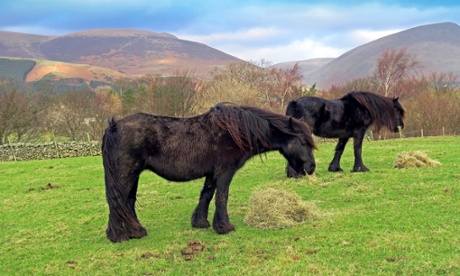
Driving through the Carrock Splash ford that crosses the fell road from Mungrisdale to Hesket Newmarket in the far north-west of the Lake District, I find my way blocked by a dozen semi-feral ponies.
Carrock Fell’s ramp was crooking its finger invitingly through the crags toward the summit, but the jet-black Fell ponies, huddling together, their manes blowing over their eyes, would not budge. Pipping the horn did not work; driving forward, even slowly, would be risky. Only when they turned away to graze on the fell was I able to progress.
Later I called on Glenis Cockbain, who was brought up on the farm near here, and who as a child used to take hay to the native-breed ponies in her doll’s pram. What should I have done? “Probably,” she replies, “get out and clap your hands. But you never know. Fell ponies are so obstinate.”
She should know. Her Fell and Dales ponies have won so many ribbons, trophies, silver salvers and cups at country shows over the years. She will be judging both in the breed classes at the Royal Windsor show at Windsor Castle in May.
Glenis now lives in Keswick where her husband, Will (who is on the board of Natural England), runs Rakefoot Farm. Their sons, John and Jamie, help with the ponies and with the general farming, which includes 1,000 Swaledale sheep, a few Berrichon sheep and beef cattle.
The Rakefoot ponies live above Castlerigg Stone Circle, on the rigg where a footpath crosses into St John’s in the Vale. It’s here they can be seen, turning their back-ends towards the gale sweeping over Clough Head and the Dodds. Stoic is the word, the same trait that saw them once endure work down the pits of County Durham.
As fluffy as these ponies look, at 14 hands high (the Dales are bigger still), walkers can find them threatening when they follow them, even nuzzling them for treats like mints and humbugs. If only, Glenis says, folk did not feed them. There’s nothing worse than spoilt children, they say. Or spoilt ponies.