Closing summary
- Asian stocks rose overnight, following a positive close on Wall Street, as investors shrugged off protests which have been raging across US over the killing of George Floyd and geopolitical tensions between Washington and Beijing over over China’s control of Hong Kong
- European shares followed suit, with the German Dax surging to its highest level in three months
- Global oil prices also climbed to three month highs on Tuesday ahead of talks between the Opec oil cartel and its allies over plans to extend an historic oil supply deal and shore up market prices
- Bank of England data for April showed that UK consumer borrowing fell, while repayments rose to historic levels during the Covid-19 lockdown
- BoE figures also showed that the number of approved home loans tumbled 80% compared to February, to just 15,800. (It echoed Nationwide data released earlier in the morning showing that house prices fell at the fastest rate since the financial crisis)
- Global factory production fell for the fourth straight month, but the PMI data showed it was a softer contraction in output in May compared to a month earlier
That’s all from us today. Join us again from 8am tomorrow morning. Stay safe –KM
Samuel Tombs, chief UK economist at Pantheon Macroeconomics, says the UK government’s support schemes should be enough to help keep businesses from going bust...for now.
BoE/HMT schemes have now funnelled £49.6B to companies—equal to 2.5% of annual GDP—via state-guarenteed bank loans and commercial paper purchases. This wall of cash should keep a lid on insolvencies for now. Nonetheless, a moment of truth is coming for many firms in the autumn. pic.twitter.com/GU966oIu6s
— Samuel Tombs (@samueltombs) June 2, 2020
Well, that was short-lived.
US stocks are now mixed, after the Nasdaq turned negative and fell 0.19%.
Updated
US stocks edge higher at the start of trading
Gains are nowhere near what is being logged across Europe, but here’s how Wall Street is trading at the open:
- S&P 500 is up 0.3%
- Dow is up 0.5%
- Nasdaq is up 0.1%
The chair of the Treasury Select Committee, Conservative MP Mel Stride, says he is concerned by the delay of the investigation into how collapsed mini-bond issuer London Capital & Finance was regulated by the FCA.
Chair @MelJStride has said that the delay in the investigation into London Capital and Finance is "particularly concerning", and that "we will want to get to the bottom of what role the FCA had in the delay".
— Treasury Committee (@CommonsTreasury) June 2, 2020
Full story on our website here shortly:https://t.co/30t5Qe5EPr pic.twitter.com/rHjK89aguT
Dame Elizabeth Gloster said in her letter released today that she faced delays in receiving documents and information from the FCA in recent month, which set back interviews originaally planned for December/January until March 2020.
She added home working as a result of the Covid-19 pandemic had also thrown up difficulties in interviewing FCA staff promptly from March.
However, she was quick to stress that she wasn’t suggesting it was intentional or the result of “deliberate non-cooperation” on the part of the FCA.
Futures are pointing to a positive start on Wall Street:
- S&P 500 futures are up nearly 0.3%
- Dow futures are up 0.4%
- Nasdaq futures are up 0.1%
Lloyds Banking Group had confirmed that it will extend its freeze on job cuts until at least October due to the pandemic.
Lloyds originally halted plans for around 780 job cuts back in March, with the decision meant to be reviewed on a monthly basis from the end of May. But it’s understood that a decision was taken last week to set a longer timeline.
A Lloyds Banking Group spokesperson said:
We have made a number of commitments to our colleagues to address their concerns during the current crisis, including continuing to pay them in full regardless of their working circumstances.
We have also pledged that any colleague placed on notice of redundancy will not leave the group before October. We will continue to review these and other commitments to our colleagues on an ongoing basis.
While workers in travel and leisure have been on edge about their employment prospects during the Covid-19 crisis, the pandemic has had the opposite effect on banks.
Lenders like Lloyds have seen their workload increase since March, as governments put them on the frontline of coronavirus rescue plans. More staff have been needed to arrange mortgage and credit card holidays and distribute government-backed loans.
Updated
Oil prices hit three-month highs
Global oil prices climbed to three month highs on Tuesday ahead of talks between the Opec oil cartel and its allies over plans to extend an historic oil supply deal and shore up market prices, our energy correspondent Jillian Ambrose writes.
Oil ministers from the world’s most powerful oil producing countries will join a video call on Thursday to discuss plans to keep cutting 9.7 million barrels of oil a day through the summer.
The record oil production curbs were put in place from April to help steady the oversupplied market after the impact of the coronavirus lockdown slashed global oil demand to 25 year lows.
The original oil supply deal, the largest agreement ever struck between the group of oil giants, helped double the global oil price which fell to 21-year lows of about $16 a barrel last month.
The price of Brent crude, the international oil price benchmark, rose by almost $1 to $39.29 a barrel on Tuesday while US oil, or the West Texas Intermediate (WTI) crude, climbed by 88 cents, to $36.32 a barrel.

Oil traders believe a deal to extend the production cuts has the support of most Opec and non-Opec countries, and is likely following Thursday’s virtual meeting.
Iraq’s acting oil minister Ali Abdul Ameer Allawi said on Twitter that the country plans to deepen its planned oil production cuts, and remains committed to the so-called Opec+ deal despite falling short of its quota last month.
Updated
French flight crew have accused Ryanair of blackmailing them into taking pay cuts or losing their jobs.
The Irish airline, which has warned it may cut up to 3,000 jobs in Europe, told staff in France it was imposing 20% salary cuts for flight crew and 10% for attendants. Those who are already on legal minimum wages will have their hours reduced.
Staff unions have accused the company of “redundancy blackmail” and acting like cowboys.
According to confidential documents seen by French media, Ryanair wrote to staff proposing wage cuts take effect from 1 July 2020. The lower wages would be progressively increased over the five years so flight crew would be paid their full current salaries by July 2025.
The loss of salary works out at an average 12% over five years for the pilots. Ryanair also proposed to pay new pilots and co-pilots the lower wages.
The Syndicat National des Pilots de Ligne said it had been given a maximum of five days to respond to the ultimatum. If not, it said the company warned it would have “no choice” but to lay off 29% of its pilots and 27% of co-pilots in France.
Bank of England governor Andrew Bailey is set to be interviewed within weeks as part of the investigation into the potential regulatory shortfalls linked to the demise of London Capital & Finance.

We already knew Bailey would be questioned, but this confirms the timeline.
In an update released by Dame Elizabeth Gloster, who is conducting the independent investigation, she confirmed that “senior employee interviews (including, for the avoidance of doubt, Mr Andrew Bailey)“ would “take place during the first half of June 2020.”
However, it was part of a wider notice that the report would not be completed until 30 September. It was originally expected within 12 months of Gloster’s appointment by the government, which would have been 10 July.
The beleaguered investment company collapsed in early 2019, owing money to thousands of customers who had bought controversial mini-bonds from LC&F.
The firm promised stellar returns to investors of up to 8% a year, but t little of the money went into safe interest-bearing investments, and was instead funnelled into speculative property developments, oil exploration in the Faroe Islands and even a helicopter bought for a company controlled by LC&F.
Some customers claim they were misled, including by the Financial Conduct Authority, over whether their investments were protected by the regulator. The City regulator’s enforcement team was also warned three years ago about the company but failed to act.
Time for a quick market update. European stock markets have all extended their gains after a positive start at the open.
Germany is leading the pack, up 3.9% at around 12,030 points. That pushes it to levels not seen since early March, when stock markets started to react to the pandemic’s migration to Europe.

Here’s how the rest of Europe is looking:

Qatar Airways chief executive Akbar Al Baker has been speaking to Reuters and said that it will keep the airline’s fleet of A380s grounded until mid to late 2021.
He also said that the airline may end up laying off around less than 20% of group staff and it wasn’t clear when the airline would return to profitability due to the pandemic.
Problems are clearly being thrown up by its agreements with manufacturers, with the airline’s boss saying it is in talks with both Airbus and Boeing to defer all pending aircraft deliveries. He also claims the airline won’t do any future business with manufacturers that make it hard to delay deliveries.
Qatar Airways is already on track to sell the five Boeing 737 Max aircraft that have already been delivered.
Heavily indebted shopping centre owner Intu Properties is forecasting it will receive over a third (37%) less rental income this year than last from the retailers which rent space in its centres, my colleague Joanna Partridge writes.
The owner of Manchester’s Trafford Centre and Lakeside in Essex thinks it will collect £310m in rent in 2020, compared with £492m in 2020.
Intu also predicts it will end 2020 with just £24m cash, having started with £82m, although this is also dependent on its lenders waiving some covenants.
Despite this forecast, the company’s shares rose by 93% at one point on Tuesday morning, to almost 11p, although they are still trading 90% lower than they did a year ago
P&O Cruises has scrapped all sailings until 15 October due to coronavirus, writing off the summer season, our transport correspondent Gwyn Topham writes.
The leading British cruise line, part of the Carnival group, had previously announced a pause in operations until the end of July, as the battered industry looks to find ways of operating in a post-pandemic world.
P&O said it was working with public health bodies in the UK and US to enhance health and safety protocols.
P&O Cruises president Paul Ludlow said:
As a business our operational focus is not “when can we resume sailing?” but is instead “how can we develop a comprehensive restart protocol that will keep everyone on board, our crew and guests, safe and well and still give our guests an amazing holiday?
The cruise line said it would give cancelled passengers a voucher worth 125% of the original booking, and “wanted to apologise once again to those guests who wait for refunds, particularly at a time of financial constraints”.
P&O is the first in the worldwide group to extend its operational “pause” into autumn, with most still suspended as far as mid- July.
All lines are searching for ways to ensure safe passage on ships and restore public confidence. Cruises were notorious for outbreaks of bugs such as norovirus, even before the current pandemic saw passengers isolated in cabins offshore.
Updated
The Treasury has also released the latest figures around the job furlough scheme this morning, as succinctly summarised by BBC Scotland’s business and economy editor:
Latest stats for 31 May for furlough/Job Retention Scheme:
— Douglas Fraser✒️🎥🎙 (@BBCDouglasF) June 2, 2020
8.7m UK people furloughed
1.1m employers
£17.5bn cost so far
Self employed Income Support Scheme: 2.5m applicants
Paid out: £7.2bn
But only reaching half of self-employed people.
Blogged:https://t.co/5GfaNATHdH
Global factory output falls for fourth straight month
Global factory production fell for the fourth straight month, but PMI data showed there was a softer contraction in output in May compared to a month earlier.
That reading came in at 42.4 in May, up from 39.6 in April.
The declines in output were widespread across the sector, with substantial drops across the consumer, intermediate and investment goods sub-industries, the report said.
Global manufacturing output fell for a fourth successive months in May, according to #PMI. While further easing of lockdown measures should help producers globally, weak demand hints that recoveries could be frustratingly subdued in months ahead. Read more https://t.co/lyagXQGQup pic.twitter.com/Xe2P1h1vI3
— IHS Markit PMI™ (@IHSMarkitPMI) June 2, 2020
It’s worth noting that China was the only country to report any output in May, and even then production was low.
Still, most countries, aside from Japan and Australia, saw a smaller rate of decline over the month.

Updated
Despite the recent spike in business borrowing through government-backed loan schemes, we’ll have to wait another month for that to be reflected in the Bank of England data.
Private businesses borrowed “little extra” from banks in April, according to the BoE.
SMEs drew down around £300m on a net basis, which was similar to March. Annual borrowing also grew just 1.2%, in line with the growth rate tracked since mid-2019.
Large businesses meanwhile borrowed £12.9bn in April, but that is down from £32.4bn a month earlier. It means the annual growth rate of borrowing rose to 15.4%, much stronger than the 5% rate logged in late 2019.
When looking at both bank loans and funds raised on financial markets (through bonds, commercial paper or equity), UK firms raised a total of £16.3bn.
However, that’s down from £31.6bn in March.
Mortgage borrowing also tumbled April, according to the BoE data.
The number of approved home loans tumbled 80% compared to February, to just 15,800.
This was around half the number of approvals that were logged during the worst periods of the global financial criss and the worst since records began in 1993.
Remortgaging performed a bit better, having fallen just 34% to 34,400 since February. It came as borrowers tried to take advantage of the drop in interest rates, which now sit at 0.1%
Lockdown leads to historic rise in consumer debt repayments
Data flash: UK consumer borrowing fell and repayments rose during the Covid-19 lockdown.
Bank of England data shows credit card lending tumbled to -7.8% in April, compared to a year earlier. That is the second straight negative reading and compares to growth of 3.5% in February, before the pandemic hit the UK.
Weak demand overall meant that the annual growth rate for total consumer credit fell below zero to -0.4% year on year, its weakest growth rate since August 2012.
There was also a notable jump in debt repayments. Households repaid £7.4bn of consumer credit, on a net basis in April, which was the the largest net repayment on record. It’s also double the repayments logged in March.
Did the UK consumer borrow in April? Yes they did to a total of £11.4 billion. But others repaid more leading to a net decline as below #BoE https://t.co/L4JP7KrL3N
— Shaun Richards (@notayesmansecon) June 2, 2020
Updated
Heathrow Airport’s holding company has been put on credit watch - meaning it will be monitored closely for any changes - by ratings agency Standard & Poor’s.
It comes as the transport hub tries to offset the impact of coronavirus travel restrictions.
Heathrow explained that the agency expects Covid-19 to have a “more severe impact than anticipated on passenger traffic, while recovery to pre-crisis volumes may not occur until at least 2023.”
Heathrow boss Javier Echave said:
We continue taking decisive steps to protect Heathrow’s financial resilience.
In addition to our strong liquidity position, we are reducing our operating costs by at least £300 million, cutting our capital expenditure by over £650 million and adapting our operating model to help us keep Britain’s hub airport open safely and protect vital supply lines throughout this crisis.
We will continue working to maintain investor confidence.
The pound is one of the best performing currencies today.
Cable is at one-month highs at around $1.25, but it has US dollar weakness to thank for its rise.

David Madden, a market analyst at CMC Markets UK, explains:
Sterling has been downbeat recently as there hasn’t been much progress made in relation to the post-transition period [Brexit] agreement, but the pound has popped today.
The US dollar continues to decline. The currency lost ground in the latter half of last week, so now the minor worries about the trade situation with China, along with fears about civil unrest in a number of US cities has put even more pressure on the greenback.
Updated
In other housing news, the FCA has announced that it is extending mortgage payment holidays for customers struggling due to the Covid-19 outbreak and lockdown.
FCA confirms support for customers who are struggling to pay their mortgage due to coronavirus #coronavirusuk #COVID19 #FCAupdate https://t.co/zcReisCLmB pic.twitter.com/kdIDvizCcZ
— Financial Conduct Authority (@TheFCA) June 2, 2020
Those who have already requested a freeze to payment will have a chance to ask for a partial or full extension for a further three months.
Here are some of the other changes:
- Customers that have not yet had a payment holiday and who experience financial difficulty have until 31 October 2020 to request one.
- The current ban on lender repossessions of homes will be continued to 31 October 2020. This will ensure people are able to comply with the government’s policy to self-isolate if they need to.
- Payment holidays offered under this guidance will not have a negative impact on credit files. However, consumers should remember that lenders may use information obtained from other sources, such as bank account information, in their lending decisions.
Germany has opened for trading and the DAX has shot past its European peers, jumping 2.5% to its highest level since 5 March.
European stocks march higher as markets open
Seems there’s still appetite for equities this morning. Here’s how Europe is looking at the open:
- FTSE 100 is up 0.5%
- France’s CAC 40 is up 0.8%
- Spain’s IBEX is up 0.6%
We’re still waiting for a print for the German DAX, which was closed for the Whitsun holiday on Monday.
Howard Archer, chief economic advisor to the EY ITEM Club, notes that this is the first time that the coronavirus restrictions would have been reflected in the Nationwide house price index.
Up until the sharp May drop, hit to #housing market activity from #coronavirus restrictions had not been reflected in #Nationwide's #house price data. Its index is constructed using mortgage approval data & there is a lag between mortgage applications being submitted & approved. https://t.co/nztgMxsBEW
— Howard Archer (@HowardArcherUK) June 2, 2020
Worth remembering (for anyone who didn’t try to move) that the UK lockdown brought the housing market to an abrupt standstill.
House moves were banned apart from those that were “reasonably necessary,” estate agents were banned from listing new properties and house hunters were only able to do virtual viewings. After seven weeks of lockdown the housing market reopened in mid-May.
Nationwide data released this morning shows UK house prices fell at the fastest rate since the financial crisis, my colleague Julia Kollewe writes.
It came as would-be buyers said they would wait six months before returning to the housing market.
The average price of a home dropped 1.7% in May from the previous month to £218,902, according to
Nationwide Building Society, one of the UK’s largest mortgage lenders. This comes after April’s 0.9% gain and is the the biggest monthly fall since February 2009.
The annual growth rate slowed to 1.8%, down from 3.7% in April and the slowest since December.
Nationwide said potential buyers were now planning to wait six months on average before looking to enter the market, and that 12% of the population had put off moving because of the lockdown.
Robert Gardner, Nationwide’s chief economist, said:
The raft of policies adopted to support the economy, including to protect businesses and jobs, to support peoples’ incomes and keep borrowing costs down, should set the stage for a rebound once the shock passes, and help limit long-term damage to the economy.
Introduction: US, Hong Kong tensions fail to dampen stock markets
Good morning and welcome to our rolling coverage of the world economy, the financial markets, eurozone and business
It’s hard to believe that during a global pandemic, when protests are raging across the US over the killing of George Floyd and geopolitical tensions are simmering over China’s control of Hong Kong, that investors would still be flocking to the equity market. But here we are.
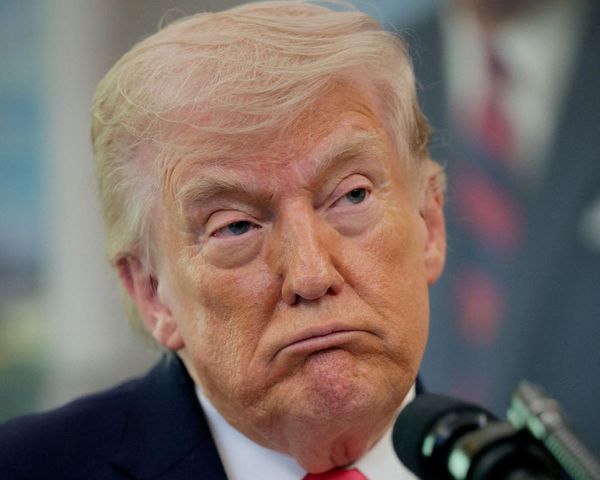
Stocks in the US closed higher overnight, with the S&P and Dow up around 0.35% each, even as president Donald Trump threatened to deploy the United States military to American cities to quell civil unrest.
Asian markets also continued their upward march, with the Hang Send up 0.7%, Japan’s Nikkei 225 up nearly 1.2% and the Shanghai Stock Exchange rising 0.2%. Europe is expected to follow suit.
As Michael Hewson, chief market analyst at CMC Markets UK, explains:
The main focus once again appeared on the longer-term prospects of the easing of lockdowns across the world, though if the violence on US streets continues for much longer US investors might have to cope with a lockdown of a different kind, imposed by the National Guard.
This is something that President Trump hinted he might well do if the various states aren’t able to contain the outbreaks of violence across US cities.
A deluge of PMI data on Monday also seems to have buoyed sentiment, including those in Italy which were much better than expected given the impact that Covid-19 and the resulting lockdown had on the country’s economy.
But as Hewson points out, even as lockdowns ease across Asia and Europe there is an “undercurrent of anxiety” that some countries might be leaving their coronavirus lockdowns too quickly ,which could put some populations at risk of a second wave of infections.
However, that is not expected to impact the positive open across major European indices, at least not this morning. We’ll bring you that print once trading begins.
The agenda:
- 9.30am BST: UK mortgage approvals, net mortgage lending, and consumer credit for April