Closing post
And finally…the London stock market has closed in the red tonight, just hours after Bank of England deputy governor Sarah Breeden’s warning of a possible correction.
The FTSE 100 share index has closed down 78 points, or 0.75%, at 10,379 points tonight.
Packaging firm Mondi (-11%) was the top faller, after warning that the Iran war was pushing up its costs.
Here are today’s main stories:
Updated
Here’s our news story about the US Department of Justice dropping its criminal investigation against Federal Reserve chair Jerome Powell, clearing the path for Donald Trump’s new nominee for chair to be confirmed.
Iran conflict knocks US consumer confidence
US consumer confidence has dropped this month, as fears grow that the Iran war is pushing up costs.
The University of Michigan’s consumer sentiment index has dropped this month, down 3.5 points to 49.8 points.
The measures of current economic conditions and of consumer expectations both declined during April.
Surveys of Consumers director Joanne Hsu said levels of consumer morale were now comparable to the trough seen in June 2022, adding:
Decreases in sentiment were seen across political party, income, age, and education.
Expected business conditions declined for both short and long time horizons, nearly matching year-ago readings when the reciprocal tariff regime was implemented. After the two-week cease-fire was announced and gas prices softened a touch, sentiment recovered a modest portion of its early-month losses.
The Iran conflict appears to influence consumer views primarily through shocks to gasoline and potentially other prices. In contrast, military and diplomatic developments that do not lift supply constraints or lower energy prices are unlikely to buoy consumers.
‘The damage is done’: global oil crisis has changed fossil fuel industry for ever, IEA chief says
The oil crisis triggered by the Iran war has changed the fossil fuel industry for ever, turning countries away from fossil fuels to secure energy supplies, the world’s leading energy economist has said.
Fatih Birol, the executive director of the International Energy Agency (IEA), also said that, despite pressure, the UK should forgo much of its potential North Sea expansion.
Speaking exclusively to the Guardian, Birol said a key effect of the US-Israel war on Iran was that countries would lose trust in fossil fuels and demand for them would reduce.
“Their perception of risk and reliability will change. Governments will review their energy strategies. There will be a significant boost to renewables and nuclear power and a further shift towards a more electrified future,” he said. “And this will cut into the main markets for oil.”
Justice Dept to close investigation into Powell over Federal Reserve renovations
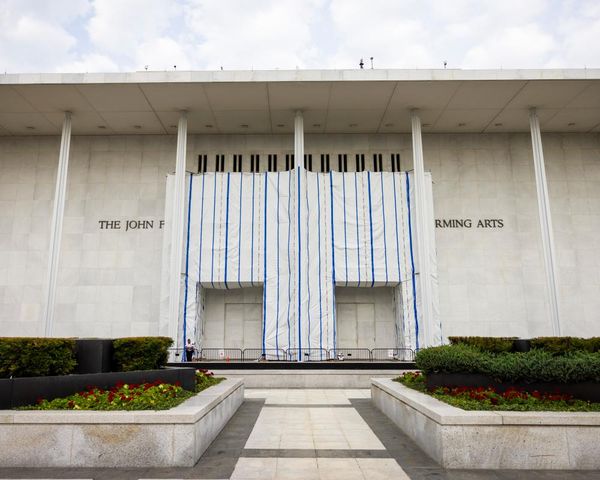
The US justice department is closing the criminal probe into Federal Reserve Chair Jerome Powell over cost overruns in renovations at the Fed.
The move, announced by US Attorney for DC Jeanine Pirro, appears to clear the way for Kevin Warsh, President Donald Trump’s pick to succeed Powell, to get confirmed for the role.
The investigation, announced in January, was examining whether Powell lied to Congress about the scope of a project to renovate the Fed’s buildings.
Today, Pirro says there will be an internal investigation led by the central bank’s inspector general into the project.
Updated
The US tech-focused Nasdaq index has hit a new record high in early trading, lifted by those chip stocks….
Intel shares surge after blowout results
Wall Street has opened a little higher, lifted by a strong rally in chip stocks.
Intel has surged by 27% at the start of trading, after smashing revenues expectations last night as the AI boom drives demand for its products.
Intel predicted it would achieve revenues of between $13.8bn and $14.8bn in the current quarter, ahead of analyst expectations of around $13bn.
Other semiconductor stocks are rallying too – with Qualcomm jumping 12% and AMD up by 10.5%.
This has helped to lift the S&P 500 share index by 12 points, or 0.17%, to 7,120 at the start of trading in New York.
RAC: Pump prices falling but slower than anticipated.
There’s an old saying that the price of motor fuel goes up like a rocket, and down like a feather.
And it appears to be coming true again.
New data from the RAC shows that the average price of petrol has dipped by just 0.08p today to 157.22p a litre; that’s stil 18.4% higher than when the Iran war began.
Diesel is down 0.2p at 189.59p a litre, 33% higher than at the end of February.
RAC head of policy Simon Williams says retail prices are lagging falls in wholesale fuel prices:
“Pump prices aren’t falling at the rate that our analysis of wholesale data indicates they should, with petrol only having dropped a penny a litre since 15 April and diesel by 2p. Interestingly, we note that prices in Northern Ireland have reduced more quickly as unleaded has already come down by 2p and diesel by more than 4p in the last week.
“The fact the price of oil went back above $100 on Wednesday having been below that mark for 10 days is no doubt cause for concern for retailers. Despite this the cost of both fuels on the wholesale market is still lower than it has been, particularly so for diesel - so drivers really ought to see some cheaper prices at the forecourts in the coming days.”
Oil has now slipped back, following reports that Iranian foreign minister Abbas Araghchi is expected to travel to Pakistan for talks with the US this weekend.
Araghchi is expected to arrive in Islamabad tonight with a small delegation, according to government sources.
Following important discussions with the Pakistani mediation team, a second round of Islamabad peace talks between the United States and Iran is expected, government sources say.
A U.S. logistics and security team understood to already be present in Islamabad to facilitate the negotiation process.
Brent crude has now dipped below $105 a barrel, slightly lower on the day.
Updated
Procter & Gamble has become the latest company to warn that the Iran war is pushing up its costs.
In its latest financial results, P&G flagged that now expects higher commodity costs to cost it around $150m after tax this financial year, on top of $400, of higher costs from tariffs.
Despite that, P&G is sticking with its previous financial guidance, after reporting sales growth of 7% in the last quarter.
Shailesh Jejurikar, president and chief executive officer of P&G, says:
“We’re increasing investments to accelerate momentum with consumers despite the challenging geopolitical and economic environment, while still maintaining our guidance ranges for the fiscal year.
We continue to believe the best path to sustainable, balanced growth is by strengthening execution of our integrated growth strategy. We are confident in the progress we’re making and excited about the longer-term opportunity to leverage P&G’s strengths and unique capabilities to create the CPG [consumer packaged goods] company of the future.”
Oil hits highest level since US-Iran ceasefire began
The oil price has hit its highest level since the US and Iran agreed a ceasefire more than two weeks ago.
Brent crude traded as high as $107.48 a barrel this morning, its highest level since 7 April, the day when the US and Iran agreed to a conditional ceasefire.
That deal included a temporary reopening of the strait of Hormuz, after Donald Trump had threatened Iran with widespread destruction.
But with the strait still largely blockaged, and oil production in the region having more than halved since the war began (see earlier post), anxiety over the conflict is rising again today.
Brent crude had been trading around $72 a barrel before the war began, and hit $119.50 in early March (corrected).
Oil is up today despite Trump announcing last night that a ceasefire between Israel and Lebanon would be extended by three weeks.
But, when asked how long he was willing to wait for a long-term peace deal with Iran, Trump replied: “Don’t rush me”.
The risks to the oil price “remain tilted to the upside”, Fawad Razaqzada, market analyst at Forex.com, explains, as the US-Iran stalemate drags on.
Razaqzada adds:
“Oil has been on a firm upward trajectory this week, clearly driven by the collapse of planned talks between the US and Iran.
Tehran has refused to engage while the naval blockade remains in place, fuelling concerns over tightening supply and pushing prices well above $100 per barrel again.
There was a brief pause when Trump opted to extend the ceasefire, but the effect proved short-lived. With no clear timeline for negotiations and both sides entrenched, markets remain in limbo — and prices continue to grind higher.”
Updated
Fertiliser supplies hit by 'global urea supply shock'
Fertiliser maker Yara has warned of tight supply compared to demand in the months ahead as the blockage of the strait of Hormuz had led to a “global urea supply shock”.
The Norwegian firm said affected production in several countries, and this had been “further amplified by Russian nitrogen plants affected by drone attacks”.
The blockage of the Strait of Hormuz disrupts around 1/3 of global traded urea, as well as other key raw materials for fertilizer production including natural gas, ammonia, phosphates and sulphur.
The company revealed a better than expected 40% rise in quarterly underlying profits to $898m as the price of fertiliser increased. It said it was able to maintain high production levels “enabling reliable supply” of fertiliser by being flexible about where it sourced ammonia when gas prices rose in Europe.
Svein Tore Holsether, the chief executive of Yara, said:
“Global crop prices are only marginally increasing while input costs have increased, and that’s putting an additional burden on farmers, and farmers across the world did not have robust margins before this.”
Russia’s central bank has cut interest rates in an attempt to boost economic growth.
The Bank of Russia has lowered its benchmark rate by 50 basis points, or half a percentage point, to 14.50%.
The reduction follows signs that Russia’s economy is ailing despite the fiscal boost from higher oil prices.
The Bank of Russia says:
According to high-frequency data, the Russian economy slowed in 2026 Q1, in part due to the adjustment to the earlier tax changes.
The other contributors were a fewer number of business days and unfavourable weather conditions. Investment activity remains subdued. Consumer demand growth continues to decelerate, despite a slight pick-up in March.
Taking into account that economic activity dynamics in 2026 Q1 were largely driven by one-off factors, the Bank of Russia has retained its GDP growth forecast for 2026 at 0.5–1.5%.
European markets head for first weekly loss since late March
European stock markets are on track for their first weekly loss in over one month.
The pan-European Stoxx 600 index has dropped by almost 2.8% so far this week. That would be its first weekly decline since 16-20 March, after four weeks of gains.
Today, the Stoxx 600 is down around 0.9%, with Germany’s Dax losing 0.5% and France’s CAC 40 down 1.2%. In London, the FTSE 100 is now down 66 points or -0.64%.
Markets are entering the final day of the trading week in a cautious mood, says Jim Reid of Deutsche Bank:
US-Iran tensions show no signs of easing while the Strait of Hormuz remains essentially closed.
Ahead of the weekend, there have been no signs of further talks, with Trump saying the “I don’t want to rush myself” when it comes to making a deal, while also claiming that “whatever I’m doing, it seems to be working very well”. Meanwhile, we saw Iran’s President, Foreign Minister and Parliamentary Speaker share similar messages of regime “unity” in short succession last night, after Trump posts claimed “infighting” between “Hardliners” and “Moderates” in Iran.
The rhetoric had also leant in an escalatory direction earlier yesterday, with Trump posting that he’d ordered the US Navy to shoot boats placing mines in the Strait of Hormuz. So all that has left lingering uncertainty, even as Israel and Lebanon have agreed overnight to extend their ceasefire by three weeks according to the White House.
Hapag-Lloyd says one ship has crossed strait of Hormuz
Container shipping group Hapag-Lloyd has reported that one of its ships has crossed the Strait of Hormuz but did not have any information on the circumstances or timing, Reuters reports.
That leaves four Hapag ships in the Gulf, which the company says are staffed with 100 crew, who are well-supplied with food and water.
Updated
Goldman: Gulf oil supply is 57% below pre-war levels
Gulf crude oil production has more than halved since the Iran war began, a new report from Goldman Sachs shows.
Goldman have calculated that oil production has fallen by 14.5 million barrels per day, or 57%, from pre-war levels, due to the closure of the strait of Hormuz and attacks on energy production facilities in the region.
The Investment Bank predicts that Gulf production is likely to mostly recover within a few months of reopening assuming:
no renewed strikes on oil assets and
a full and safe reopening of the Strait in coming months.
But, they also see “significant risks” that the last leg of the recovery will take significantly longer and may not fully materialize, especially if the Strait were to remain closed for much longer.
Interestingly, Goldman estimate that the available empty tanker capacity in the Gulf has halved since the start of the war, which would make it harder to boost supply once a peace deal is reached.
Goldman say that once the Strait safely re-opens, the key potential constraints on production will likely be
availability of pipeline capacity and empty vessels to destock previously produced oil, and
availability of materials and workers for field workovers, and
well flow rates
UK companies ramp up selling price expectations after surge in energy prices
UK companies are expecting to hike prices at a much faster rate over the next year, as the Iran war drives up energy costs.
New data from the Bank of England shows that companies expect to have raised prices by 4.4% by April 2027.
Back in February, firms had only expected to have raised their prices by 3.4% in a year’s time.
The increases suggests firms are “adjusting their expectations as a result of the recent increases in energy prices,” the Bank says.
Its latest survey of chief financial officers from small, medium and large UK businesses also found that expectations for year-ahead CPI inflation rose to 3.5% in the three months to April, up from 3.1% in the three months to March.
UK mortgage rates slip back again
The average interest rates on UK mortgages are continuing to slip back from the highs set earlier this month.
Data provider Moneyfacts reports:
The average 2-year fixed residential mortgage rate today is 5.81%. This is down from 5.82% the previous working day.
The average 5-year fixed residential mortgage rate today is 5.70%. This is down from 5.72% the previous working day.
Sarah Breeden’s warning that share prices do not reflect the many risks facing the global economy may have pushed the market down this morning, suggests Russ Mould, investment director at AJ Bell.
He explains:
The stock market reflects what investors think will happen in the future. While markets have been wobbly since the Middle East conflict unfolded, they didn’t pull back sharply in the early stages of the crisis, and more recently they’ve shown resilience. That suggests investors are confident the war will end quickly, and elevated oil and gas prices will retreat as supply is restored.
Oil prices currently trade at $105 per barrel which is higher than the sub-$70 price seen at the start of 2026, but below the $120+ level when Russia invaded Ukraine in 2022. One could argue current oil prices are high enough to cause pain for businesses and consumers as everything becomes more expensive. There are already signs it is causing problems for companies as they report cautious outlook statements.
Central banks such as the Bank of England will be watching key data points around inflation and the jobs market to see if interest rates need to change. It’s a tough call as a swift resolution to the Middle East could mean that an inflation spike is only temporary, and that monetary policy may not need to go down a different path. But wait too long to respond and central banks could face criticism that once again they didn’t act fast enough.
It’s unusual for a Bank of England official to explicitly warn about a potential stock market pullback, and the comment might have contributed to some of the FTSE 100’s decline on Friday.
Updated
Iran crisis hitting the German economy hard as business morale weakens
German business morale has deteriorated this month, as energy costs stemming from the Iran conflict threaten to derail the country’s economic revival.
The Ifo institute has reported that its business climate index fell to 84.4 in April from 86.3 in March, which is the lowest reading since May 2020, early in the Covid-19 pandemic.
An index tracking economic expectations dropped to 83.3 in April, down from 85.9 in March, which is the lowest level since August 2023.
Clemens Fuest, president of the Ifo institute, says:
Companies are considerably more pessimistic about the coming months.
The German economy is being hit hard by the Iran crisis.
Updated
Oil pushing higher again
The oil price has risen by almost 1% this morning, as the US and Iran continue to both impose blockades in the strait of Hormuz.
Brent crude has riesn to $106 a barrel this morning, towards the two-week high of $107.40 set yesterday.
Energy prices picked up after Donald Trump ordered the US military to “shoot and kill” small Iranian boats that deploy mines to choke traffic through the strait of Hormuz.
Hopes of an early breakthrough also withered after Trump replied “Don’t rush me” when asked how long he was willing to wait for a long-term peace deal with Iran.
There is some relief, though, that the US president also announced that a ceasefire between Israel and Lebanon would be extended by three weeks.
Susannah Streeter, chief investment strategist at Wealth Club, explains:
‘It’s shaping up to be a frustrating Friday, with oil prices on the march higher yet again and companies and consumers left counting the cost of the conflict. In just a week, we’ve had a sharp reversal of hope, with the key strait of Hormuz firmly shut and President Trump issuing shoot-to-kill orders to the US Navy for any boats laying mines.
Brent crude is up around 20% on the week and is trading around the hot level of $105 a barrel, as any hopes of an immediate easing of the crisis are shattered. President Trump has stressed he’s in no rush to end the war, and with the ceasefire extended for another three weeks, there’s set to be fresh financial pain ahead as key shipments from the region remain blocked. That is set to keep costs elevated for a vast array of commodities, from oil and gas to fertiliser and helium, which are vital for electronics manufacturing.
Updated
FTSE 100 opens lower
The London stock market is dropping in early trading, as investors digest the lack of progress towards ending the Iran war, and Sarah Breeden’s warning about stock valuations.
The FTSE 100 share index is down 48 points, or 0.46%, at 10,408 points.
Mondi (-5.8%) is the top faller, after the packaging group warned this morning that the Middle East conflict was pushing up its costs.
Updated
Japan's Nikkei closes at record high
Japan’s Nikkei share index has ended the week at a new closing record high.
Stocks rallied as enthusiasm over earnings reports from the technology sector trumped anxiety over the Middle East conflict.
This lifted the Nikkei 225 index to a new closing high of 59,716.18 points, meaning it has risen by 2.1% this week.
Updated
Packaging firm Mondi lifting prices after Iran war drove up costs
Paper and packaging group Mondi is lifting its prices to offset higher costs due to the Iran war, amid ongoing tough trading that has seen it close factories and cut jobs across Europe.
The group – headquartered in Weybridge, Surrey – said 450 jobs were being axed this year after plans announced earlier this month to shut a further three factories in Hungary, Poland and Germany, PA Media reports.
It said the closures add to three recently announced across Turkey, Hungary and Germany as it takes “targeted actions to strengthen our competitive advantage” and looks to cut costs.
Mondi, which has operations worldwide including a factory in Birmingham, said trading had remained “challenging” in the first quarter of 2026.
The FTSE 100 group is hiking prices to offset rising costs caused by the Middle East conflict and soaring oil and energy prices, telling shareholders this morning:
Across the business, we have however experienced increased energy, raw material and logistics costs. We are actively responding with pricing actions.
“While there is a customary lag, we expect the impact of these price increases to take full effect in the third quarter of this year.”
Updated
Investor: 'Markets appear to be experiencing increasingly marked cognitive dissonance'
On the issue of high stock markets… Emma Moriarty, portfolio manager at CG Asset Management (CGAM) reckons they’re exhibiting “increasingly marked cognitive dissonance”.
She suggests that share valuations don’t properly account for the energy shock caused by the Iran war, and are too optimistic, explaining:
The strait of Hormuz has been shut for eight weeks. The last ships went through on 28 February and are arriving at their destination now, implying that we have effectively reached the point where pre-closure supply is exhausted.
Commodity markets and government bond markets have repriced to reflect this. Oil and gas price curves continue to show tightness of supply in the spot and the next few months’ futures markets.
Government bond markets have priced in an inflation shock. In the UK, nominal interest rates have risen by around 50bp across the curve since pre-war levels.
OIS markets, which began the year pricing in 2-3 cuts to Bank Rate, now price in 1-2 Bank Rate rises, a reflection of stickier inflation expectations.
At the same time, short-term UK real interest rates have fallen, a function of increasing market expectations of inflation and lower growth over the coming years.
The impacts are also showing up in the real economy. Petrol and diesel prices are higher; industry bodies are warning of potential double-digit food inflation; the number of payrolled employees has fallen; demand destruction is beginning, with mass flight cancellations being one of the most visible examples.
By contrast, equity markets have continued their optimistic run: after a steep drawdown in the middle of March, the MSCI World Index is currently around 5% higher than it began the year – even after accounting for GBP appreciation over the period.
Updated
Motor fuel sales drove up retail sales last month
Retail sales across Britain last month were boosted by the dash to fill up cars as the Iran war drove up petrol and diesel prices, according to the Office for National Statistics this morning.
The ONS has reported that retail sales in Great Britain rose by 0.7% in March (up from a fall of 0.6% in February), as the Iran war pushed motor fuel prices steadily higher.
Retail sales volumes excluding automotive fuel rose by a more modest 0.2% over the month.
Over the January-March quarter, retail sales volumes rose by 1.6%.
ONS senior statistician Hannah Finselbach explains:
Retail sales rose in the three months to March, with commercial art galleries doing well earlier in the quarter and sales in beauty products stores rising as retailers reported launching new collections. Online shops also saw strong sales across the period.
“Motor fuel sales were up on the quarter, with retailers commenting that many motorists had been filling up their tanks in March following the start of conflict in the Middle East.”
That is slightly perplexing, though, as yesterday’s public finances showed that the amount collected in fuel duty in March was the lowest for any month since July 2023.
Updated
Trump threatens UK with 'big tariff' over digital services tax
The threat of a new UK-US trade war has reared up again, after Donald Trump has threatened to impose tariffs on the UK if it does not drop its digital services tax on US social media firms.
Speaking to reporters from the Oval Office on Thursday, the US president said:
We’ve been looking at it and we can meet that very easily by just putting a big tariff on the UK, so they better be careful.
If they don’t drop the tax, we’ll probably put a big tariff on the UK.”
The digital services tax, which was introduced in 2020, imposes a 2% levy on the revenues of several major US tech companies.
The Trump administration has been pushing back against it; in December, the US paused its promised multibillion-pound investment into UK tech in protest against trade barriers.
Updated
Introduction: Stock markets are too high and set to fall, says Bank of England deputy
Good morning, and welcome to our rolling coverage of business, the financial markets and the world economy.
Stock markets are too high, and are going to drop back at some point due to the many risks facing the global economy, one of Britain’s top central bankers has warned.
Bank of England deputy governor Sarah Breeden has issued the prediction to the BBC, at a time when the US stock market has risen to record levels despite the Middle East conflict.
She points out:
There’s a lot of risk out there and yet asset prices are at all-time highs. We expect there will be an adjustment at some point.
This chimes with the latest assessment from the Bank’s financial policy committee, which pointed to the risks from high AI valuations, AI disruption, and the private credit market.
As she explains, the big fear is that several risks crystallise at the same time – such as an economic shock that leads to a rapid readjustment of AI valuations, and hurts confidence in private credit.
Breeden is clear that she’s not predicting a correction imminently … but is focused on making the UK financial system strong enough to cope.
What we are watching for: is how might those prices fall? Will there be a sharp adjustment downwards? And if there is such an adjustment, how will that affect the economy?
I’m not saying it will happen today, tomorrow, in 12 months’ time. It’s ensuring that if it happens the system is resilient.
The agenda
7am BST: UK retail sales report for March
9am BST: IFO survey of German business confidence
10.30am BST: Russia interest rate decision
Updated