
Through the manipulation of the traditional five senses, food can be made to taste even more delicious. Research is currently underway to alter the flavor of food by making use of this tactic.
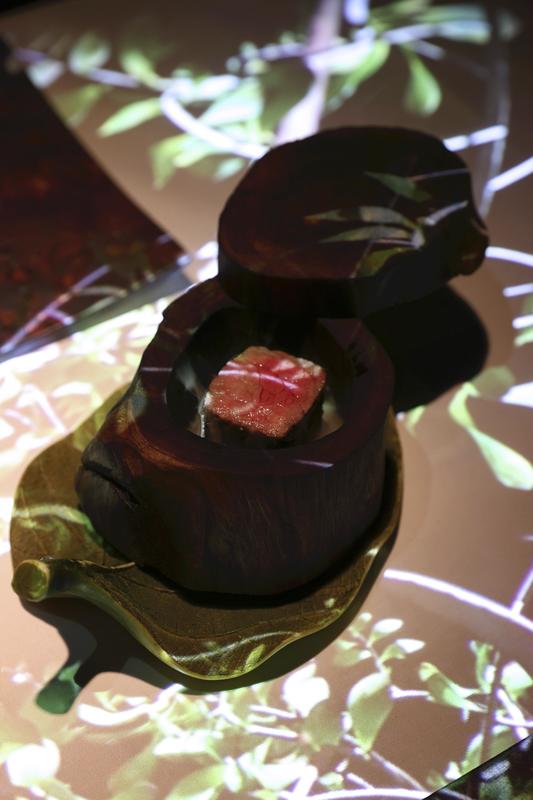
A video depicting the vigorous growth of tree branches was projected on a dining table of French restaurant Elan Vital in the Yoyogi area of Shibuya Ward, Tokyo, while the refreshing aroma of the woods wafted throughout the restaurant.
As the serving tray shaped like a stump was opened, roast beef was revealed within a cloud of white smoke. The rich flavor of the red-haired wagyu beef was a delight to my taste buds.
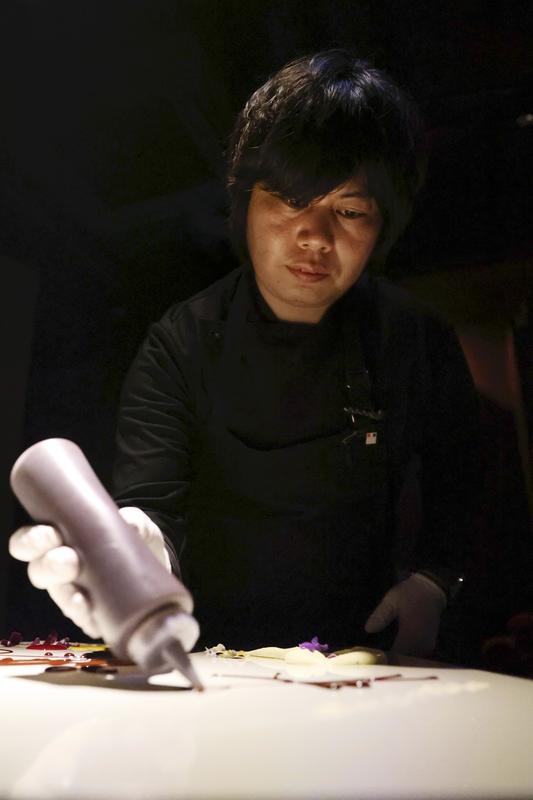
The restaurant's owner and chef Naoto Fukasaku, 35, is a practitioner of "molecular gastronomy," a type of cooking that analyzes food at the molecular level and puts ingredients to the best possible use.
He creates new flavors and textures with the help of science, such as freezing popcorn instantly with liquid nitrogen to change its texture, or creating foam with ingredients using carbon dioxide and adding acidity. His kitchen is like a science laboratory or factory, filled with such equipment as vacuum freeze-driers, distillers, lasers, soldering irons.
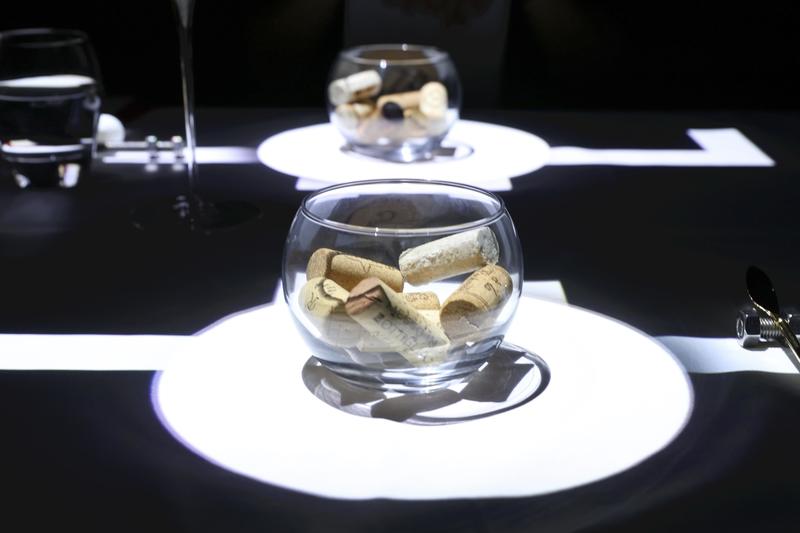
One of his creations is a risotto with the appearance of corks and texture that breaks up and melts in the mouth. This risotto is frozen at minus 45 C and then is drained to remove 99.9% of the liquid. Fukasaku said that he researched the optimum conditions for black truffles to bring out their aroma.
He experimented on scallops that had either been dehydrated, ripened or emulsified repeatedly to give them a texture similar to cheese. Fukasaku strives to develop cooking methods that take advantage of the flavor and nutrition of the ingredients.
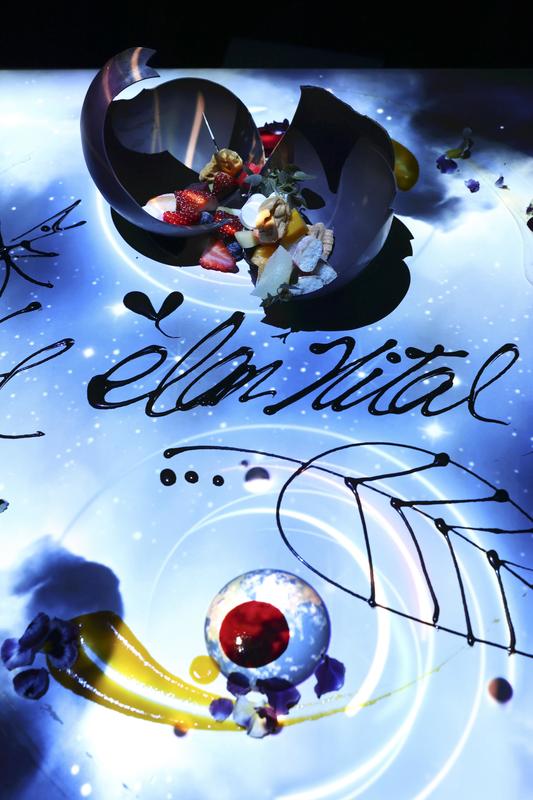
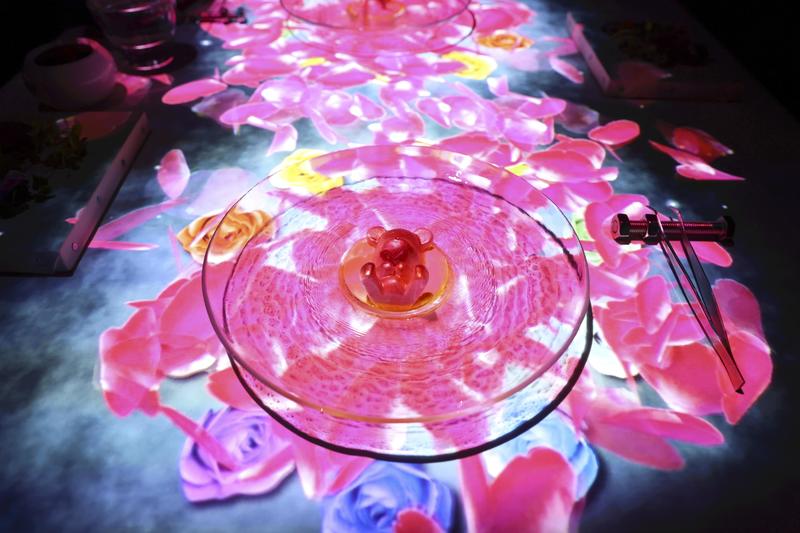
The dining tables are decorated with self-made digital images.
"If you become nervous simply for the fact that it's French cuisine, it's difficult to appreciate the deliciousness. So, I'm always thinking about how to provide my customers with an environment where they can enjoy dining," Fukasaku said.
Synergistic effects of sensations
While the senses of vision and taste are two separate entities, taste and smell can be manipulated by vision. The moment I noticed the forest aroma in the restaurant, I recalled my time at the laboratory of the University of Tokyo with Associate Prof. Takuji Narumi.
In early March, I entered his laboratory and found cold curry on a desk. A video of a simmering pot of curry was played above the cold curry. Suddenly, I began to be able to smell curry. Why was that?
The human brain constantly relies on the information received from the senses to predict what will happen next and sharpen its awareness. After seeing the video of the hot curry, my brain became more sensitive to the smell of curry and identified the smell with the cold curry before me. The sense of smell could help improve the taste of any dish you eat.
The synergy effect between different senses, such as sight and taste, or hearing and taste, is called cross-modal perception.
Research on taste and its relationship with multiple senses has advanced overseas. In 2008, a British and Italian team won the Ig Nobel Prize for the "sonic chip." The team asked examinees to wear headphones as they ate potato chips from a bag that had been left open for a while. The headphones amplified the sounds they made while chewing, which gave the impression of the chips being crisper and fresher than they actually were.
Narumi, 36, cites "immersion as well as strong relationships with images, sounds and food" as conditions for the manipulation of multiple senses. The imagery and staging presented at Elan Vital were a part of the carefully calculated plan utilizing molecular cuisine that creates flavors.
Said Narumi, "Even hospital food can taste richer if a bleak hospital room was changed to include a projection-mapped image."
The science of taste is profound indeed.
Read more from The Japan News at https://japannews.yomiuri.co.jp/












