I’ve seen your introductory poem to It’s About Love. What gave you the idea to mix your spoken word with your writing?
It just makes sense to me. Whenever I’m writing something longer, shorter pieces come out. Sometimes in character, sometimes to help me get a sense of what a relationship between characters is about. For the introductory spoken word pieces, it’s a way to make the blurb feel more interesting and immediate and to save me waffling on when anybody asks me what the story is about.
If you could bring any one of your characters to life, which would you choose?
My characters are full of bits I’ve stolen from real people, so I feel like I’m around them all the time. That’s a lame answer though, so if I had to choose, I’d go with Leia. Definitely. A strong girl, full of ideas, who loves films? I write the characters I want to meet. Even the bad guys. Leia is a projection of my teenage dream girl.
Did any of Luke’s experiences – both positive and negative – happen to you?
The story is set firmly in a world I know well, both the ups and the downs. Luke is very much based on a feeling I had aged 16, and still have now. That wrestle between where I’m from and what I feel like I want to do. The love and laughter and ugliness and violence and excitement and romance are all things I grew up with and made me who I am. I have experienced pretty much every situation Luke finds himself in at some point in my life, so yes. I have been lucky enough to go through things that feel like they’ve made me stronger. The whole book is soaked in my own memories.
It’s About Love uses lots of excerpts from film scripts, and involves quite a lot of references to films. What gave you the idea to do this?
It’s just what I always did, and still do. My life revolves around ideas and that’s just the way they come out sometimes. Scribbled shots on scraps of paper. Shot descriptions in my notes on my phone. Flashes of soundtrack and voice over. I think film was the first medium to genuinely grab me as being magical. The book is a celebration of that excitement.
One of my favourite things about the book was the quotations from different characters that featured at the beginning of chapters. Which of these is your favourite?
Those bits are fun, because I have to collect them rather than make them up sitting at my computer. I remember and create different ones all the time and most of them relate to where and who I’m from so using ones that fit specific characters in this story felt brilliant. It’s all part of my love letter to the place I grew up and the people who made me. My favourite one is actually the line that started the whole story and is a phrase that I use to describe myself and my work all the time: “My life is my scrapbook”. It was fun to give it to Zia, as he’s just the character who drops amazing lines without even realising.
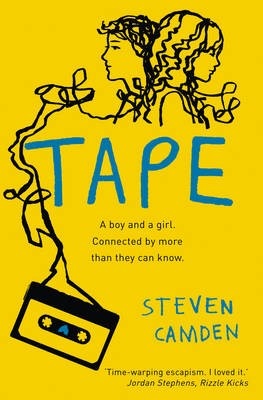
Which did you prefer writing: Tape or It’s About Love? How were the two experiences different?
TAPE was very much me writing for my 13-year-old self. When I was 13, I longed for stories that felt real and weren’t about spies or secret agents or escaping to somewhere else. I enjoyed that stuff, but more than that I wanted to meet characters I identified with and see them in situations that felt just like my life. I enjoyed writing a story that starts slowly and builds to a conclusion which hopefully communicates my belief that the only thing we can ever do is act on our instincts and trust that good will come of that. The fun was knowing my 13-year-old self would’ve loved it.
For It’s About Love, the whole process was much more messy. I wanted to write about home and all the sides of what I grew up with. I felt early on a real need to do my home justice and to communicate what I remembered and still hold dear. I think overall it was a richer process, both because of the subject matter and also as it was my second novel and I felt more equipped to play with a wider cast and more voices. I wrote so much stuff underneath and around the final manuscript (including a play about Luke, Zia and Tommy going to climb Mount Snowdon) that all contributed to the world feeling richer and more full to me. The story is for my sixteen year old self and I think there’s a more of him still inside me than the thirteen year old. I am so chuffed with how it turned out and with the fact that, as I hoped, it feels like the title is open to interpretation.
Which books – teen or adult – inspired you while writing It’s About Love?
Everything I took in was inspiring. There was no specific book. Elements of everything that I’ve loved in films and books and music and stories I was told and people I know all got poured into the mix. I watched lots of films I loved when I was sixteen. Things like Kickboxer, Grosse Point Blank, The Last Starfighter and Reservoir Dogs. I reread The Outsiders and The Basketball Diaries and I talked a lot to friends and family about memories and outlooks on life.
As I said, It’s About Love is a celebration of where I’m from and so the biggest influence were those memories of my Birmingham.
It’s About Love has some really hard-hitting scenes. Which was your favourite to write and which took the most time?
For me, when writing is going well, it feels like I’m watching things happen to my characters and just writing down the action. I like the scenes that feel like things are bubbling under the surface and then the satisfaction of getting to write the moments when those things boil over is ace. The fight with Marc, or rather the before and aftermath were fun to write as I remember both feelings very well.
Every scene took time to get just right and they all have multiple drafts, but the feeling of directing a film with the words meant that all of it felt exciting and visceral.
What are you working on now?
A few things. Another play. A new theatrical performance piece for myself and the beginnings of a new novel. In typical annoying fashion I have to say no more about it, but on the back of this one, I feel excited to play with the form.
I’m sure you’ve been asked this many times before, but what are your hints and tips for aspiring authors?
Finish things. Whether it is a short story. A song. A poem. Finish a draft. Allow it to be whatever it is in its first form, messy, scattered, rubbish. Then leave it alone for a bit, and then look at it. Don’t stop yourself digging that first time through. Throw out ideas and churn through them until you find something, as I find it’s the stuff underneath that initial topsoil that has the good bits in it. Just scraping around waiting for an amazing idea, can mean you never get to the stuff underneath. Dig dig dig. And ask questions later. If you’re lucky, you’ll find something interesting, and that’s when the real work starts.
And finally... what is it that you love most about writing and being an author?
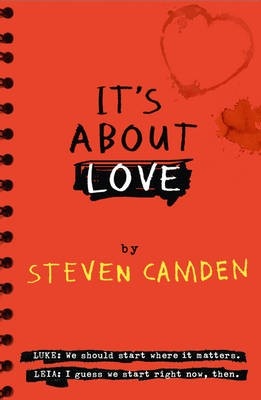
I love the idea of being found. The thought that a stranger might stumble across one of my stories and take a chance and feel some kind of connection is pretty much the most exciting thing in the world ever to me. When people get in touch saying that it has happened, I do a little dance, and then promise myself to keep trying to get better at what I do. This is just the beginning for me.
It’s About Love is this month’s Teen Book club focus.
You can read the first chapter here, and then look out for loads of cool stuff including blogs, and an awesome competition to write your own poem and work on it with Steven!