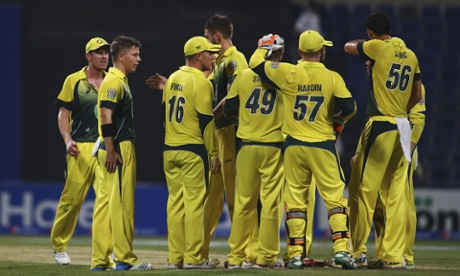
Sunday’s match between Australia and Pakistan may have been a dead rubber, but it wasn’t short of excitement. Australia won by one run after spinner Glenn Maxwell bowled a double-wicket maiden at the death, sealing a 3-0 series victory.
But things could have been quite different if the match had been played a fortnight ago.
In the 18th over, Pakistani batsman Fawad Alam was facing spinner Xavier Doherty. Steve Smith, fielding at slip, saw the batsman shaping to sweep and dashed across to leg slip as the ball was bowled. The oblivious Alam got a top edge and turned around to see Smith take an easy catch as he ran across.
Unsure of the rules, Alam remained on the field to seek clarification, but was eventually given out and returned to the pavilion without scoring.
Some Pakistani fans were up in arms, but it seems the umpires’ decision was correct.
The change to the laws
Law 41.7 states :
Any significant movement by any fielder after the ball comes into play, and before the ball reaches the striker, is unfair. In the event of such unfair movement, either umpire shall call and signal Dead ball.
This is further clarified by Law 41.8:
For close fielders anything other than minor adjustments to stance or position in relation to the striker is significant.
The Laws have yet to be updated on either the MCC or the ICC’s websites, but in the latest edition of the ICC Match Officials’ ODI Almanac, the law has been clarified to say that umpires must work to a “revised intent” of an anticipated future rewording of Law 41.7.
According to cricket.com.au, which claims to have seen a copy of the revisions, the almanac states:
“MCC has varied its position around significant movement according to the timing of when a close catching fielder can move … they will be redrafting this Law when next a rewrite occurs, so we are going to apply the revised intent that is in keeping with the games’ progress.
“As long as the movement of a close catching fielder is in response to the striker’s actions (the shot he is about to play or shaping to play), then movement is permitted before the ball reaches the striker.”
But there is also room for ambiguity:
“On the day, if the umpires believe any form of significant movement is unfair (in an attempt to deceive the batsman), then the Law still applies.”
Had the players been informed of the rule change? Is the new law still too ambiguous? Should Steve Smith’s catch have been allowed?