The ‘80s is surely one of the most liberally sampled decades in musical history, its perennially influential catalogue of timeless tracks finding a second life in countless hits of the ‘90s, ‘00s and beyond.
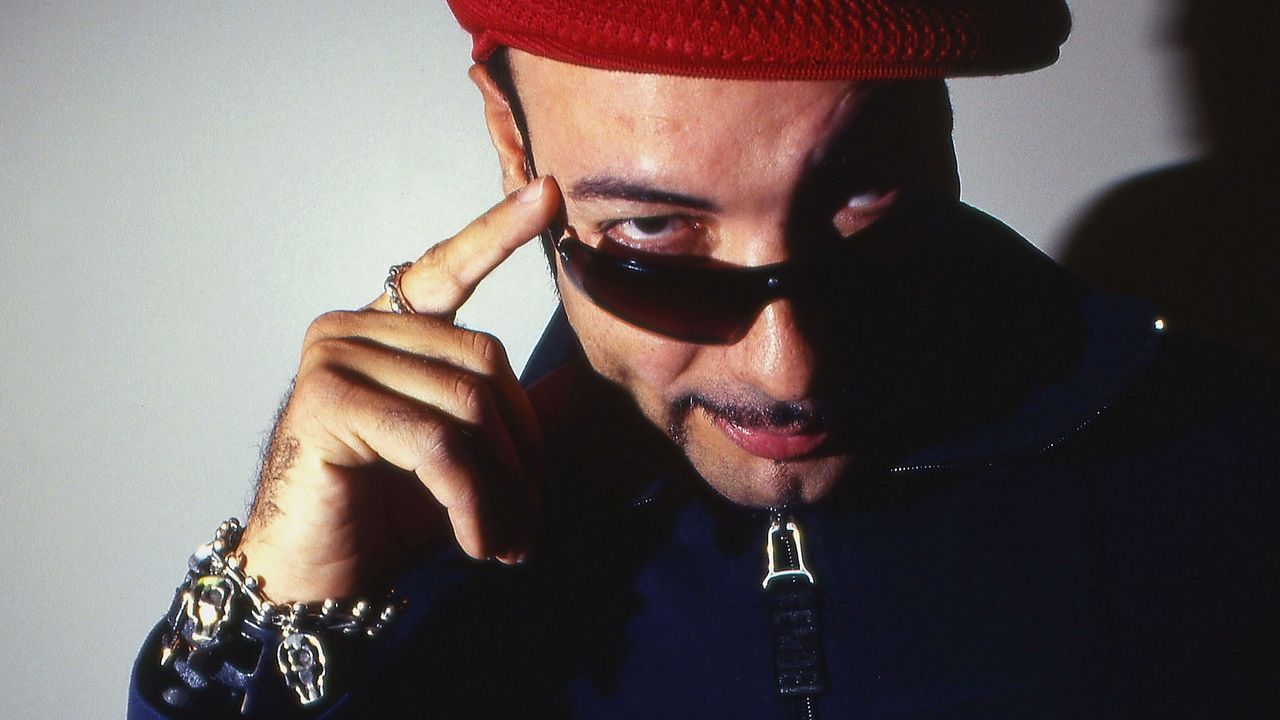
Reimagined in a new musical context, a sinuous funk bassline can anchor a head-nodding hip-hop beat and a well-placed snippet of a synth solo can become a thumping electro-pop hook. But among the canon of ‘80s-sampling gems, few have pulled off a transformation quite like Roger Sanchez’s Another Chance.
Lifting a vocal line from the opening of Toto’s I Won’t Hold You Back, a soaring power ballad from the group’s 1982 smash Toto IV, Roger Sanchez channeled the sample’s bittersweet melancholy into a bona fide house classic, layering Steve Lukather’s yearning croons over a propulsive groove that captures the aching urgency of fresh heartbreak.
Following its release in 2001, the song instantly resonated with audiences, rocketing to No 1 in the UK and top 10s across Europe while turning Sanchez from established DJ/producer to global house star almost overnight.
It’s no surprise that Sanchez reached back to the ‘80s for inspiration on Another Chance: he spent his teens immersed in the culture of that decade as a young New Yorker growing up in Queens. Raised on early hip-hop, graffiti and breakdancing, Sanchez’s interest in DJing and production was a natural next step, an interest that he only began to consider as a potential career move while studying architecture at Brooklyn’s Pratt Institute.
“One of my friends was a DJ, and I really admired his ability to control and move the crowd,” Sanchez told DJ Mag in 2021. “One day, he asked me to take over the decks at some house party, and I was hooked. From then, I would start collecting vinyl with the money from odd jobs that I had, working in clothing stores or selling shoes, whatever it was.”
As the end of his architectural degree drew nearer and academic pressures mounted, Sanchez was faced with a choice: double down on DJing or abandon it altogether. It was his father that helped him decide. “One day, he was like, ‘if you really love this DJing thing, if you’re not really wholeheartedly into architecture, why don’t you spend your time DJing?” Sanchez recalls. “You never know, you might become the best DJ in the world!’”
Buoyed with a newfound confidence, Sanchez took a year off from school and dashed headlong into a DJ career, finding early success with 1990’s Luv Dancin, released on storied New York house label Strictly Rhythm. As the decade rolled on, Sanchez began to make a name for himself on the international DJ circuit while steadily issuing a series of well-received singles, but the new millennium arrived with a new challenge: record his debut album.
As the project began to take shape, Sanchez felt that it needed a more “underground” track to balance out the commercial-leaning material he’d already recorded. “I thought: ‘you know what this album needs? It needs another underground track. I’ve done enough crossover tracks’”, he told Ministry of Sound in 2021. (The irony isn’t lost on Sanchez that it was this very “underground” track that became a global sensation.)
For Sanchez, the creative process often began with sampling, a technique inspired by his deep roots in hip-hop. “Sampling for me, really came from the hip-hop roots of where I started my DJing and production career,” he told Ministry of Sound. “Scratching, cutting and all those techniques, I’ve managed to graft that on to what I do with house music, and the same thing happened with my production.”
“Inevitably, I would start collecting all these samples and figuring out how I wanted to use them,” Sanchez recalls. “With Toto, that one came from a gig that I’d done in Montreal. The following day I went record shopping and bought a ton of vinyl at this bargain basement store, and that album was 99c.”
"When you hear that vocal, there’s something so emotionally bittersweet about it"
Dropping the needle on Toto’s IV, Sanchez was immediately captivated by I Won’t Hold You Back’s “melancholy piano” and opening chords, but it was the vocals that sealed the deal. “When you hear that vocal, there’s something so emotionally bittersweet about it,” he says. “That just inspired me to create something that captured that bittersweet emotion.”
While Sanchez admits he doesn’t typically work with “blatant samples”, instead preferring to rework sounds into something unrecognizable, he felt that he needed to leave Lukather’s vocals largely untouched. "Lyrically, it just made the track, and hit something I'd gone through," he says.
Sampling both the chords and the vocal with the E-mu Emulator and Akai S950, Sanchez cranked up the tempo on the vocal to create the main hook and arranged the chopped-up chords around it, layering additional chords played on the piano over the top. The distinctive effect on the chords came courtesy of the Emulator’s phaser effect, which Sanchez used to introduce an “emotional rise and fall” as the track progresses.
With the fundamentals in place, Sanchez added drums using another E-mu machine, the SP-1200 – a classic drum machine favoured by early hip-hop producers – before recording a handful of live elements to inject some energy. “I had my bass player come in and play the bassline and the guitar solo in the middle of the track, and some guitar riffs,” he says. “I added a lot more live elements to it because it felt that it needed that, and it really came together.”
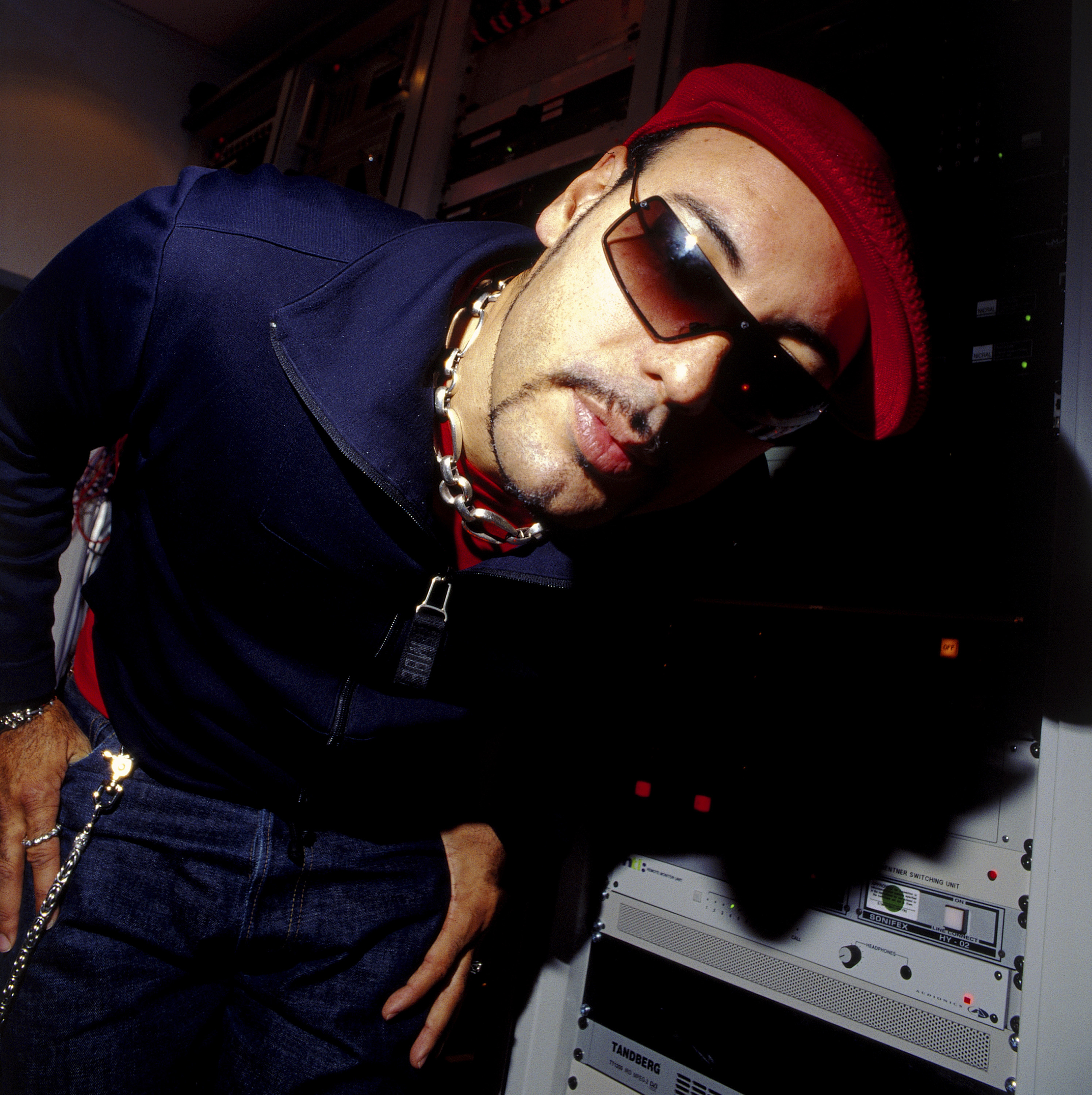
Once Another Chance was complete and the album was finished, First Contact was released through UK house institution Defected Records, and it was label head Simon Dunmore that identified the track’s potential. “When he heard ‘Another Chance,’ he said, ‘That’s the track. That’s the one we’re going to go with,’” Sanchez recalls. “I was like, ‘okay, fine, cool.’ That was it – I really had no idea what would happen.”
It didn’t take long for Another Chance to strike a chord with listeners – Sanchez recalls playing the test pressing for partygoers at London nightclub Pacha and receiving an ecstatic response almost immediately. “Right after I play the track, five different girls came up: ‘What was that record?’ And then that would happen at literally every gig that I would play. I was thinking, ‘this could be the big one!’”
Following its official release, Another Chance soared straight to No 1 in the UK, before hitting Top 10s across Europe and catapulting Sanchez to house stardom, an experience he describes as feeling like a warp-speed launch into outer space. A blitz of press and media coverage ensued, and Sanchez was instantly elevated to the status of superstar DJ.
The impact of Another Chance is not to be understated, and while house music was already firmly embedded in the musical mainstream by the time of its release, Sanchez’s bittersweet banger rode the wave of the genre’s ‘90s crossover success straight into a millennial boom that saw pop-tinged vocal house become a dominant force in the wider cultural consciousness.
"People tell me they’ve met on the dancefloor to Another Chance and fallen in love, and this is the track that brought them together"
For Sanchez, though, it wasn’t the track’s commercial success that brought him the most fulfilment, but the way it brought his fans together. “The most common story I get from fans and people who have really connected with the song is they’ve met and found love on the dancefloor to it,” he says. “People tell me they’ve met on the dancefloor to Another Chance and fallen in love, and 10, 20 years later with their kids, this is the track that brought them together.”
While Another Chance connected with millions of listeners around the world, the man behind its iconic vocal hook unfortunately remained resistant to its charms. “I heard that Steve Lukather from Toto was performing around the time Another Chance had gone to No 1 in the UK,” Sanchez told The Guardian last year.
“He said: ‘Here’s a record that some DJ turned into a No 1 and made us a lot of money. I can’t stand it, but here’s the original version.’ He got 90% of the publishing rights, so he can’t have been that mad!”