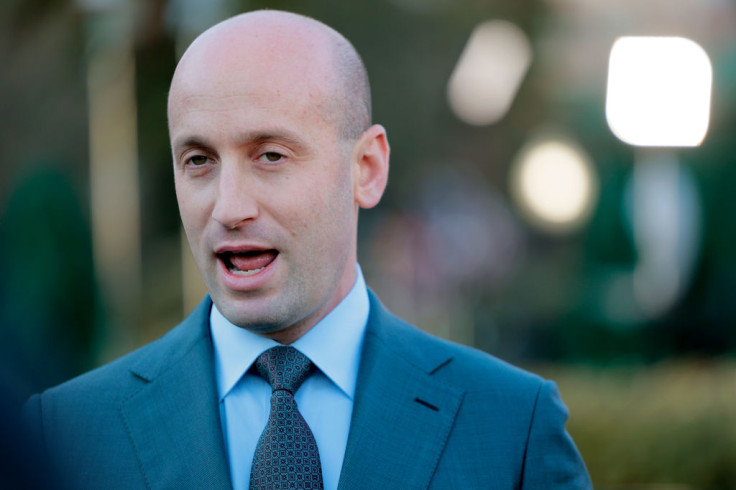
Stephen Miller, President Donald Trump's top homeland security adviser, has played a central role in shaping a U.S. military campaign that has carried out lethal strikes against suspected drug smugglers in the Caribbean and eastern Pacific, according to current and former U.S. officials cited in a sprawling report by The Washington Post.
The campaign, which began in September, marks an unprecedented expansion of U.S. military force against alleged narcotics traffickers. Since then, the United States has launched more than two dozen strikes on boats suspected of smuggling drugs, killing at least 99 people, according to officials familiar with the operations.
According to the Post, Miller pressed senior officials early in Trump's second term to explore aggressive options against transnational criminal groups, including the use of military force. After Mexican security operations reduced cartel activity along the southern border, officials said Miller and his team turned their focus toward maritime trafficking routes linked to Venezuela.
Miller helped steer the drafting of a classified presidential directive signed July 25 that authorized the use of lethal force against two dozen foreign criminal organizations designated by the administration as "terrorist organizations," officials said. That directive formed the legal basis for an Aug. 5 execute order issued by Defense Secretary Pete Hegseth, which set permissive targeting standards for military strikes.
The order allows lethal action based on "reasonable certainty" that adult males are affiliated with a designated group, while requiring "near certainty" that civilians are not present. Several current and former officials told the Post the criteria resemble "signature strikes" used during the post-9/11 counterterrorism campaigns, despite the absence of congressional authorization for a new armed conflict.


Critics, including former military lawyers and national security experts, warned that the approach stretches international law. "The idea that a government would kill people on the basis of 'reasonable certainty' that they're members of a drug cartel is beyond the pale," said Ryan Goodman, a former Pentagon special counsel, to The Post.
The campaign has also intersected with the administration's long-standing effort to increase pressure on Venezuelan President Nicolás Maduro. Trump has accused Maduro of overseeing "narco-terrorists" targeting the United States, claims disputed by U.S. intelligence assessments cited by lawmakers.
Miller's ability to shape the military effort reflects his growing influence across national security and immigration policy. Separate reporting by The Guardian in November described Miller as directing visa revocations and refugee policy through near-daily interagency calls, reinforcing his role as a key architect of Trump's hardline agenda.
© 2025 Latin Times. All rights reserved. Do not reproduce without permission.