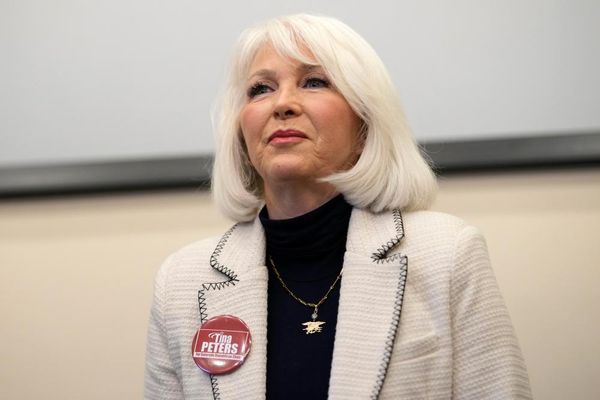
Stephanie Piko has always approached public service with an emphasis on substance over show. As former Mayor of Centennial, Colorado, she centered her leadership on building systems that work reliably, partnerships that endure, and a governance model grounded in long-term results. Since taking office in 2018, following six years on City Council, Piko has led with a disciplined, solutions-oriented mindset, consistently attentive to performance and sustainability.
Centennial itself is a young city, incorporated just 25 years ago out of necessity rather than ambition. Its residents organized to protect their neighborhoods from annexation and taxation without representation, forming a city through grassroots coordination and shared resolve. Piko arrived in Centennial at the moment of its founding, raising her family alongside the city's formative years. "Those early experiences taught me how a new city forms its identity and how much effort it takes to transform a collection of neighborhoods into a cohesive community," she shares.
Consequently, those experiences drew her into deeper community involvement. Even before holding elected office, Piko helped establish neighborhood traditions, supported local schools, and spent nearly a decade teaching and supporting technology programs. These roles demanded problem-solving and the ability to translate vision into daily function, laying the foundation for how she would later govern.
Her growing engagement eventually placed her at the center of one of the community's most difficult challenges, a contentious land‑use dispute unfolding near her neighborhood. The local concern soon expanded into a major land‑conservation effort involving state agencies, nonprofits, private landowners, and local government. The collaboration preserved critical open space and showcased the power of coordinated leadership. Just as importantly, it introduced Piko to the mechanics of governance, negotiation, and trust‑building at scale, experiences that would shape her path into public office.
By the time she joined the City Council in 2011, Centennial was uniquely positioned to innovate. Operating as a contract‑model city, it delivered services through private‑sector partners while maintaining a lean internal staff. With a disciplined budget and no municipal debt, Centennial demonstrated a level of fiscal rigor uncommon among cities of its size. Piko quickly recognized that this structure offered a strategic advantage.

As mayor, she continued to champion an efficient, responsive approach to public service. "I don't view the government as the solution to every problem," she remarks. "To me, it's a facilitator that reduces friction, convenes partners, and enables communities to function effectively."
This philosophy shaped her approach to public safety, where Centennial deepened its collaboration with regional law enforcement partners, expanded mental health co-responder programs, and emphasized prevention and trust alongside enforcement. The results are measurable. Centennial has earned national recognition as one of the safest and most livable cities in the country. Despite these accomplishments, she notes, "I always tell everyone that a city's strength isn't a trophy to be displayed. It's something we all need to ensure is renewed daily through care and vigilance."
Building on the belief that strong communities require ongoing attention, Piko turned her focus to the social fabric of the city. Coming out of the pandemic, Piko identified civic disconnection as one of the city's most significant risks. Zoom meetings and procedural compliance had replaced informal collaboration, weakening the relationships that underpin effective governance. In response, she launched neighborhood grant programs that empowered residents to rebuild connections on their own terms, reinforcing the idea that social capital is a form of infrastructure as vital as roads or utilities.
This emphasis on human connection also guided her response to rising homelessness. Piko established Centennial's Homelessness Coordinator as a street‑level role focused on repeated, trust‑based engagement. The position was designed to navigate complex systems on behalf of individuals who often cannot access services alone.
Her attention to the social and cultural dimensions of civic life extended beyond immediate service needs. Recognizing that a city's vitality includes its creative and communal expression, she played a significant role in leading the Centennial Arts and Cultural Foundation. "Art invites us to see our city differently," she stresses. "It creates moments of conversation and connection, and these are reminders that civic life is not only functional but also beautiful." As the co-founder and President, she helped establish a nonprofit structure that could bring public art and cultural initiatives into shared spaces across the city.
Piko's work within Centennial naturally expanded into broader arenas. Beyond City Hall, Piko's service extended to regional and national conversations about governance. Through board service and advisory roles, she brought Centennial's experiences into discussions about workforce development, infrastructure, and intergovernmental cooperation.
These efforts reflected her belief that cities learn best from one another when ideas are shared openly and adapted thoughtfully. Her contributions have been acknowledged in various ways over the years, including recognition by the Common Sense Institute, which awarded her the Visionaries for the Future honor at its Free Enterprise Summit in 2025.
Even after completing her mayoral term, Piko's commitment to public life hasn't diminished. She remains active through advocacy, public speaking, and consulting, and she plans to pursue innovative private-sector strategies designed to bridge the gap between businesses, government entities, and the communities they serve.
Piko hopes to be a voice in addressing the many policy challenges facing her region and Colorado. She views mentorship and policy dialogue as natural extensions of her experience, offering ways to continue contributing without holding office. "Public service doesn't end when a role does," she states. "It simply changes form, carrying forward in new ways."