The perfect golf grip is one of the most important factors that determines success in golf, and this crucial fundamental of the golf swing is something all amateur golfers can master with the right advice.
Some golfers will naturally play with a strong or a weak grip, but this can make it difficult to square the club face at impact - causing you to pull iron shots or slice the ball.
In this video, article and handy step by step GIF image, Golf Monthly Top 50 Coaches Kristian Baker and Alex Elliott provide a comprehensive guide to the perfect golf grip...
Step By Step Guide To The Perfect Golf Grip
While there is some room for personal preference with how you grip the golf club, there are some key fundamentals that will ensure your hands work in partnership effectively.
This article focuses on a neutral golf grip, which will help to straighten your ball flight and improve your strike.
For beginners, the neutral grip is certainly something you should be aspiring for, as this will help you to deliver the club squarely at impact and hit shots without too much side spin.
It's important not to get disheartened when working on your golf grip, as similarly to understanding how far to stand from the golf ball, it can take a little time to get used to and being resilient in your practice will pay off in the long run.
Step 1: The Left Hand
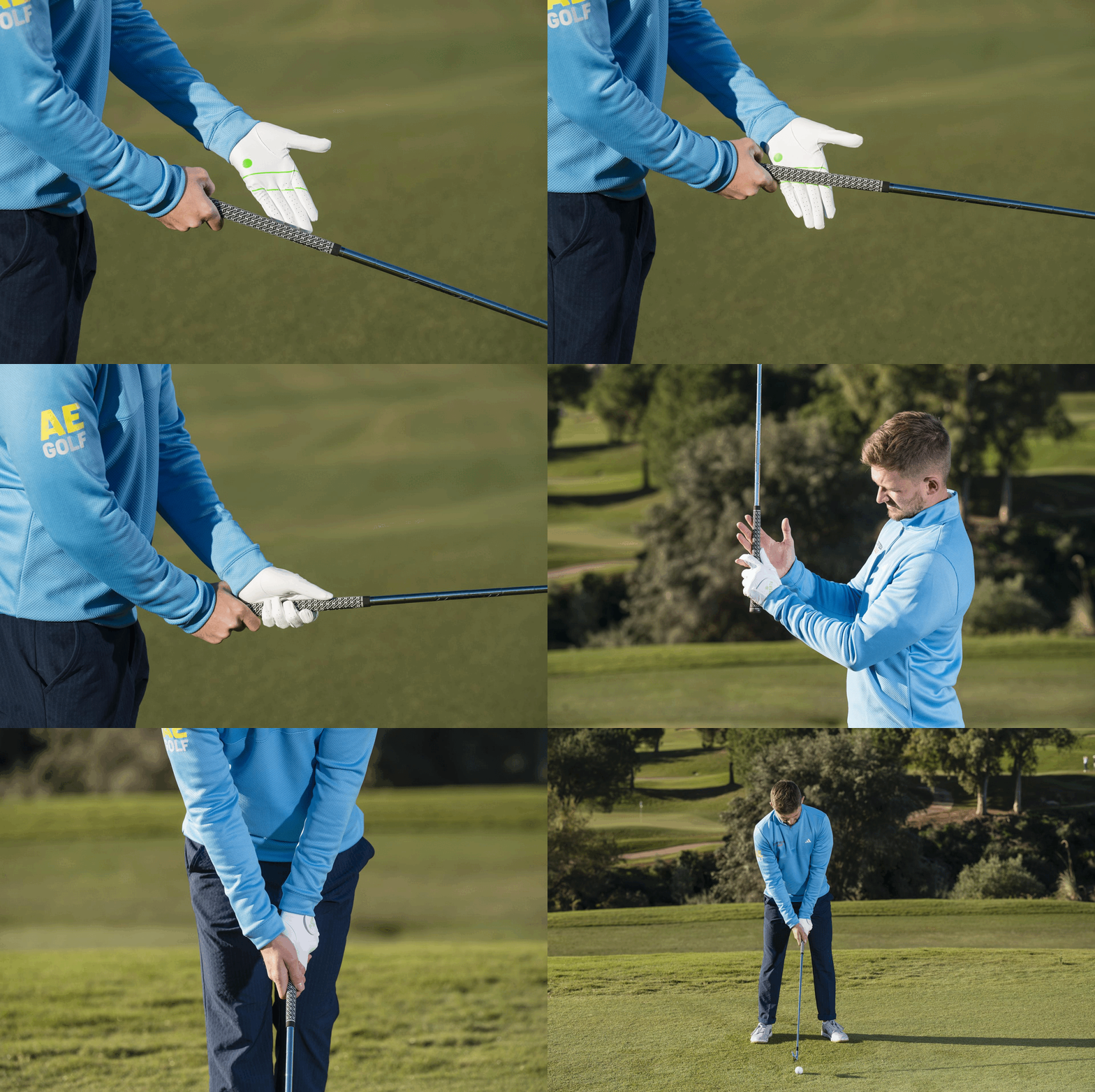
Initially, I want you to focus on the left hand (or right for left-handed golfers). This should sit on the grip, holding the club only in your fingers.
To achieve this, start with an open hand and ensure the grip runs from the middle joint of your index finger through to the fleshy pad at the bottom of your hand (as demonstrated in the image below).
Finally, wrap the fingers round and roll your thumb into place.
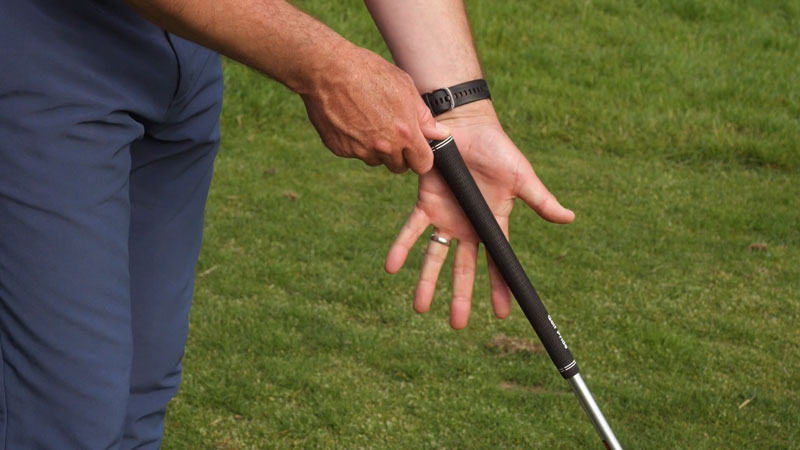
With your left hand on the club, you will notice you've created a line between your thumb and forefinger which should point towards your right ear.
Ideally, you should see between two and three knuckles on your lead hand as you look at your grip from above.
This is a great checkpoint that you may notice professionals using, and is something golfers of all levels should adopt in their pre-shot routine to ensure their hands are in the correct position at address.
Step 2: Which Is Better, The Interlock or Overlap Grip?
This is where you have the choice of overlapping, interlocking or employing the baseball grip.
There is no right or wrong here, it's all down to personal preference. There is one key to remember, though: make sure you grip it in the fingers.
The interlock variation, famously used by Tiger Woods to pretty devastating effect, involves interlocking the index finger of the left hand with the little finger on the right hand, as shown below.
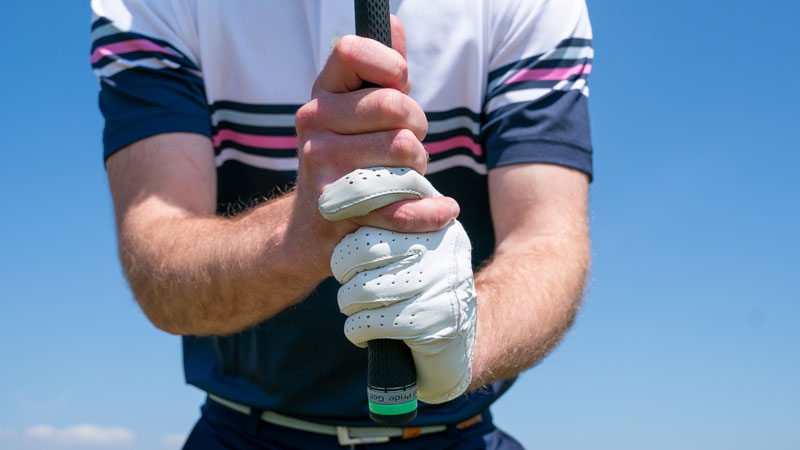
Arguably the most popular, the overlap sees the little finger on the right hand sit between the index and second fingers on the left hand whereas, as should be quite self-explanatory, the fingers underneath the club are completely separated in the baseball grip.
Step 3: The Right Hand
Whatever your preferred method, it's important to get the right hand in the appropriate position so the two can work together as a solid unit - this will help you get more power in your golf swing.
Place the fingers on the underside of the grip and then wrap the hand over so the left thumb is sitting cosily beneath the palm of the right hand.
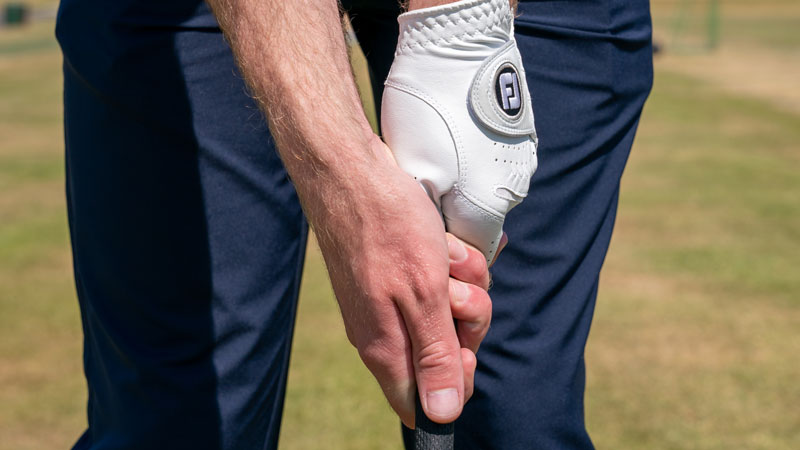
Once again, a line will be visible between the thumb and forefinger that should point towards your right ear. The finishing touch is to shift the index finger down the grip slightly which will act as a trigger.
Put all this together and you have the perfect golf grip. If you can get this right and also find the perfect ball position with every club, you should be able to find better strikes that send the ball where you want it to go!
Visual Demonstration
Below, Golf Monthly Top 50 Coach Alex Elliott provides a visual demonstration of the perfect golf grip, covering each of the important steps that will help you to strike the golf ball better than ever before.
Matching A Release Style
If you are someone who wants to stick with more of a strong or weak grip, you will benefit from learning how to effectively release the club.
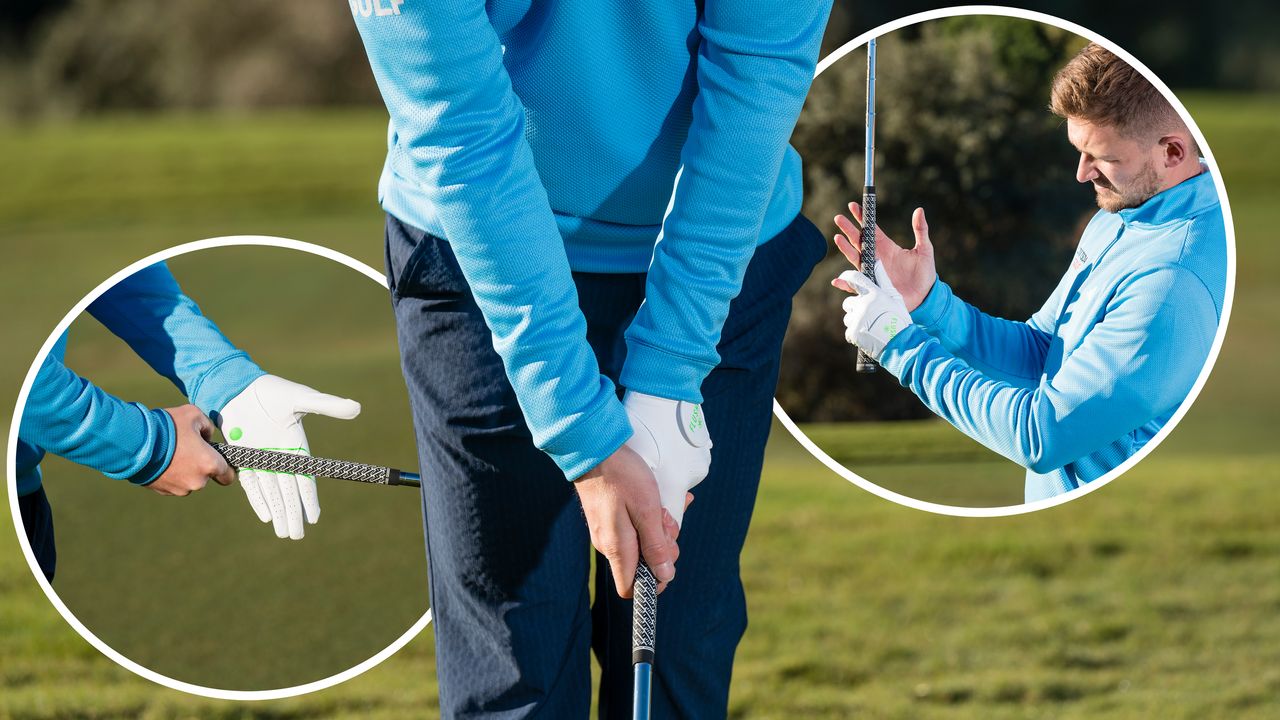
A strong grip favours more of a roll release, where the club face moves back a little bit open and then rolls through impact (right image below).
A weak grip favours a release where there is more flexion in the lead wrist, preventing the toe of the club head from rotating as much as the roll release through impact (left image below).
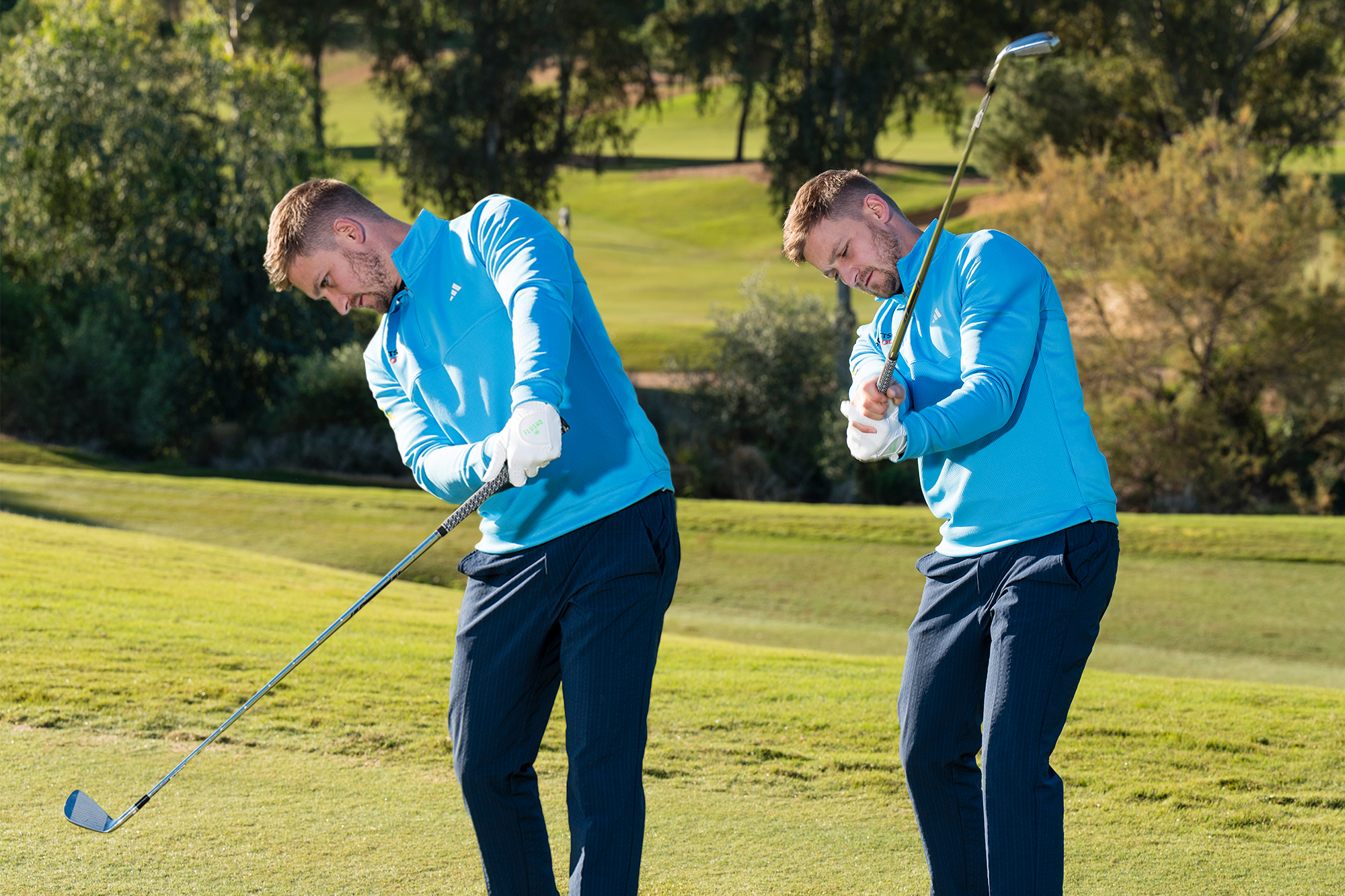
Matching a release style with your grip can help you to feel more in control of your swing and understand a little better where the golf ball will travel off the face - but there isn’t a one size fits all approach.
Think of it more as a sliding scale - a little experimentation can help to match your grip to the appropriate release for your swing.
What Are The Common Grip Faults?
There are two main issues that people tend to struggle with when it comes to this basic fundamental: having too weak or too strong a grip.
Strong Grip
This is where the lead hand is on top of the club, most commonly leads to hooks as the face wants to turn over through impact.
An easy way to find out if this is your issue is to check how many knuckles on your lead hand are visible. If you can see three or more, then you'd have what is considered a strong grip and it would be worth spending some time trying to weaken it.
Weak Grip
By contrast, if you have a weak grip you might be plagued by the horrible slice shot –where the face is open to the path at impact.
To check, look down at the knuckles on show. If less than two are visible, it would be a good idea to strengthen it slightly and regain some control over the clubface.
The last thing to mention is grip tension. The right grip pressure will help you swing with freedom and speed, but it should be lighter than many golfers think.
You should be aiming to hold the club with enough pressure that it doesn't move during your swing, but without squeezing it with excessive force.
After finding a neutral hand position, finding the right grip pressure could be the final piece of the puzzle in your pursuit for improvement.
How Do I Grip A Putter?
The key thing to know when learning how to grip a putter is that it's different from the perfect golf grip with any other club in the bag.
There are so many variations of grips that you can use with the putter, including the claw grip and the left hand low grip - but this is a matter of personal preference and finding which one works best for you.
Golf Monthly's instruction writer Baz Plummer recently did an experiment where he hit 60 putts from 6ft using three different putting grips to see which worked best for him, and while the results were close he did find one style that he felt comfortable with.