The next time you order sake, you might think you were served wine by mistake. But wineglasses are increasingly becoming an option for sake, traditionally served in ochoko small ceramic cups.
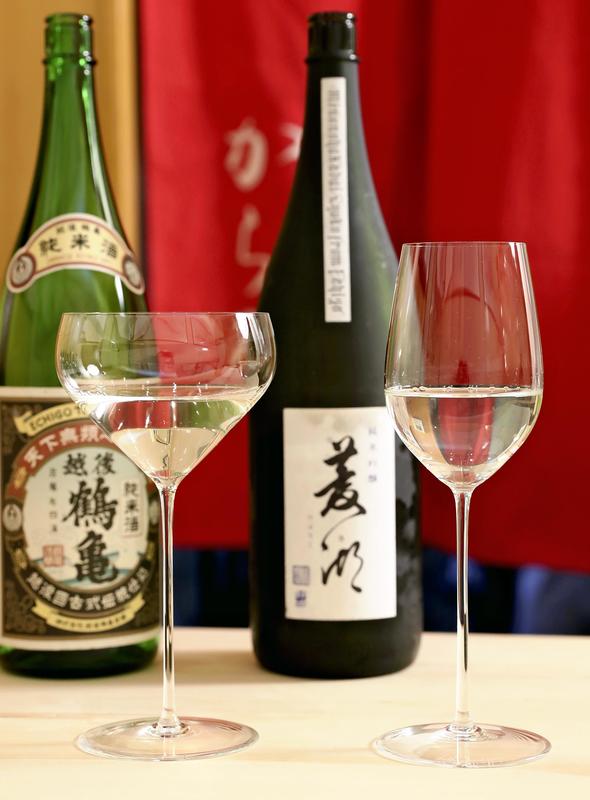
At Karaku, a sushi shop in the Ginza district of Tokyo, if diners prefer it, sake is poured from a 1.8-liter bottle into goblet-type glasses. The establishment offers glasses specific to certain types of sake: one for the normal daiginjo class of sake made from highly polished rice and the addition of distilled alcohol, and the other for the junmai style of sake made without adding distilled alcohol. The different shape of these glasses are said to help bring out the flavors inherent in daiginjo or junmai sake.
"Sake flavors can change depending on the drinking vessel," said owner and chef Kiminari Togawa, 60, who is also a sommelier. "I want our customers to drink using a vessel that brings out the best of each sake's flavor."
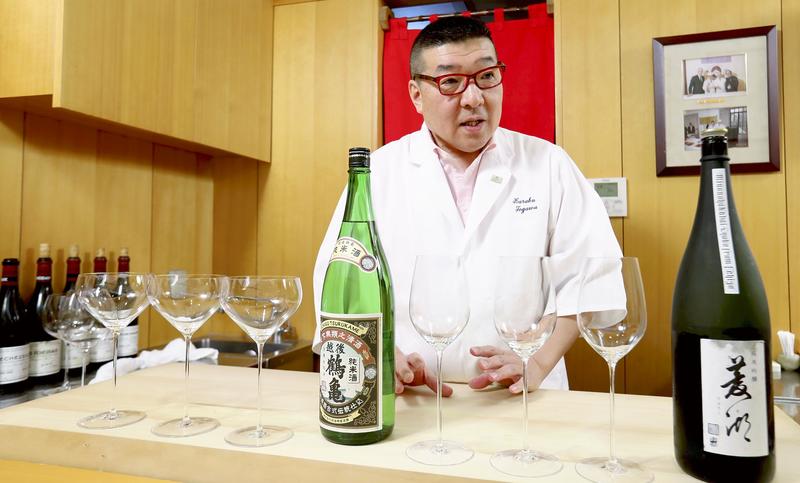
In his restaurant, Togawa recommends sake or wine pairings depending on the dish served and the customer's preferences. He uses glasses made by Riedel, a time-honored Austrian wineglass manufacturer.
It took about eight years for Riedel to develop its junmai sake glass, which started to be sold in 2018. The glass has a wide bowl and rim to help the sake's umami flavor stay longer in the mouth.
On the other hand, the daiginjo glass, which Riedel first specialized for sake in 2000, is based on a white wine glass. Tall with a round bowl, it is designed to keep the sake's aroma in the glass.
Riedel was inspired to develop a glass designed for sake when some young brewery operators contacted the maker. They had been looking for a new style of sake drinking that would be appealing to younger generations amid the declining consumption of sake.
Riedel's Daisuke Shoji said, "In 2000, sake aficionados and breweries still felt somewhat strange about drinking sake using a wineglass."
However, such a perception has dissipated as wine has become increasingly popular. Shoji said Riedel has now been receiving requests to develop a glass for junmai daiginjo, a type of junmai sake that uses highly polished rice.
Zwiesel, a German glass manufacturer that is also long-established, recommends on its website its wineglasses that are good for certain types of sake.
For a sake that is light, dry and crisp, for example, the manufacturer recommends a tall slender flute glass because the shape helps the beverage run straight into the mouth, making it easier to appreciate its refreshing flavor.
The Fine Sake Awards Japan, a competition that honors sake products that can be enjoyed better when drinking from wineglasses, had its ninth edition in 2019. The competition received entries of nearly 900 products from about 250 breweries all over the nation.
"I guess many households today have wineglasses at least, even if they might not have any ochoko," said Takuya Kano, a member of the competition's organizing committee and a representative of private research organization Sakebunka Institute Inc. "Sake that tastes good in wineglasses are fragrant types with few unpleasant flavors. These types are surely easier for younger drinkers to enjoy.
"Sake is raising its profile overseas, where wineglasses are mainly used, as washoku becomes popular," he continued. "This style will likely take root in Japan, too."
Materials, shapes crucial
Sake's flavors can change depending on the materials and shapes of drinking vessels, says Shizuka Wada, who runs restaurant Otsuka Hanaoka in Toshima Ward, Tokyo.
According to Wada, glass cups help sake's sweet and sour flavors to stand out, while ceramic cups make sake taste milder. The height and rim size of a cup change the angle sake enters the mouth, and how and where it touches the tongue.
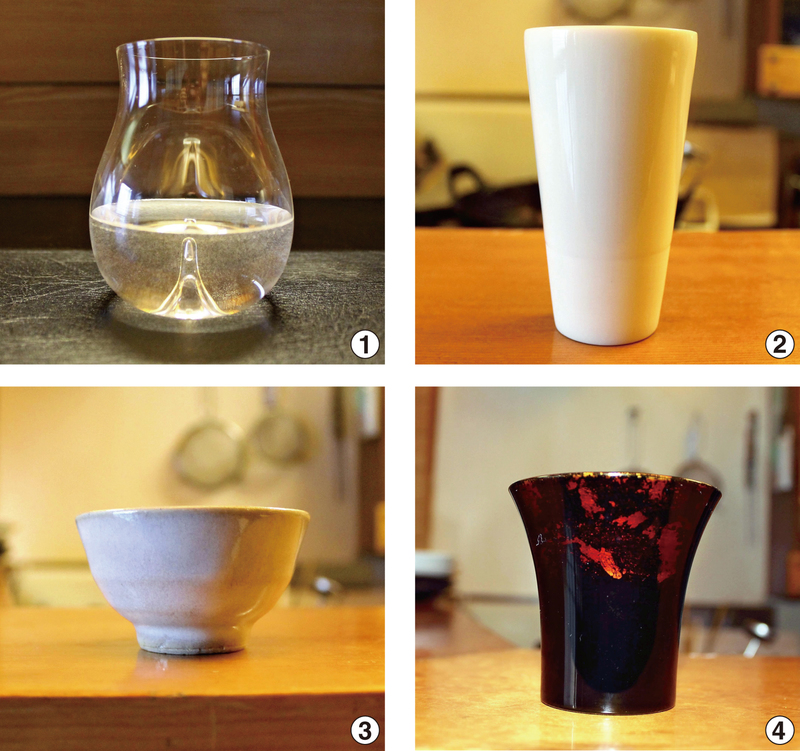
Wada recommended the types of sake that go well with each of the four kinds of drinking vessels that are mainly used for sake.
Daiginjo can go well in a glass cup (Photo 1), which, along with its round shape, enables the fragrance to be better appreciated.
Junmai ginjo -- a junmai style sake that uses rice polished to a lesser degree than daiginjo -- that is light and dry can be served in a taller, straight-sided porcelain cup (Photo 2). With its narrow rim, the sake's aroma can reach deep into the mouth without being diffused, leaving a refreshing aftertaste.
For products that have strong umami flavors, an earthenware ochoko (Photo 3) can be used as the material helps those rich flavors taste milder. Ochoko also suits sake served warm.
Try a lacquered cup (Photo 4) for products with strong acidity or sour notes as the vessel makes them milder and brings out the sweet, umami flavors of sake.
"It's great if you have several kinds of drinking vessels such as earthenware and porcelain. They don't have to be expensive," Wada said. "You'll be surprised to find how sake flavors can change if you compare them in different vessels."
Read more from The Japan News at https://japannews.yomiuri.co.jp/