The Ministry of Defence has officially issued the Request for Proposal (RFP) for India's indigenous fifth-generation Advanced Medium Combat Aircraft (AMCA) programme to three shortlisted domestic private companies, ANI reported. This is a monumental leap forward in India's pursuit of cutting-edge aerospace self-reliance and strategic sovereignty. By inviting initial bids from Tata Advanced Systems, the Larsen and Toubro-Bharat Electronics Limited alliance and the Bharat Forge-BEML combine, the government is deliberately reshaping its traditional state-led defence manufacturing paradigm. This high-stakes stealth fighter project aims to address the critical capability gap in the Indian Air Force while also transforming the domestic industrial ecosystem into a globally competitive powerhouse.
ALSO READ | Defence Ministry issues AMCA fighter jet tenders to Tata, L&T-BEL, Bharat Forge-BEML: Report
The regional power balance
The formal issuance of tenders for the AMCA comes at a critical juncture for India's national security architecture. The Indian Air Force has been grappling with a severe deficit in its fighter fleet, with its operational combat strength shrinking to approximately 31 squadrons. This falls significantly below the government-authorized optimum of 42 squadrons required to counter a dual-front security challenge. As regional dynamics grow increasingly complex, the absence of a fifth-generation stealth platform remains a glaring vulnerability. Neighbouring adversaries are rapidly modernising their aerial capabilities, with China deploying its J-20 stealth fighters and Pakistan actively exploring advanced next-generation aircraft.
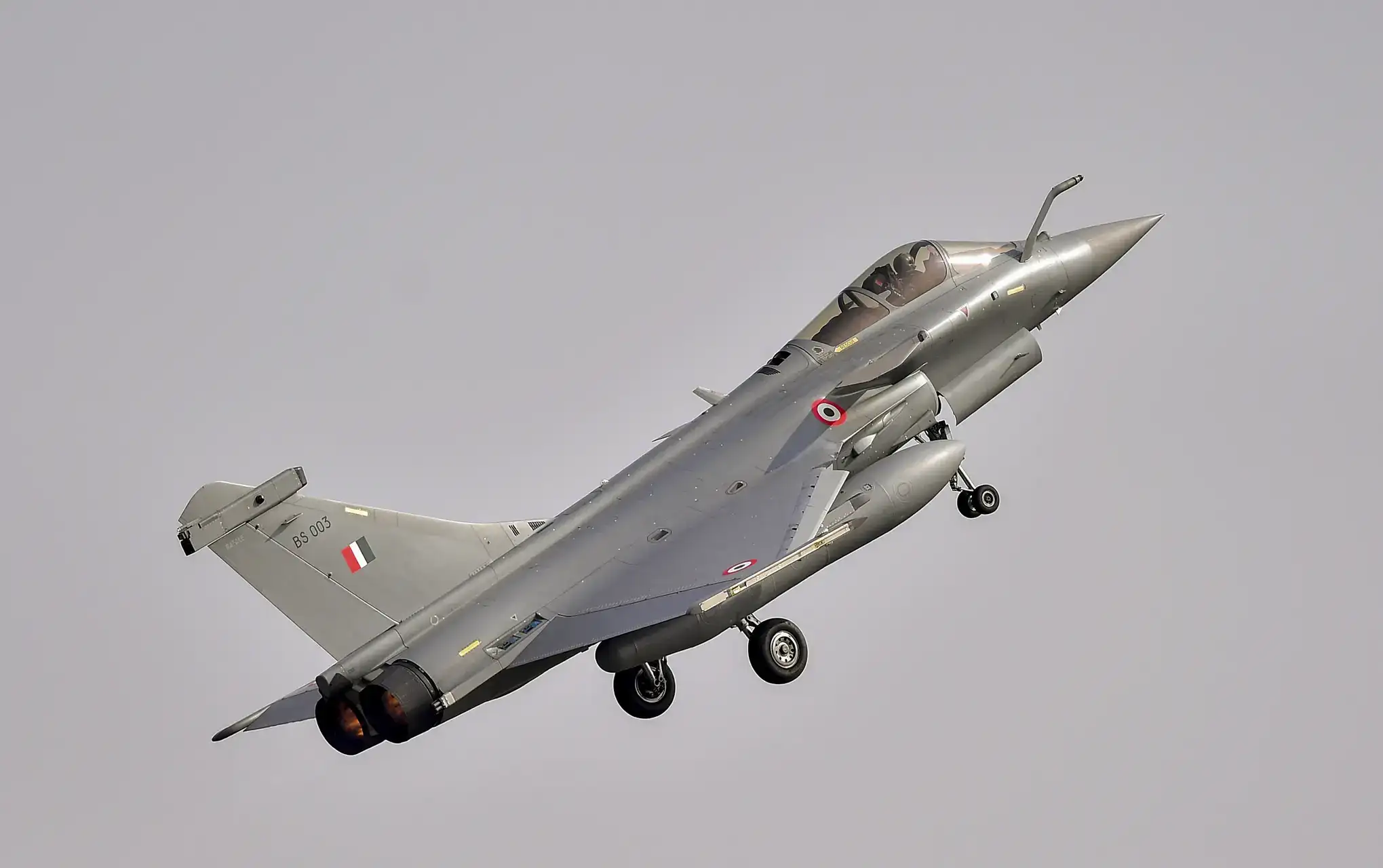
India currently does not operate any fifth-generation fighter aircraft, forcing its military planners to rely heavily on upgraded fourth-generation and 4.5-generation platforms like the Sukhoi-30MKI and the Rafale. While these jets remain highly capable, they lack the low-observable characteristics necessary to survive in modern, heavily contested airspaces protected by sophisticated surface-to-air missile networks.
Procuring stealth platforms from the international market is fraught with prohibitive expenditures, restrictive geopolitical conditions and technological black-boxing that compromises strategic independence. Consequently, the domestic AMCA project has been elevated to a matter of absolute strategic necessity. This platform will serve as the undisputed backbone of India's future air dominance, offering the military the capability to penetrate deep into hostile territory, neutralise enemy air defense installations and secure the skies from the mid-2030s onward.
A paradigm shift
Beyond its immediate military utility, the decision to issue the RFP exclusively to private sector-led consortium represents a profound structural overhaul of India's defence-industrial framework. Historically, domestic aerospace development was a strict public monopoly dominated by state-run enterprises like Hindustan Aeronautics Limited (HAL) and laboratories under the Defence Research and Development Organisation (DRDO). While this architecture preserved sovereign control, it frequently suffered from extended development timelines and cost escalations. The new execution model introduces unprecedented market competition by shortlisting three companies based strictly on their technical competence.
The bidding entities reflect the growing maturity of Corporate India, with Tata Advanced Systems Limited competing independently, Larsen & Toubro partnering with Bharat Electronics Limited and Dynamatic Technologies and Bharat Forge joining forces with BEML and Data Patterns. This transition aligns with a broader national effort to boost domestic military production, which reached a historic high of Rs 1.54 lakh crore in the 2024-25 fiscal year, up from Rs 1.27 lakh crore in the previous fiscal period. Although public sector undertakings still command nearly 77% of this value, the private sector's share has grown to 23%, indicating its readiness to shoulder complex integration tasks.
By utilising a private sector-led production model for the five initial prototypes, the government seeks to leverage the operational agility, risk-absorption capacity and financial discipline inherent in diversified commercial conglomerates. Private entities are structurally better equipped to manage intricate global supply chains, maintain stringent quality control and invest parallel capital across civilian and military portfolios.
Notably, HAL has not been permanently excluded from the wider programme, as the state-run aerospace major will have the opportunity to contest the much larger production order for approximately 120 jets once testing finishes. Nevertheless, the private consortium that secures the prototype contract will establish an insurmountable technological head start, permanently altering the dynamics of the nation's aerospace ecosystem.
Technological frontier
The AMCA is a 25-tonne, twin-engine stealth supersonic multi-role fighter that pushes India into an elite tier of nations capable of engineering low-observable aircraft. A full-scale engineering model manufactured by the private firm VEM Technologies was publicly displayed at the Aero India 2025 exhibition, showcasing its sophisticated 5.5-generation design characteristics. To achieve a minimal radar cross-section, the aircraft incorporates shoulder-mounted diamond-shaped trapezoidal wings, canted V-tail stabilizers and a heavily area-ruled fuselage to reduce aerodynamic drag at transonic speeds. A critical stealth feature is the integration of diverterless supersonic inlets with serpentine, S-shaped air intakes that conceal the engine fan blades from enemy radar waves.
The airframe itself represents a massive leap in materials science, with nearly 38% to 40% of its structure composed of advanced lightweight composites alongside radar-absorbent materials and body-conformal antennas. The aircraft will integrate next-generation domestic innovations like the Analakshya surface cloaking system developed by the Indian Institute of Technology Kanpur, which uses advanced metamaterials to provide multi-spectral camouflage against synthetic-aperture radar imaging. Instead of carrying external munitions that would compromise its stealth profile, the jet features an internal weapons bay carved into the underside of the fuselage.
The technological roadmap also outlines a progressive strategy for propulsion and avionics. The initial prototypes and the first two operational squadrons will be powered by American General Electric GE-F414 engines in the 98 kilonewton thrust class. For the subsequent five AMCA Mark-2 squadrons, India plans to indigenously co-develop a much more powerful 110 kilonewton engine, a massive undertaking that has drawn intense interest from global propulsion giants including French Safran, British Rolls-Royce and General Electric. In terms of software, the Aeronautical Development Agency is embedding advanced artificial intelligence systems directly into the jet's architecture to provide pilots with comprehensive sensor fusion, network-centric decision support and the capability to command unmanned autonomous wingmen in fluid combat zones.
The rollout of the very first AMCA prototype is tentatively scheduled for late 2026 or early 2027, with its highly anticipated maiden flight planned for 2028. This will initiate an intensive multi-year flight-testing campaign, with full platform certification targeted by 2032. If these tight benchmarks are successfully met, series production will commence shortly thereafter, allowing the Indian Air Force to begin the formal induction of its first operational AMCA squadrons by 2035, completing a mega cycle from conceptual drawing boards to absolute aerial dominance.