Africa boasts an immensely rich diversity of plant and animal species. These are the building blocks of healthy ecosystems. Yet, the projected loss of wild habitats and species on the continent threatens biodiversity. Recent reports by the Intergovernmental Panels on Biodiversity and Ecosystem Services and Climate Change also highlight how biodiversity loss and climate change threaten human well-being.
Good information is crucial to understand and reverse this trend. More and more data about biodiversity is becoming available worldwide, through satellite imagery, citizen science programmes and wildlife rangers, for example. But socio-ecological systems are enormously complex and so data can still be sparse, biased, or incomplete. Not only must data be collected, it also has to be analysed if it is to be useful for decision making.
The emerging field of statistical ecology offers great promise to meet these challenges. This discipline uses growing datasets and innovative analytical methods to tackle important questions in biodiversity science and management. Statistical ecology offers opportunities for African researchers to develop local solutions to the continent’s ecological challenges. It is currently a fast developing field, even in Africa where it is led mostly by active research groups in South Africa.
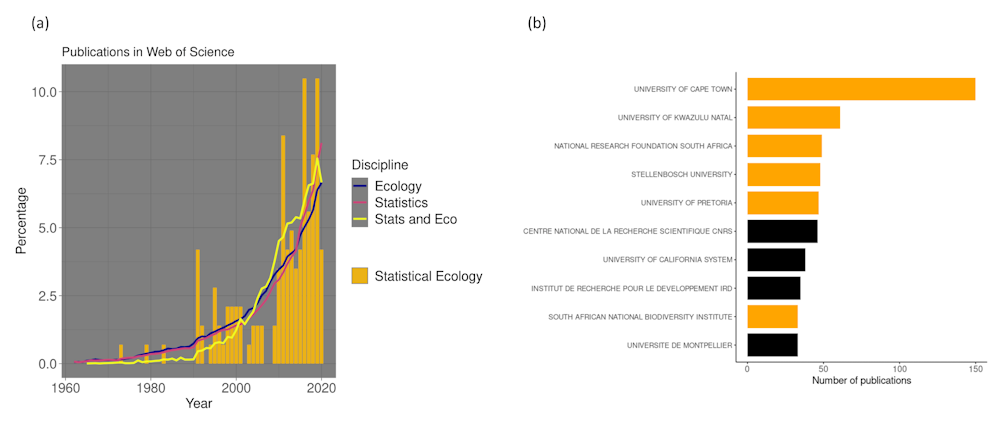
Our aim at the centre for Statistics in Ecology, Environment and Conservation at the University of Cape Town is to answer important ecological questions using cutting edge statistical methods. The case studies below, in which researchers at the centre are involved, illustrate the potential of this exciting field.
Case studies of statistical ecology in Africa
The South African Biodiversity Data Pipeline for Wetlands and Waterbirds is a clear example of a project that can make an impact on conservation. This collaborative project led by the South African National Biodiversity Institute collates data from citizen science bird monitoring programmes to determine the state of waterbird populations and wetlands. Information about population trends and species distribution is critical for conservation managers. The project will transform raw data into usable indicators and display the results online for anyone to see. It has the potential to inform decisions and policies.
Statistical ecology can also help limit poaching. From rhinos and elephants to abalone and cycads, wildlife trade is a threat to African biodiversity.
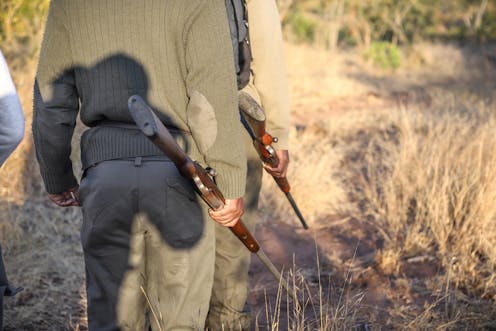
A recent study by researchers analysed data collected by rangers to identify elephant poaching hotspots. Across the African continent, tens of thousands of wildlife rangers patrol wide areas every day, helping track biodiversity and threats to it. The challenge is that the locations of elephant carcasses they detect may reflect patrol patterns rather than true poaching patterns. The researchers used tailored statistical techniques to correct this bias and show where poaching was actually concentrated within their Zimbabwean study site.
Sometimes, researchers need to use refined techniques to gather reliable data, particularly when the species is difficult to detect. For instance, acoustic monitoring was used to keep track of the population of the Cape Peninsula moss frog. Researchers placed microphones at the study sites to record sounds from the environment. Then, they used automated sound recognition software to distinguish calls from the moss frogs. Frog abundance could be estimated from the frequency and location of calls using innovative statistical models. These imaginative procedures allowed them to monitor the population of this threatened endemic species without the need for specialist field staff.
Challenges and the way forward
Despite these promising examples, statistical ecology has yet to reach its potential in Africa. Large gaps remain in African biodiversity data, linked to limited local research funding and government support in many countries. Citizen science and remote sensing are exciting options for addressing these limitations at relatively low cost, yet specialised skills are needed to analyse these data.
There is a promising trend of growing research and training in statistical ecology in Africa, but many institutions lack capacity and resources. Researchers from the Global-North working on African systems should try to collaborate more meaningfully with African institutions to help address these gaps. This is critical to enrich the way data informs decisions in African biodiversity management and policy.
There’s a unique opportunity next year to share knowledge, build capacity, and create a long-term collaboration network. Our centre in Cape Town is hosting the International Statistical Ecology Conference, a flagship event in the field. We encourage Africans working in this space to submit an abstract.

Henintsoa Onivola Minoarivelo is based at the Centre for Statistics in Ecology, Environment and Conservation, within the department of Statistical Sciences at the University of cape Town. She receives funding from the DAAD ClimapAfrica programme.
Francisco Cervantes Peralta is a post-doctoral researcher at the Centre for Statistics in Ecology, Environment and Conservation (University of Cape Town), and at the South African National Biodiversity Institute. His position is funded by the JRS Biodiversity Foundation.
Timothy kuiper is currently a Postdoctoral Research Fellow at the Centre for Statistics in Ecology, Environment and Conservation at the University of Cape Town (UCT). He receives funding from the National Research Foundation (South Africa) and the University Research Council at UCT.
This article was originally published on The Conversation. Read the original article.