George Washington: 21 January 1790 In deciding to address Congress at the beginning of the year after his election in 1789, George Washington, America’s first president, set the precedent for the state of the union address. Washington had wanted to retire after defeating the British but was was persuaded to attend the constitutional convention in Philadelphia and was unanimously elected president of the convention. Read the speech in fullPhotograph: Public DomainAbraham Lincoln: 3 December 1861 The country is heading for civil war. In December 1860, South Carolina took the lead in seceding from the union over slavery. By February, six other other cotton-growing states in the deep South had followed suit, declaring themselves a new nation, the Confederate States of America. He warns foreign countries agaisnt intervening on the side of the Confederates. Read the speech in fullPhotograph: Public DomainHerbert Hoover: 3 December 1929 In October, Wall Street crashes in a prelude to the Great Depression. In the space of five days, the New York stock exchange plummets, wiping out $30bn, 10 times bigger than the annual federal budget. Hoover states his conviction that measures he has taken will reestablish confidence. Read the speech in fullPhotograph: Public Domain
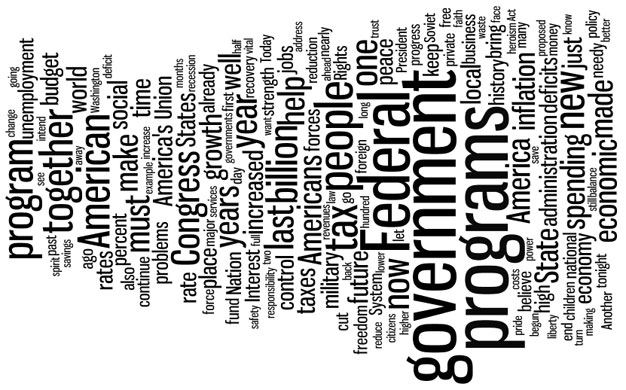
Franklin Roosevelt: 3 January 1934 Roosevelt became president when the Great Depression was at its worst. In calling for stringent regulatory measures, some of his words resonate today, referring to ”those individuals who have evaded the spirit and purpose of our tax laws, of those high officials of banks or corporations who have grown rich at the expense of their stockholders or the public, of those reckless speculators with their own or other people’s money whose operations have injured the values of the farmers’ crops and the savings of the poor.” Read the speech in fullPhotograph: Public DomainHarry Truman: 21 January 1946 The second world war is over and it is time for Truman to set out the cornerstone of a postwar order. He tells Americans that the immediate task “is to deprive our enemies completely and forever of their power to start another war. Of even greater importance to the preservation of international peace is the need to preserve the wartime agreement of the United Nations and to direct it into the ways of peace.” Read the speech in fullPhotograph: Public DomainJohn Kennedy: 30 January 1961 Kennedy succeeds Dwight Eisenhower after having beaten the Republican Richard Nixon. Considered untested in diplomacy, the new president seeks to convince Americans that he is tough enough to stand up the communists in the Soviet Union and Russia. “We must never be lulled into believing that either power has yielded its ambitions for world domination,” Kennedy declares. Read the speech in full Photograph: Public DomainRonald Reagan: 26 January 1982 After the “national malaise” of the Carter years, it’s “morning again” under the avuncular former B movie actor. Reagan, marching in lockstep with Margaret Thatcher across the Atlantic, comes into office taking aim at big government. Read the speech in full Photograph: Public Domain
Sign up to read this article
Read news from 100’s of titles, curated specifically for you.