
SpaceX’s experimental Starlink service has officially shipped internet terminals to 100,000 customers around the world. Elon Musk tweeted about the milestone this morning, along with a message stating that Starlink’s license applications are pending in “many more countries.”
Last we heard, Starlink had attracted about 69,000 customers globally, which means approximately 30,000 more terminals have been shipped since late June of this year. And Starlink says there are about 400,000 more customers who have expressed interest in getting started with the service but who haven’t had their orders fulfilled yet.
Starlink is still very much in testing mode, with many users reporting intermittent speed issues and set-up difficulties. It’s also still very expensive, with a $499 fee just for the hardware to get set up. But being somewhat inaccessible isn’t stopping Starlink from making enormous expansion plans for the next few years.
Flying high —
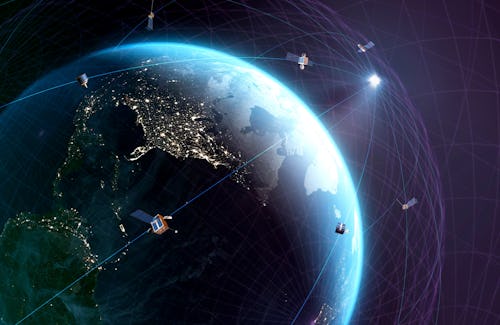
Starlink is still just getting started. To date, SpaceX has launched approximately 1,700 satellites to service Starlink customers, but the company expects that number to reach close to 30,000 in the next decade.
Right now, Starlink is launching its satellites via SpaceX’s Falcon 9 rocket, about 60 at a time. In order to hit much higher targets, the company is planning to use its Starship rocket to carry many more satellites in a single go. The Starship — which Musk hopes will eventually help humans colonize Mars — is still very much in development mode, though, so for now the satellite constellation’s construction will continue to be a piecemeal process.
A troubled rollout —
If it hopes to hit its lofty goal of serving millions of customers all over the world in the next decade, Starlink will need to contend with the myriad issues it’s currently facing.
Most prominent in these issues is affordability, both for consumers and for the company. New customers pay $499 for initial Starlink hardware and then pay another $99 per month for the service itself — numbers that, for many in rural areas who could use Starlink the most, are entirely unaffordable.
And Starlink is losing about $800 for every home internet setup it sells, even at these astronomical rates. The company expects to spend something like $30 billion in the next decade. Not exactly a profitable business model... at least, not in the short-term.
“Every other low-Earth orbit constellation ever done has gone bankrupt,” Musk said in a recent interview. “Step number one for Starlink is don’t go bankrupt.”
Starlink’s promised ultra-fast connectivity has proven more myth than fact for customers in some locations as well. Connection speeds and latency are very much dependent upon location and how many people nearby are also using the service — which could prove even more problematic upon continued expansion.