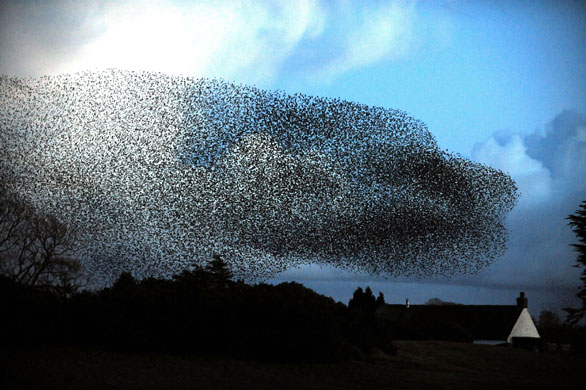
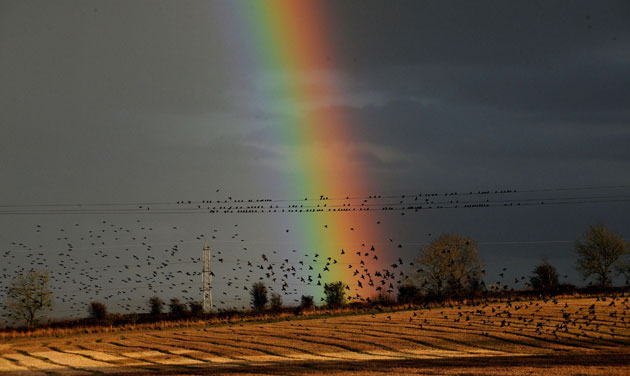
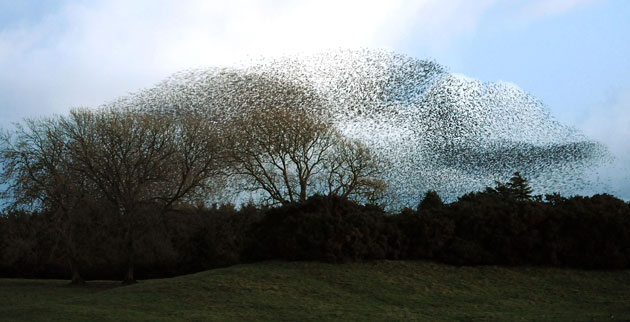
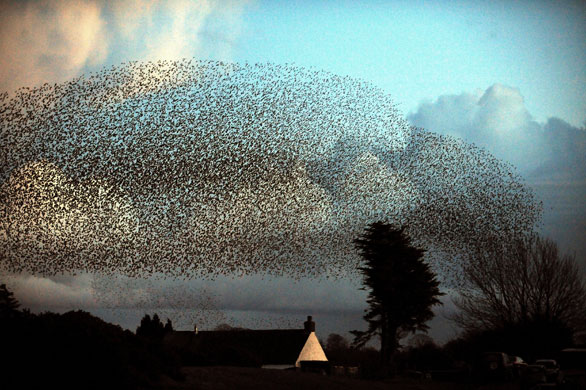
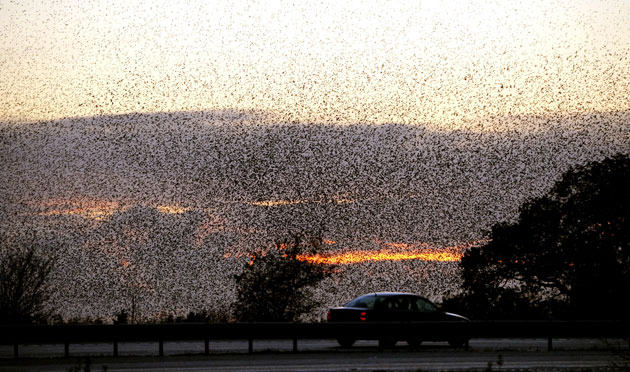
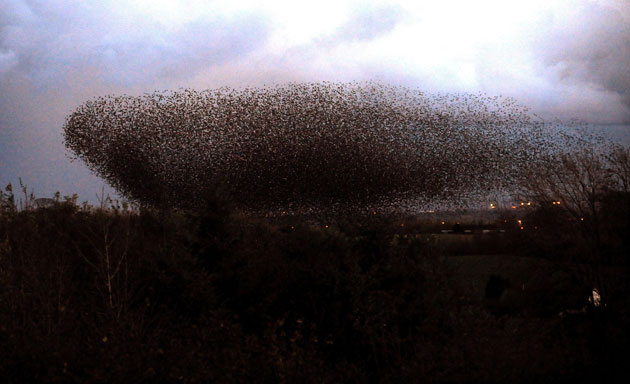
Thousands of starlings return to Gretna. Britain gets a huge influx of starlings from Russia and northern Europe. They come here to roost in the relative warmth. However, the species which is now listed as one of the most at-risk birds in BritainPhotograph: Owen Humphreys/PAStarlings are thought to form flocks for safety in numbers, warmth, and possibly communication. Quite why or how the birds move together so fluidly, making such specific shapes, remains a mystery Photograph: Owen Humphreys/PAWhy the birds are disappearing is also unknown, though most blame the loss of insects for the starlings to eat because of the increase in chemical use on farms since the 1970s and new grassland management techniquesPhotograph: Owen Humphreys/PA
Each night before they roost, starlings swoop around the skies in spectacular formations. The best time to catch this is in the evening – an hour before it gets darkPhotograph: Owen Humphreys/PAFlocks start forming around November each year, and stay together right through to spring when the birds go off - some abroad, some not - to breedPhotograph: Owen Humphreys/PASome flocks have been estimated to contain 2 million birds – though not in the UK. Birdwatchers on Brighton Pier have estimated there are about 40,000 birds doing their aerial ballet just before duskPhotograph: Owen Humphreys/PA
Sign up to read this article
Read news from 100’s of titles, curated specifically for you.