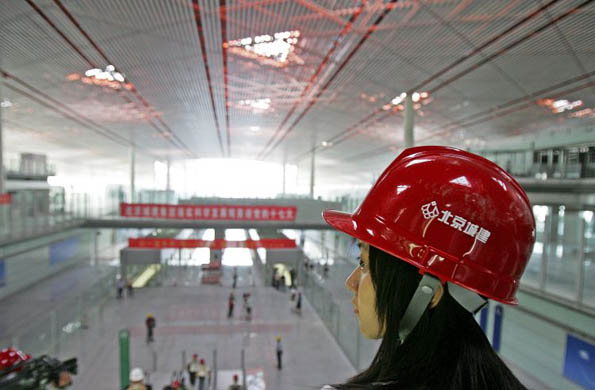
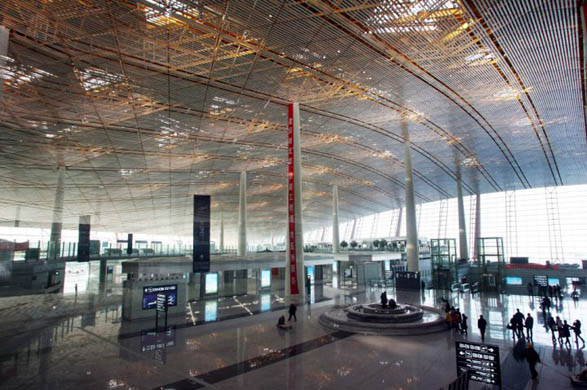
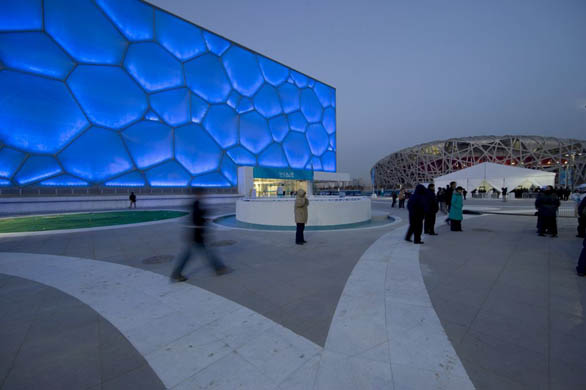
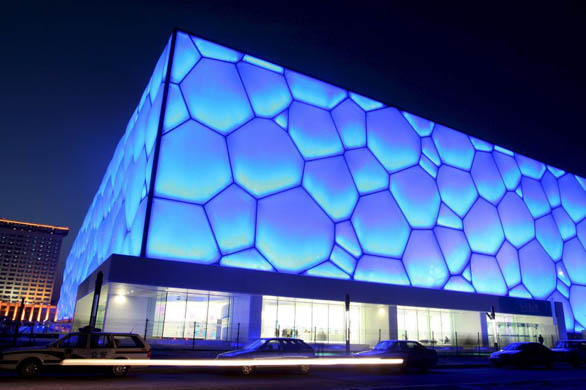
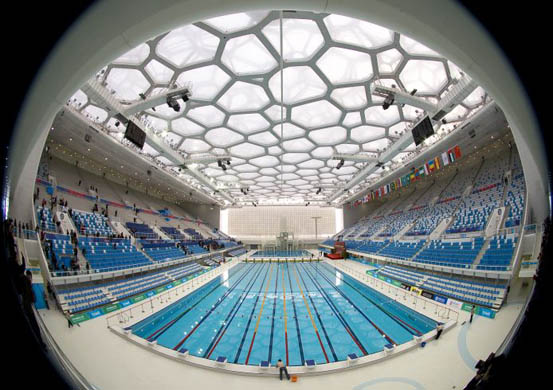
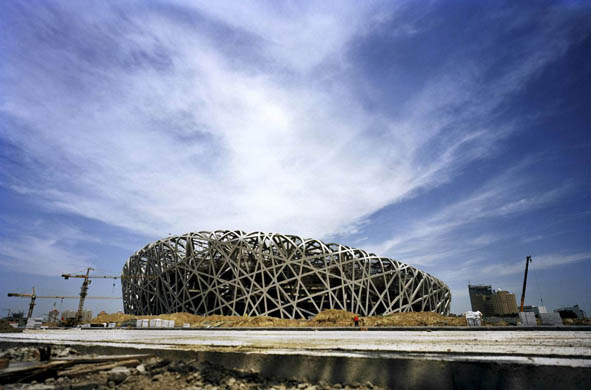
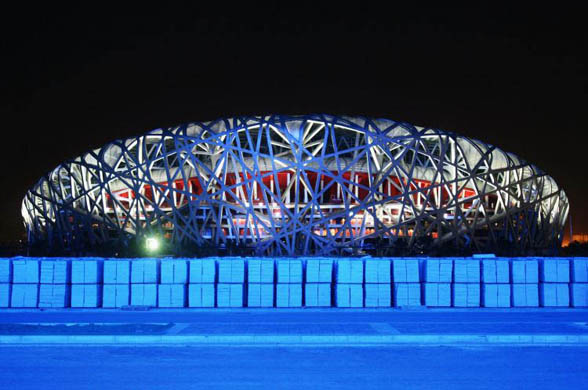
Within minutes of touching down in Beijing this year visitors will come face to face with the world’s biggest building boom: their first glimpse will be at the new airport terminal, designed in gold and red by Norman FosterPhotograph: Wong Maye-E/APThe airport terminal occupies a space larger than all of Heathrow’s terminals combined, and was built in less time than it took Heathrow’s new terminal 5 to even get approvedPhotograph: CSPA/NewSport/CorbisThe a brilliant, buoyant National Aquatics Center, or “Water Cube,” features a bubble-wrapped exterior and is the perfect yin to the bird's nest yanPhotograph: Arian Bradshaw/EPA
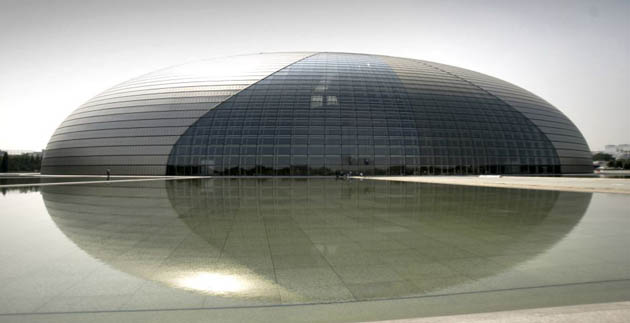
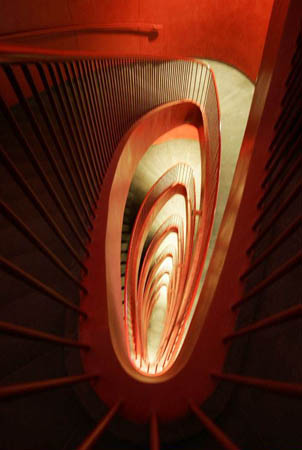
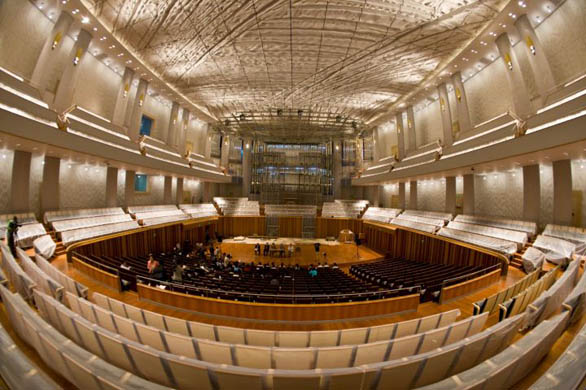
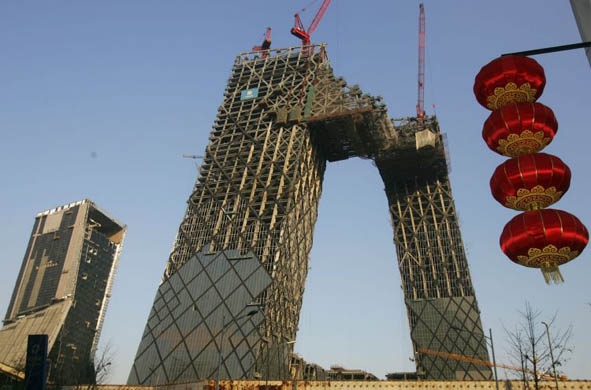
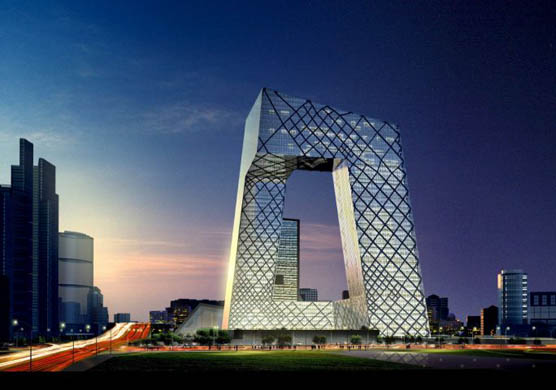
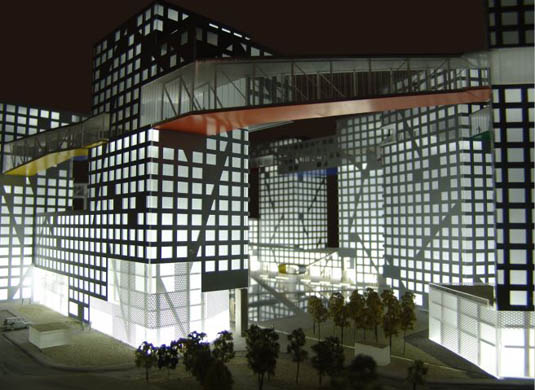
Unlike the National Stadium, the Water Cube promises a more vibrant life after the Games, when it will become a recreational centrePhotograph: Michael Reynolds/EPAAnd - provided its minders can keep off the city’s dust - the gorgeous translucent envelope allows in more light and heat than glass, helping to warm the building’s five pools and slashing energy costs by 30%Photograph: Dan Chung/GuardianThe stunning National Stadium’s unique shell fosters natural air circulation, while a translucent membrane covers gaps to protect the stadium’s 91,000 spectators from rainPhotograph: Adam Pretty/GettyThe 44,000 tonnes of steel that bend and swerve around the hulking National Stadium make it look more like a Martian mother-ship. Cynics have likened it to a “hairy donut” or, more chillingly, barbed wirePhotograph: Feng Li/GettyIt wasn’t its complex design but the controversy surrounding it that put the world’s largest performing arts centre three years behind schedule. Many complained that French the egg-shaped building would have been more fitting for a sci-fi filmPhotograph: Peter Parks/AFPOthers questioned the cost of the building (£35,000 per seat) and the sky-high cost of daily maintenance to keep it dust-freePhotograph: China Photos/GettyBut since the theatre opened in December, the outcry has been drowned out by cheers for its luminous design and fabulous acousticsPhotograph: Adrian Bradshaw/EPA/CorbisEach 40-story, 60-degree-leaning tower of China state TV's headquarters twists dramatically at the bottom and top, forming a single loop that has earned it many nicknames, including wei fang, or “dangerous building” Photograph: China Photos/GettyRumours have swirled that some employees are too scared to occupy itPhotograph: OMA/epa/CorbisFilters in the Linked Hybrid building protect residents from Beijing’s pollution, but the building is also designed to protect the environment: beneath the complex sits a wastewater recycling plant and one of the world’s largest geothermal systems, which eliminates the need for boilers or electrical air conditionersPhotograph: Steven Holl Architects
Sign up to read this article
Read news from 100’s of titles, curated specifically for you.