How can the effectiveness of an aesthetic procedure be accurately assessed, and what metrics should be used to evaluate results after non-invasive treatments for the face and body?
The lack of standardized evaluation criteria often leads clients to choose surgical procedures, where results are immediate and clearly visible. In contrast, non-invasive cosmetology works progressively at a physiological level, where improvements in microcirculation, lymphatic drainage, and fat reduction require time to become visible and continue to develop and stabilize over several weeks.
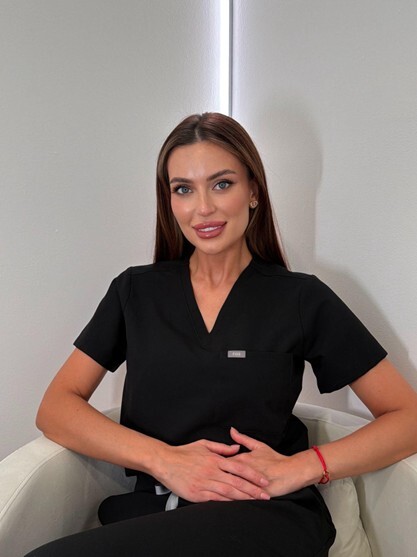
This challenge led Anna Dolia, an entrepreneur and aesthetic specialist, to develop a proprietary methodology for evaluating treatment effectiveness, which has been successfully implemented at her studio, iContour Aesthetics & Spa, located in Centennial, Colorado.
Why Standards Matter
Non-invasive aesthetics has advanced significantly faster than the systems used to evaluate its outcomes. There are numerous device-based technologies on the market, each with different mechanisms of action, depths of penetration, and timelines for results, yet evaluation methods have remained largely subjective and inconsistent.
In many cases, assessment has been limited to photographic comparisons or personal perception, making it difficult to compare techniques, predict outcomes, and manage client expectations, particularly when those expectations are influenced by marketing.
Based on professional observations, only a limited number of clinics in the United States utilize measurable indicators such as body volume, fat layer thickness, tissue density, tone, and fluid retention, while most rely solely on standardized before and after photography, which does not always accurately reflect true physiological changes.
Standardization is essential for the advancement of modern aesthetic medicine, as without it clinics risk creating unrealistic expectations, inconsistent outcomes, and decreased client satisfaction.
The Idea Behind the Methodology
The development of this system was driven by the need for transparency, predictability, and measurable outcomes, as clients want to see tangible changes and understand what is happening within the tissues and how results evolve over time.
Unlike surgical procedures, where results are immediate and structurally visible, device-based treatments rely on gradual physiological processes such as improved circulation, lymphatic flow, and tissue remodeling, which makes evaluation inherently more complex.
To address this, the methodology is based on three core principles: clinical relevance, measurability, and repeatability, incorporating measurements of body volume, skin elasticity and turgor, fat layer thickness, and indicators of fluid retention and microcirculation. This approach allows for the assessment of both visual improvements and structural changes within the tissues.
Key Evaluation Parameters
The methodology integrates multiple assessment tools, including precise centimeter-based measurements with corresponding inch conversions for international clarity, a standardized photographic protocol with consistent lighting and positioning, and visual and tactile evaluation of tissue density, elasticity, and mobility.
For lifting procedures, contour definition, tissue firmness, dermal density, and reductions in ptosis are evaluated over time, while microcirculation and lymphatic drainage indicators are monitored due to their direct impact on the stability and longevity of results.
Additional indicators include reduction in swelling, improvement in skin tone, and a subjective sensation of lightness reported by clients.
Measurable Results
Based on internal measurement data, stable improvements are observed following a full course of treatments, with follow-up evaluations conducted four to six weeks after completion.
On average, improvements of 20-35% are observed depending on the treatment area and individual goals, including reduction in body circumference by approximately 3-6 cm (1.2-2.4 inches), improvement in tissue density and reduction in fat thickness by 25-40%, and enhancement of tone microcirculation by up to 30-50% following stimulation-based procedures.
After implementing this proprietary methodology, repeat client engagement and long-term program participation increased by approximately 30-40%, as clear metrics and structured comparisons make results more understandable and predictable, shifting perception from subjective opinion to an evidence-based approach.
The methodology is actively used in the daily operations of iContour Aesthetics & SPA for treatment planning, monitoring, and ongoing adjustments, allowing specialists to recommend maintenance procedures, determine optimal treatment frequency, and develop long-term strategies for sustaining results.
Proprietary Manual
To ensure consistency, a proprietary manual was developed for internal use, outlining structured protocols for device-based body contouring and skin improvement treatments, combining multiple technologies that target fat tissue, the lymphatic system, and the dermis in a sequential approach. This comprehensive system supports the reduction of localized fat deposits, improvement of lymphatic flow, enhancement of skin elasticity, and refinement of body contours without surgical intervention.
The manual includes recommended treatment courses, device settings, and step-by-step session guidelines designed to maximize results, and once finalized will serve as an internal standard for the studio, ensuring consistency, efficiency, and high-quality outcomes across all practitioners.
The implementation of Anna Doli’s proprietary methodology introduces a structured, evidence-based approach to non-invasive aesthetics, enhancing client trust, improving treatment consistency, and increasing transparency of results, while also contributing to the development of unified evaluation standards and supporting the continued advancement of the aesthetic industry.