What does a truly innovative Edinburgh fringe show look like? I’ve seen plenty of terrific comedy shows there over the years, and I’ll see more over the next month. But will any of us see a show that rewrites comedy’s rules, that raises the bar or changes the artform’s direction, announcing a whole new way of doing things? It does happen – I can think of a handful of occasions over the past 15 years when fringe-goers have felt the earth move, comedically speaking – going right back to my first fringe as the Guardian’s comedy bod, when a certain Daniel Kitson also made his Edinburgh debut.
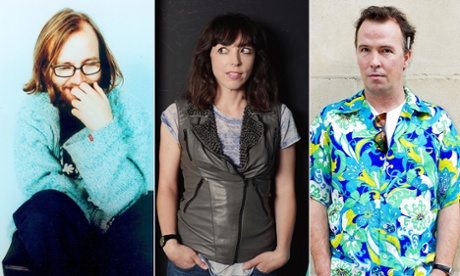
I enjoyed Kitson’s show that year – and the following, when he won the Perrier award – but his work wasn’t as distinctive then as it has since become. The big event for me back then – and still one of my all-time fringe favourites – was Noble + Silver’s everything-boggling multimedia floorshow, which dynamited the distinctions between situationist prank, art happening and comedy. (Fifteen years later, one-half of that act, Kim Noble, remains as transgressive as ever.) The following year, something extraordinary arrived from the opposite end of the spectrum, when Doug Stanhope made his UK debut. I hadn’t then, and I still haven’t, seen Stanhope’s brand of scorching, devil-may-care, misanthropic-romantic standup done better than he did it that summer, although many have tried.
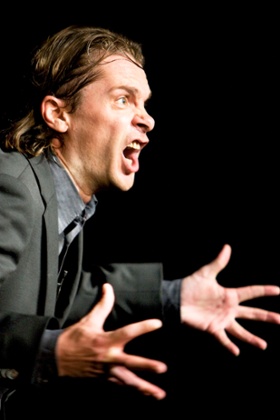
Cementing its place as the fringe’s best room for comedy, the same venue where I saw Stanhope – the downstairs bar at the Tron – five years later hosted Hans Teeuwen, the sui generis Dutch absurdo-comic recently hailed by Bridget Christie in these pages. Teeuwen performed for only 15 minutes on a bill of Amsterdam standup, but he made a more vivid impression than anyone else on that year’s fringe. In his hands, you get a sense of comedy’s subversive capability. His shows are brilliantly constructed to confound your expectations – of content, of rhythm, of mood. Playful, dangerous, manipulative, he set a new standard for nonsense comedy, recognising that if it lacks sense it may yet have purpose, power and poise to burn.
The emergence of Flight of the Conchords in 2003-04 felt special; Will Adamsdale’s Jackson’s Way, confounding everyone with his 2004 Perrier win and heralding the dawn of a new era of experimental theatrical comedy; Mark Watson’s 24-hour (then 36-hour) shows, expanding the possibilities of how comedy on the fringe could present itself and what it could be. Then there were the classic straight standup shows, as diverse but unforgettable as Stewart Lee’s 90s Comedian (2005) and Rhod Gilbert and the Award-Winning Mince Pie – still one of the plain funniest trad standup shows I’ve seen on the fringe.
I’ve not always spotted the game-changers, of course: sometimes I’m looking the other way; sometimes I’m there, but not getting it. The first time I saw Doctor Brown, in a muggy cave off Niddry Street, I felt outside of an in-joke. The following year, I got it, and could see that mime – despised, naff mime – was being given a sly, sexy and interactive makeover for a whole new audience.
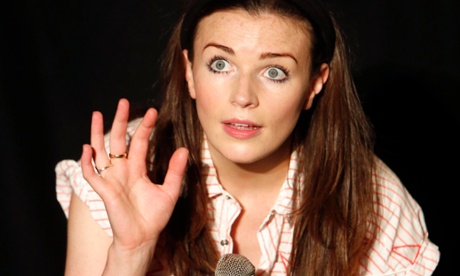
The other fork-in-the-road moments in recent years concerned gender, and the new generation. The 2013 fringe made fools of everyone still writing fret pieces about the dearth of women in comedy, as Bridget Christie found her (feminist) voice, Adrienne Truscott debuted with her unmissable nugget of performance-art-meets-anti-sexist-comedy, and Sara Pascoe and Aisling Bea delivered two of the best pure standup sets on the fringe. That felt like a dam breaking. I wanted to say the same about the movement heralded by Bo Burnham and Liam Williams, two very different acts whose emergence over the last few years supplied two of the fiercest, smartest standup hours I’ve seen. Their shared generational angst – desperate for something to believe in; frustrated that it’s all been said; complicit in and kicking against the commodification of everything – threatened a new wave of dissenting, culturally savvy millennial comedy that hasn’t quite materialised.
Then there’s Pappy’s Last Show Ever, probably the best (and certainly the most moving) sketch show I’ve seen in 15 years, and which encouraged a great leap forward for creatively ambitious group comedy. We all reaped the benefit on last year’s fringe, when young sketch comics pulled that artform into a series of twisty new shapes. I see good shows on tour all year round, but it’s only on the fringe – comedy’s annual explosion of new stuff – that you get these glimpses of the future, these sudden encounters with unheard-of new talents and styles, these moments when promising acts discover what they were born to say and do. Who will it be this year, and what will they be up to? I’m heading up there today, butterflies in stomach, hoping to find out.