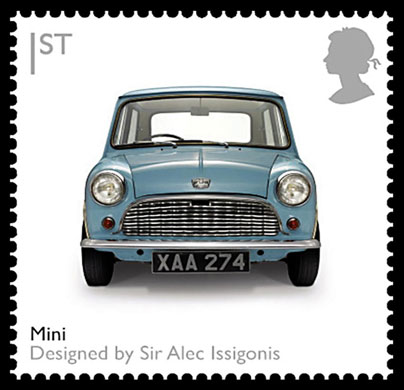
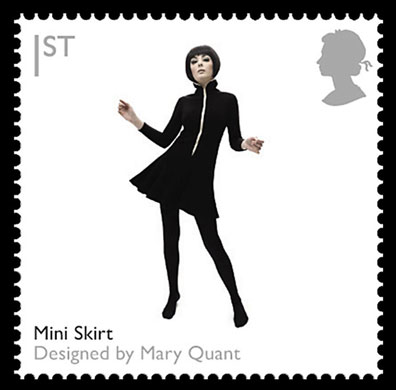
The first Mini rolled off production lines 50 years ago. Sir Alec Issigonis's revolutionary car became an icon of the 60s and remains one of the most striking and familiar pieces of British designPhotograph: Royal Mail/PAStrictly speaking, Concorde is an Anglo-French design classic, having been jointly created by BAC and Aérospatiale. Rumours still abound that Russia's Tupolev Tu-144 (or Concordski) was developed from blueprints obtained through espionagePhotograph: Royal Mail/PAMary Quant developed the miniskirt for her Kings Road boutique Bazaar after a long period of experimenting with shorter skirts and dressesPhotograph: Royal Mail/PA
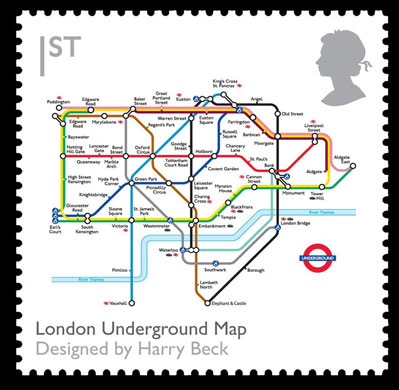
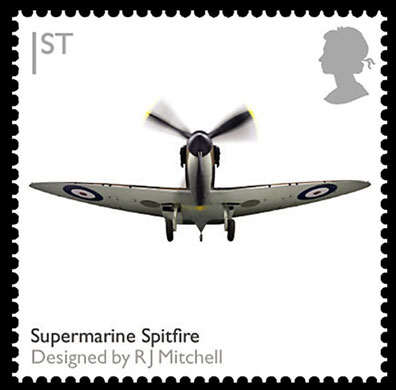
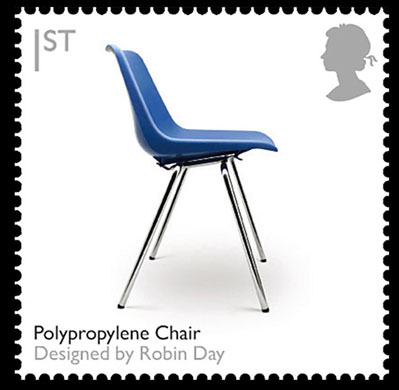
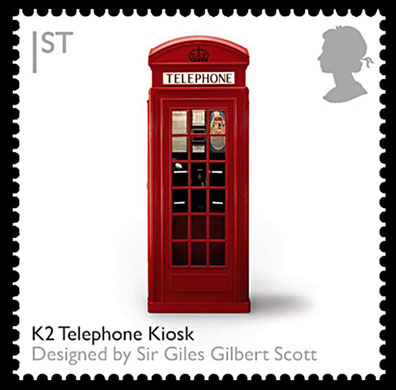
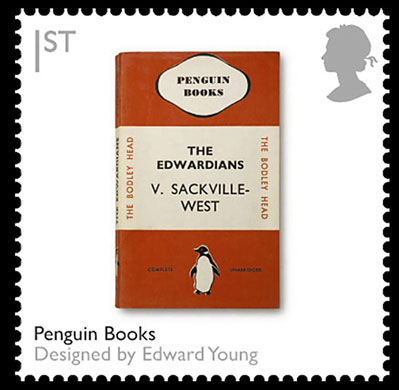
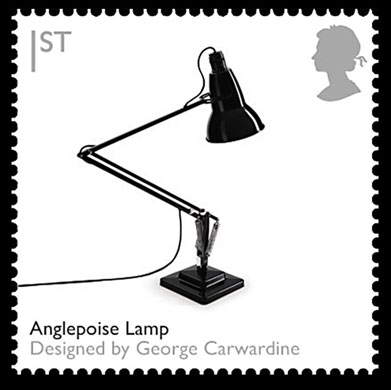
Increasingly rare in the 21st century, London Transport's Routemaster bus still symbolises London across the worldPhotograph: Royal Mail/PAAnother design tied to the capital, Harry Beck's elegant solution to the problems posed by the complexity of the London Underground was inspired by circuit diagrams, and established design principles that remain relevant todayPhotograph: Royal Mail/PARJ Mitchell died before his Supermarine Spitfire even went into production. The plane's elliptical wings gave it a higher speed than most of its contemporaries as well as an iconic silhouettePhotograph: Royal Mail/PAOne of the first products to exploit the potential of injection moulding, Robin Day's ingenious stacking chair is so ubiquitous that the refinement of its design is easy to missPhotograph: Royal Mail/PAFamous for Battersea Power Station and Liverpool's Anglican Cathedral, Giles Gilbert Scott followed architectural cues in his submission to the GPO's competition to design a telephone kiosk. The K2 was an instant design classicPhotograph: Royal Mail/PAIn the world of publishing, cover designs have rarely been so immediately iconic as Allen Lane's Penguin classics series, designed by Edward Young, perfected by Jan Tschichold and featuring Eric Gill's immortal Gill Sans typefacePhotograph: Royal Mail/PAGeorge Carwardine's Anglepoise lamp sprung from his background in designing suspension systems for cars, and uses springs to replicate the function of human musclesPhotograph: Royal Mail/PAFor a nation that barely knows how to cook, Nigella's seductive and handsomely designed recipe book seemed an ideal treat. Big type, big pictures, lots of white space to write notes on; this did most to fetishise food in recent years. Imagine cooking like a domestic goddess. Then, pop something instant into the microwavePhotograph: PRWhat makes it the nation's favourite retro-chic chocolate bar? The odd shape, the sticky, stretchy sweet itself, or the whirly, colourful graphics decorating the eye-catching wrapper? Now, why on earth has the 70s been called the decade design forgot?Photograph: GuardianThe croak-voiced aliens encased in pepper-pot shells, and famously challenged by stairs, were designed by the BBC's Raymond Cusick for the second series of Dr Who in 1963. Somehow, they have become as lovable as they are monstrousPhotograph: Rex FeaturesIn contrast to Harry Beck's painstakingly inventive Tube map, the cheaper-than-potatoes Irish airline goes out of its way to challenge every fixed notion of old school British good taste and genteel manners. "Fawking Great Fares" was the Ryanair way to go just before 5 November 2004. Perfectly in tune with the British spirit todayPhotograph: GuardianOriginally meant for athletes, yet in its 90s heyday, the shell suit was worn by millions of Britons 24 hours a day, seven days a week. Like it or loathe it, it is, by any stretch of the imagination, or fabric, the lodestone of everyday British designPhotograph: Rex FeaturesThe Aston-Martin DB5 might be faster and more elegant, but the sturdy MGB Roadster is surely more representative of everyday British motoring tastes and dreams from its debut in 1962 until its (slow) demise 18 years later. The car for driving to Mock Tudor pubs for a pint or two of warm beer in summerPhotograph: PRThe British answer to American burger restaurants: the food was a novelty, if not exactly as Americans ate it, but the bubbly decor, playful graphics and bright colours seemed so very modern, much like early motorway services stations, and a world away from archetypal greasy spoon cafesPhotograph: David Levene/GuardianTom Dixon made his name internationally with this chair for the Italian manufacturer Cappellini in 1991. The lacquered steel frame could be sheathed in a choice of wicker and marsh straw, or spotted pony leather. We might not always make things in Britain today, but we still know how to make them look goodPhotograph: PRA truly revolutionary design: the pug-like aircraft can take off vertically, travel backwards and is, so lucky pilots say, a joy to fly. No fighter will ever replace the Spitfire in the British imagination, but the Harrier is the stuff of aerial sorceryPhotograph: Peter MacDiarmid/Rex FeaturesThis interpretation of Harry Roberts' classic radios, in production in one form or another since 1932, will sit as happily in most contemporary interiors as it would have done in fashionable homes of 50 years ago. The British are good at retro-chic designPhotograph: Guardian
Sign up to read this article
Read news from 100’s of titles, curated specifically for you.