
The past few years have been remarkable for gay rights in the US. Well over half of the states now recognise same‑sex marriage and Oregon is the first state to elect an out bisexual state governor.
With so many positive forces at play shouldn’t it be expected that the annual St Patrick’s Day parade in New York City would embrace gay marchers? Apparently not.
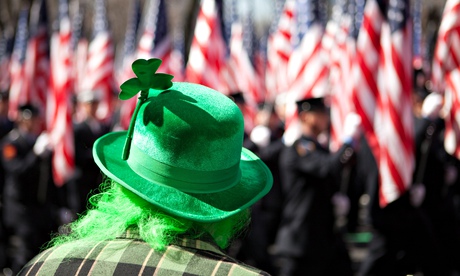
With a history stretching back 250 years and around two million spectators attending each year, the 5th Avenue parade is a huge event in the city’s, and the country’s, cultural calendar. However, it has been mired in allegations of discrimination for decades because the organising committee, part of a private business that has a licence from the city to run the parade, has repeatedly refused to permit lesbian, gay, bisexual and trans (LGBT) groups to march on equal terms alongside people from other Irish American organisations, ranging from police officers to pipers.
Last year, the new Democratic mayor of NYC, Bill de Blasio, refused to participate, as did a number of city council members, because of the exclusion of gay groups. Along with two of the biggest sponsors of the official parade, Guinness and Heineken, pulling out, this was seen by campaigners as a sign that things might be changing for the better. Six months later a concession was announced confirming that one LGBT group would be taking part in 2015 (a workplace group at one of the event’s biggest sponsors, NBC, Out@NBCUniversal). LGBT campaigners protested that this clearly did not constitute full inclusion and they renewed a long-standing boycott, as did many local politicians.
Activist Emmaia Gelman, a member of the group Irish Queers, who has been advocating for full inclusion for 20 years, says there “was absolutely no consultation between the parade’s organisers and the groups campaigning” before selecting the NBC group. The organisers said there was “no room” this year for further LGBT groups but that they could reapply in “future years”. However, they insisted that gay groups would not be able to march under a banner identifying them as LGBT. This remains unacceptable, says Gelman.
A supreme court ruling of 20 years ago upholds the right of private parades to prevent gay groups marching but, as Gelman says, it doesn’t mean they have to. “The parade organisers now reiterate that Irish LGBT people can only march if they are not identifiable – in other words, as long as they remain invisible in the Irish community – and that no end to the exclusion is planned. The ban on Irish LGBT groups remains in place,” she says.
Yet, permitting even one LGBT group to march has proved too much for some. The Catholic League, a group staunchly opposed to gay participation, declared it was withdrawing from this year’s parade claiming that the organisers had reneged on a promise to include a “pro-life” group if a gay group was marching.
As other St Patrick’s Day events around the US have embraced diversity and inclusion, the New York official parade’s stance has become all the more anachronistic. An annual alternative, the St Pat’s for All parade in the New York borough of Queens, takes place on 1 March.
Kerry Kennedy, daughter of Robert F Kennedy and president of the Robert F Kennedy Centre for Justice and Human Rights, has been confirmed as one of two grand marshals at the Queens parade. She describes the official 5th Avenue parade’s inclusion policies as a throwback. Kennedy says the grassroots, community event is an example of a genuinely inclusive parade.
With all the progressive changes on gay rights, it is still shocking that the parades controversy persists, says Kennedy. “The LGBT community is an unfortunate annual reminder of how far society still has to go.”
Whatever you think of St Patrick’s Day and its parades wherever they are, the one thing they absolutely should not be is an excuse for discrimination.













