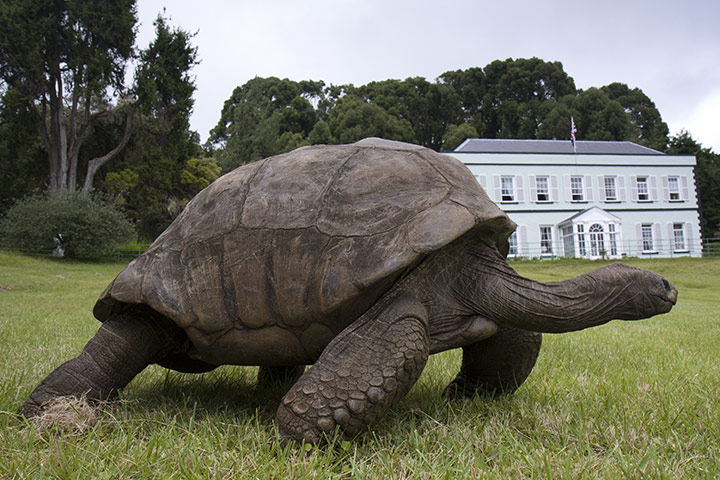
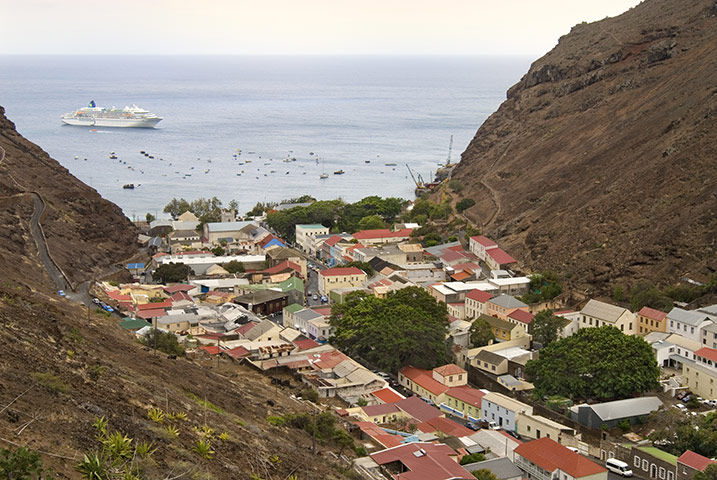
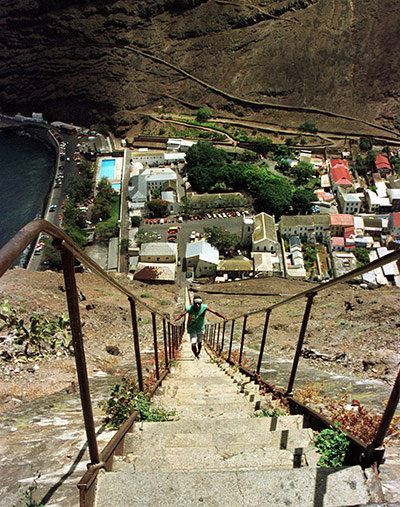
Estimated to be up to 200 years old, this giant tortoise is one of several that roam the lawns of the late 18th-century Plantation House, seat of the governor of St Helena.Photograph: National GeographicSheltered in a valley at the foot of the cliffs, Jamestown is St Helena’s capital and only port. It was named after James, Duke of York – later to become King James II – in 1659.Photograph: Olaf Protze/PhotolibraryRising almost vertically from Jamestown, Jacob’s Ladder was originally built to transport manure and weaponry to the top of Ladder Hill. Walkers who conquer its 699 steps are rewarded with spectacular views. Photograph: Reuters
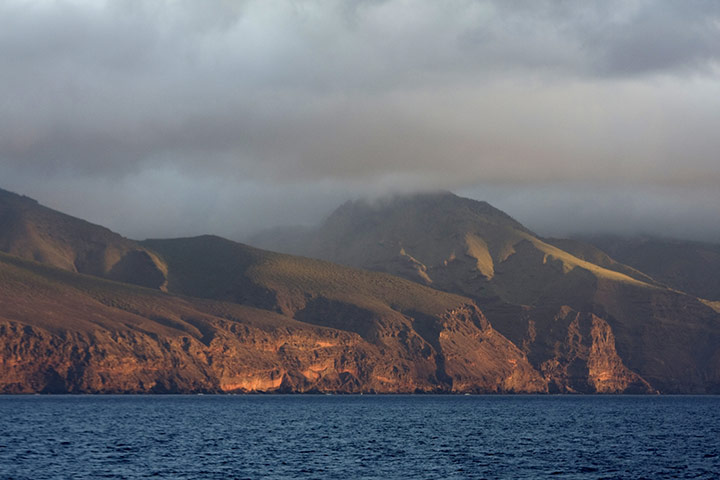
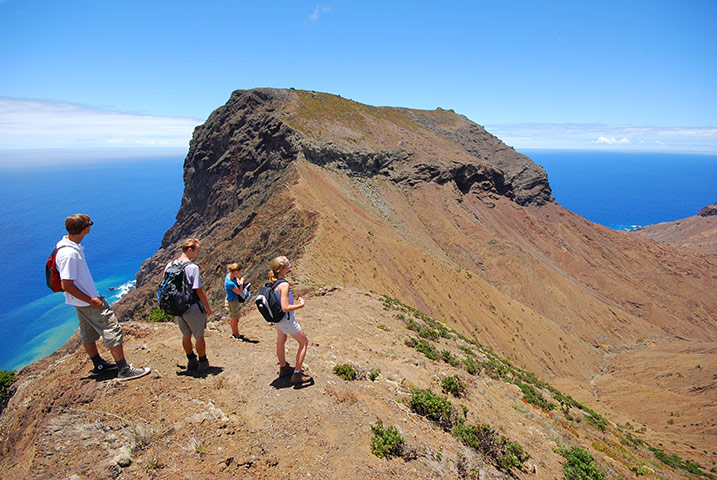
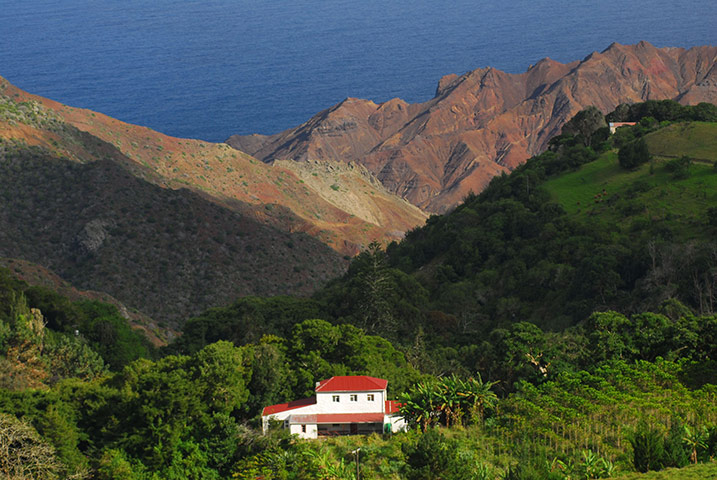
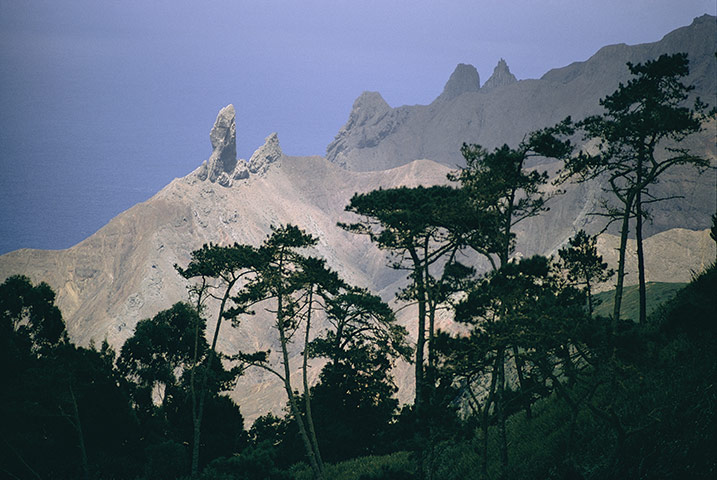
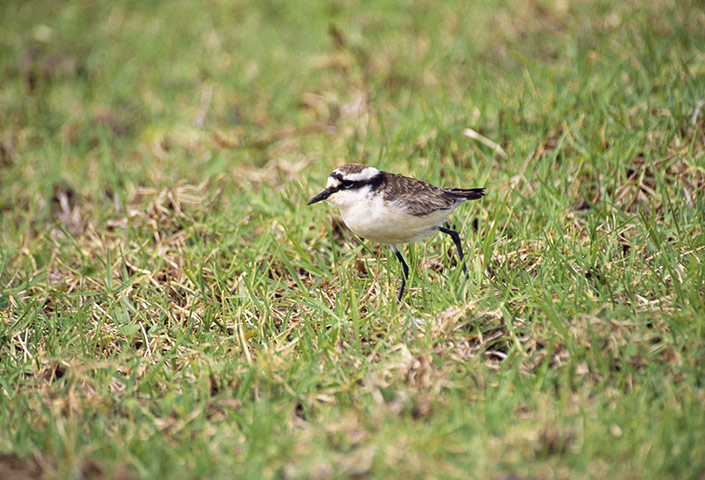
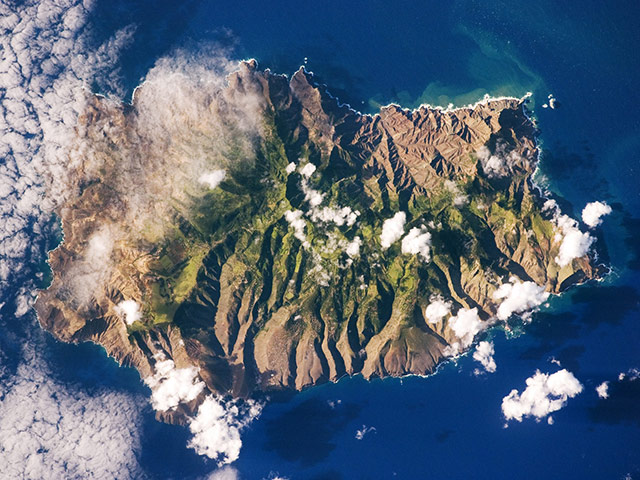
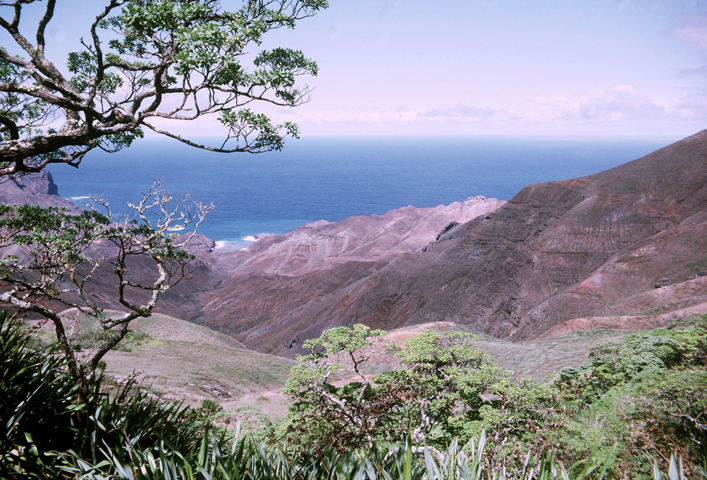
Mist looms above the rolling hills of St Helena, near Jamestown, as sunset reddens the island’s steep volcanic cliffs.Photograph: Kent Kobersteen/National GeographicToday’s walkers have the freedom to enjoy the challenging ridges and distant horizon of Longwood Barn. It was a different story for Napoleon, who was exiled at nearby Longwood House.Photograph: PRFertile trees surround this old plantation in the mountains above Sandy Bay.Photograph: Jeffrey BarbeeLooming over Sandy Bay, and some freshwater ponds, is the stark formation of Lot’s Wife, recalling the biblical story of the disobedient woman turned to a pillar of salt. Photograph: Walter Meayers Edwards/ National GeographicThe St Helena plover, known as the wirebird due to its thin legs, is the island’s only indigenous bird. When threatened, it may feign a broken wing to distract potential predators away from its chicks.Photograph: ArdeaIt takes a satellite image to appreciate the full grandeur of this volcanic island, from the verdant interior to the deeply fissured rocks tumbling down to the Atlantic.Photograph: Nasa/WikipediaOnce covering about a third of the island, the gumwood is the national tree of St Helena. A conservation project ensures the gumwoods are protected.Photograph: Ardea
Sign up to read this article
Read news from 100’s of titles, curated specifically for you.