Sri Lanka has introduced a four-day working week and a work-from-home mandate to conserve dwindling fuel and gas reserves amid supply disruptions caused by the US-Israeli war on Iran.
Officials said on Monday that the new austerity measures, introduced in the face of uncertainty over shipping in the Strait of Hormuz, would remain in place indefinitely.
Prabath Chandrakeerthi, commissioner of essential services, told reporters after meeting president Anura Kumara Dissanayake that all state institutions, along with schools and universities, would shift to a four-day work week from Wednesday.
“We are also asking the private sector to follow suit and declare every Wednesday a holiday from now on,” he said.
According to senior officials, essential services, including hospitals, ports and emergency services will continue to operate as usual.
The president reportedly said at the meeting that the country “must prepare for the worst but hope for the best”.
The government is halting all public ceremonies and urging civil servants to work from home where possible to cut fuel use.
Fuel rationing is already in place.
After it was attacked by the US and Iran on 28 February, Iran closed the Strait of Hormuz, choking a strategic waterway through which passed almost a quarter of the world’s seaborne oil and a fifth of its LNG shipments.
Sri Lanka said it had about six weeks of reserves left but warned that fresh disruptions in the Strait of Hormuz would severely impact the island nation.
Earlier, deputy minister of trade RM Jayawardena noted that the crude oil price was already around $100 a barrel and warned that it placed a strain on international shipping and distribution networks in the country.
He also said transportation costs could rise and certain supply chain limitations could lead to higher prices for goods entering Sri Lanka.
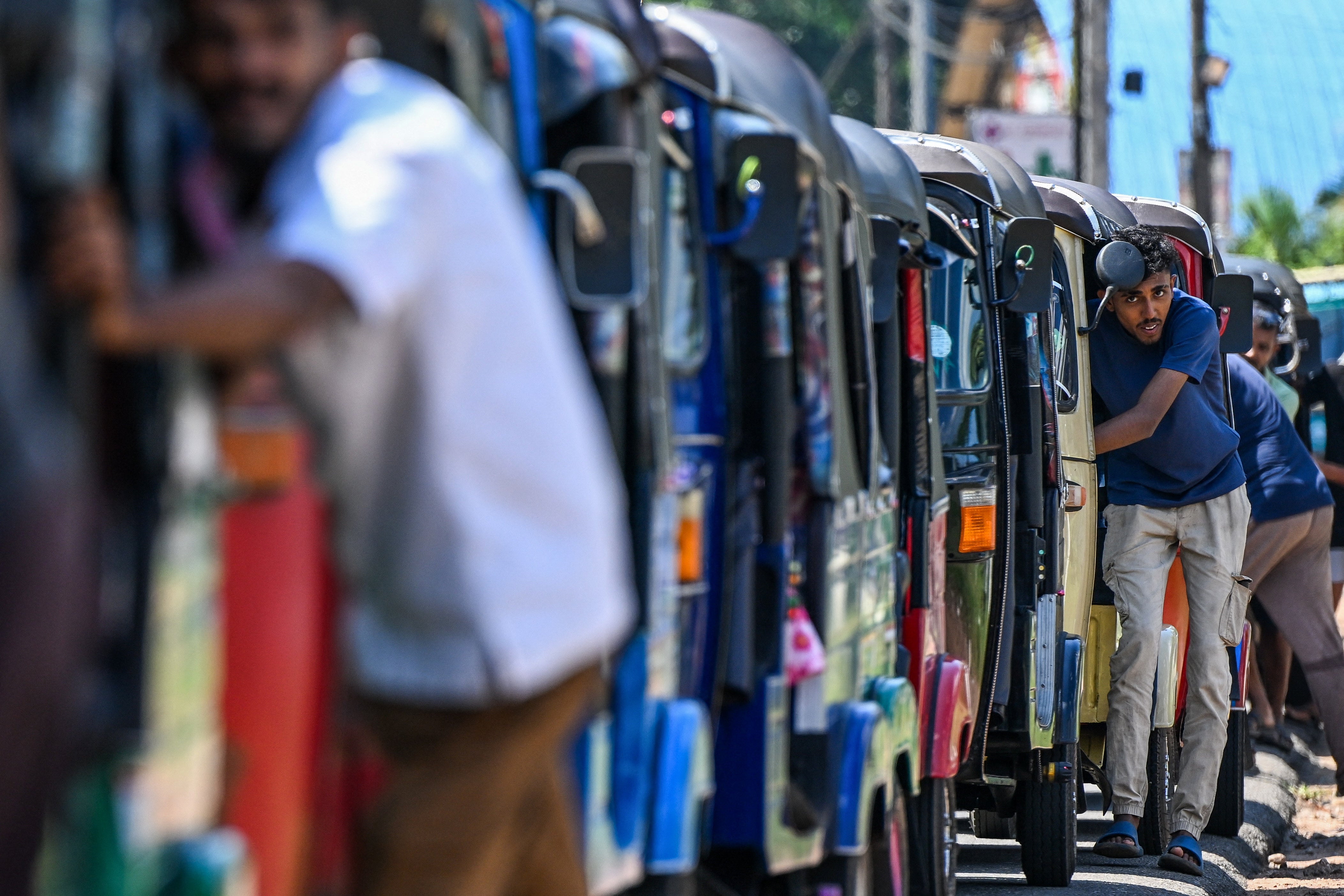
A video recently went viral in Sri Lanka showing a man riding a scooter while carrying another on his lap as he searched for fuel, according to the Colombo Post.
The same outlet reported energy minister Kumara Jayakody telling parliament on Tuesday that the government might resort to power cuts in the future if the situation did not improve.
Sri Lanka’s austerity measures came just days after Pakistan implemented a four-day work week for some of its employees. The South Asian nation also introduced emergency measures in response to the rising fuel prices, shutting all schools for two weeks and ordering the public sector to implement a four-day work week.
Sri Lanka government has declared Wednesdays a holiday from 18 March 2026 for Government employees, schools, universities and courts, the Commissioner General of Essential Services says.
— Sri Lanka Tweet 🇱🇰 (@SriLankaTweet) March 16, 2026
Private institutions have also been requested to follow, while all Government events are… pic.twitter.com/mmAp5EKjSO
Other Asian nations are also taking energy-saving steps. Thailand is encouraging lighter clothing for its citizens to cut AC use and Myanmar is limiting private cars on alternate days.
Bangladesh has introduced early Ramadan holidays and blackouts to save energy, while the Philippines has introduced work-from-home rules and travel bans with cash aid for workers.
Vietnam is urging people to stay home and reduce the use of personal vehicles.
In India, the Strait of Hormuz disruptions have pushed up cooking gas prices. Many eateries have cut menus, reduced hours, or temporarily closed.
Crisp fans’ fury as popular Japanese snack hit brand by oil shortage
Which countries are rejecting Trump’s call to send ships to Strait of Hormuz and why
Rescued Thai sailors return home after Strait of Hormuz attack
Afghanistan says at least 400 killed in Pakistani airstrike on Kabul hospital
Why is Pakistan bombing Afghanistan and what will happen next?
Roof collapse kills at least eight women collecting welfare payments for Eid