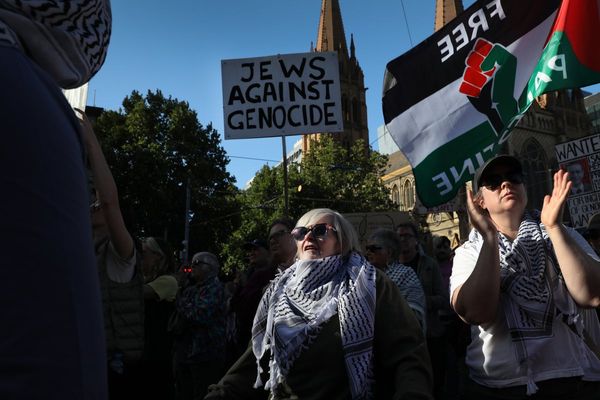
Today's students are often criticized for being politically apathetic - but woe betide them if they get too radical.
Universities are to be asked to spy on students to alert the security services to potential Islamist extremists under draft government guidance revealed by the Guardian.
Following the furious row over Muslim women wearing the veil, during which Bill Rammell, the higher education minister, said they shouldn't be wearing the niqab in lecture halls and labs, and it's easy to see why Muslim students might be feeling got at.
Encouragingly, the university vice-chancellors who would have to put this dubious policy into practice have reacted with unusual speed and firmness today and told ministers to stuff it.
Their language is more polite than that, of course, but the message is pretty clear.
Professor Drummond Bone, president of Universities UK, said today:
"While this is clearly a draft document, there are dangers in targeting one particular group within our diverse communities of students and staff. Not only is this unreasonable but, crucially, it could be counterproductive. The key to this is balance and discussion - and we have made this point repeatedly to ministers."
Universities UK have published their own guide Promoting good campus relations: dealing with hate crimes and intolerance, looking at how to strike the often complex balance between academic freedom and the rights of groups on and off the campus.
The University and College Union, representing academic staff, fears members "may be sucked into an anti-Muslim McCarthyism which has serious consequences for civil liberties by blurring the boundaries of what is illegal and what is possibly undesirable."
Paul Mackney, joint general secretary, said: "There is a danger of demonising Muslims, for example by the statements of five ministers in the last couple of weeks, when actually Muslims have made enormous strides in getting more of their young people to universities and colleges."
The universities have been accused of complacency by Professor Anthony Glees, the Director for the Brunel Centre for Intelligence and Security Studies, although he puts the problem of student extremists at tens or possibly hundreds. His research has been strongly criticised by other academics and university vice-chancellors as little more than anecdotal.
In contrast Kent sociologist Professor Frank Furedi urges students and academics to debate publicly rather than try to ban or suppress extreme ideas. "Islamic radicals... appear to have something to say and at public meetings often command authority. Those who associate with organisations such as Hizb ut-Tahrir are often hightly motivated, articulate and intelligent young people", he says. A campus clampdown would be a "disaster in the making".
On the blogs today, Kiki says "By making security the most important value of modern societies, we are slowing moving in an Orwellian type of world were suspicion and surveillance become the norms".
But Little Bull Dogs claim secondhand evidence that radicalisation is taking place on campuses. "A friend told me that during a freshers' fair this year at one London campus the Islamic Society were proudly displaying a Hezbollah flag."
Hostility to Muslims shown by blogs like this prompt the question of whether recruitment of students by the British National Party is just as serious a threat for the ministers to be worried about.
But, more fundamentally, universities should be places where people go to discover ideas and have their own preconceptions challenged. Driving groups underground is not the way forward.