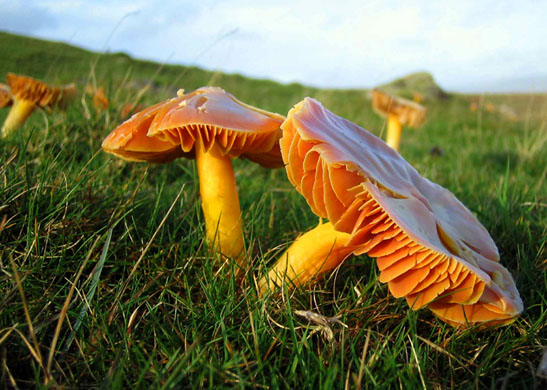
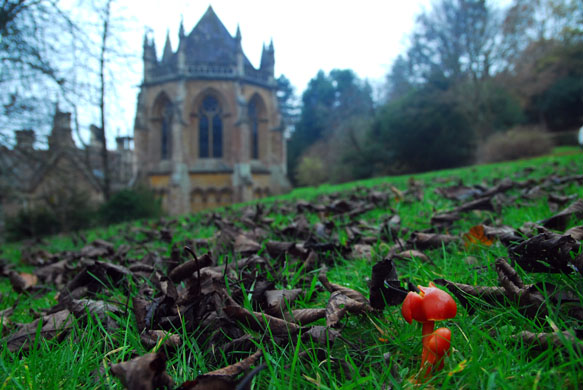
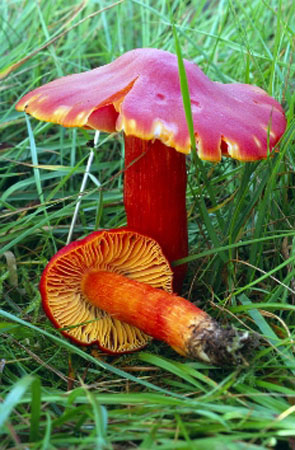
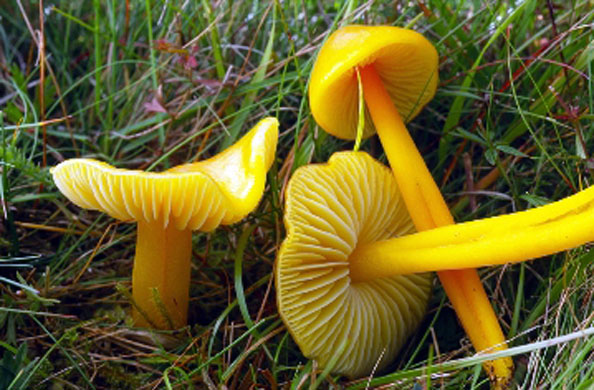
Waxcaps at the National Trust's Tyntesfield property near Bristol. Waxcaps appear on grassland where the soil has been undisturbed for a long time - such as the lawns around stately homes and ancient monuments, including Stonehenge. Tyntesfield's lawns are dotted with eight colours of waxcapsPhotograph: Gemma HallCrimson waxcap. This rare, red-coloured waxcap has a blood-red cap that fades with age and an orangey-yellow stem. Naturalists have long considered the waxcap a rarity. However, some mycologists - those who study fungi - believe they are more common than previously thought and sightings are on the increasePhotograph: Lorne GillYellow waxcap. During the National Trust's waxcap survey in 2007, the yellow waxcap was the most widely recorded variety. The population of waxcaps declined across Europe after the late 1940s when grasslands were built on and agricultural fields treated more intensively with fertilisers. Unploughed and unimproved grassland became an increasingly rare habitatPhotograph: Lorne Gill
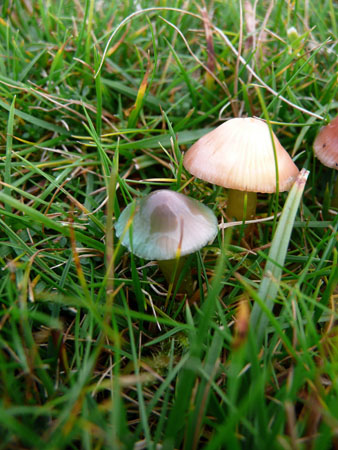
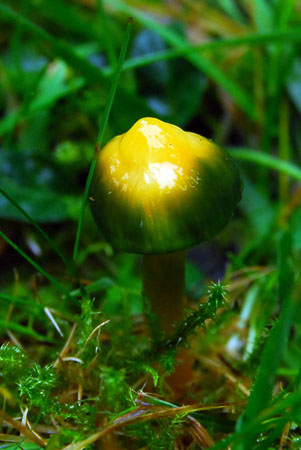
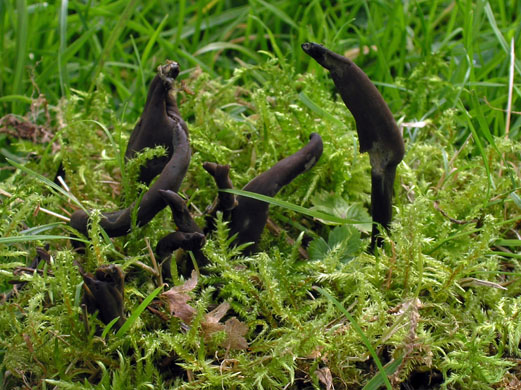
Pink waxcaps are the rarest of them all, but thought to be better represented in the UK than anywhere in the world. They can be seen in good numbers in country house and stately home gardens, including Petworth House, Sussex, and Charles Darwin's former home, Down House, in KentPhotograph: Lorne GillThe meadow waxcap is peach in colour and then has a white stem, not to be confused with the honey waxcap which is bright orange. It's best to look for waxcaps where there is a lot of moss and the grass is kept shortPhotograph: Richard AllenThe pint parrot waxcap. This year's persistent rain should make ideal conditions for fungiPhotograph: Sophie WheatleyParrot waxcap. The parrot has a slimy, bell-shaped cap which turns from deep green to yellow brown with age. It usually has a green hue at the top of the stem. It is thought that the waxcap season is lengthening due to mild winters. Waxcaps are appearing later in the year because there are fewer frosts Photograph: Gemma HallOlive earthtongue. Although they are a different shape, earthtongues are part of the waxcap family. This rare specimen - at risk from the introduction of fertilisers and a decrease in grazing or cutting of grassland - was discovered at Tyntesfield near BristolPhotograph: John Bailey
Sign up to read this article
Read news from 100’s of titles, curated specifically for you.

---8968.jpg)