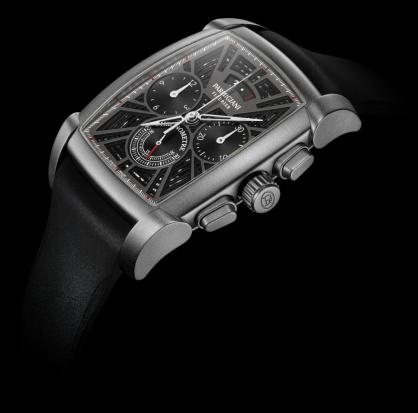
Among Parmigiani Fleurier's 2019 novelties, bold models with a slate-coloured dial steal the spotlight.
Kalpagraphe Chronomètre Titanium boasts a black and slate-coloured dial, laser-cut and open-worked, while displaying two snailed counters, a date window and a small seconds sector.
The design recalls a car radiator grille while revealing the tonneau-shaped movement. The integrated chronograph -- unlike the modular kind -- is a complication that few watchmakers in the world have mastered on an industrial scale.
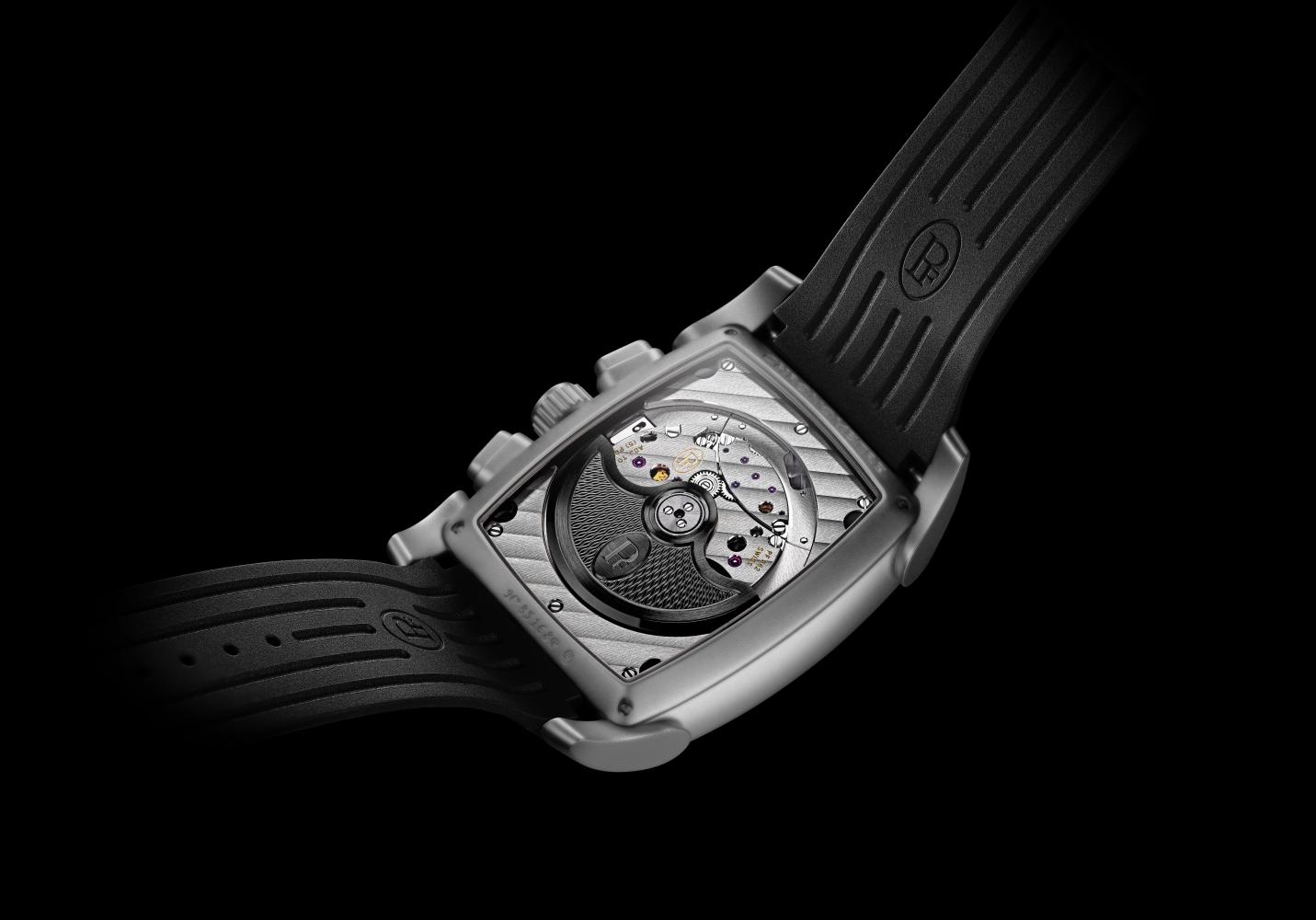
Developed and manufactured in-house, the movement is seamlessly integrated with the emblematic tonneau case, measuring 48.2mm by 40.4mm.
Michel Parmigiani actually designed the Kalpa case from the side view. To draw the lugs' teardrop-shaped contours, the master horologist relied on the Golden Ratio and natural proportions of the Fibonacci sequence.
This is also expressed in a guilloche inspired by the arrangement of scales on a pine cone -- one of the innumerable examples of the Golden Ratio seen in nature.
The concentric pattern adorns the slate-coloured dial of the 40.8mm red gold Toric Chronomètre and 42.8mm rose gold Toric Hémisphères Rétrograde.
Parmigiani created the Toric timepiece in 1997, one year after the establishment of his namesake brand in Fleurier, in the Swiss valley of Val-de-Travers, Neuchâtel.
Its round case features a distinctive bezel with a hand-knurled design. Knurling requires the craftsmen to be both delicate and firm in manipulating the material with a wheel that leaves imprint of its notches in the metal.
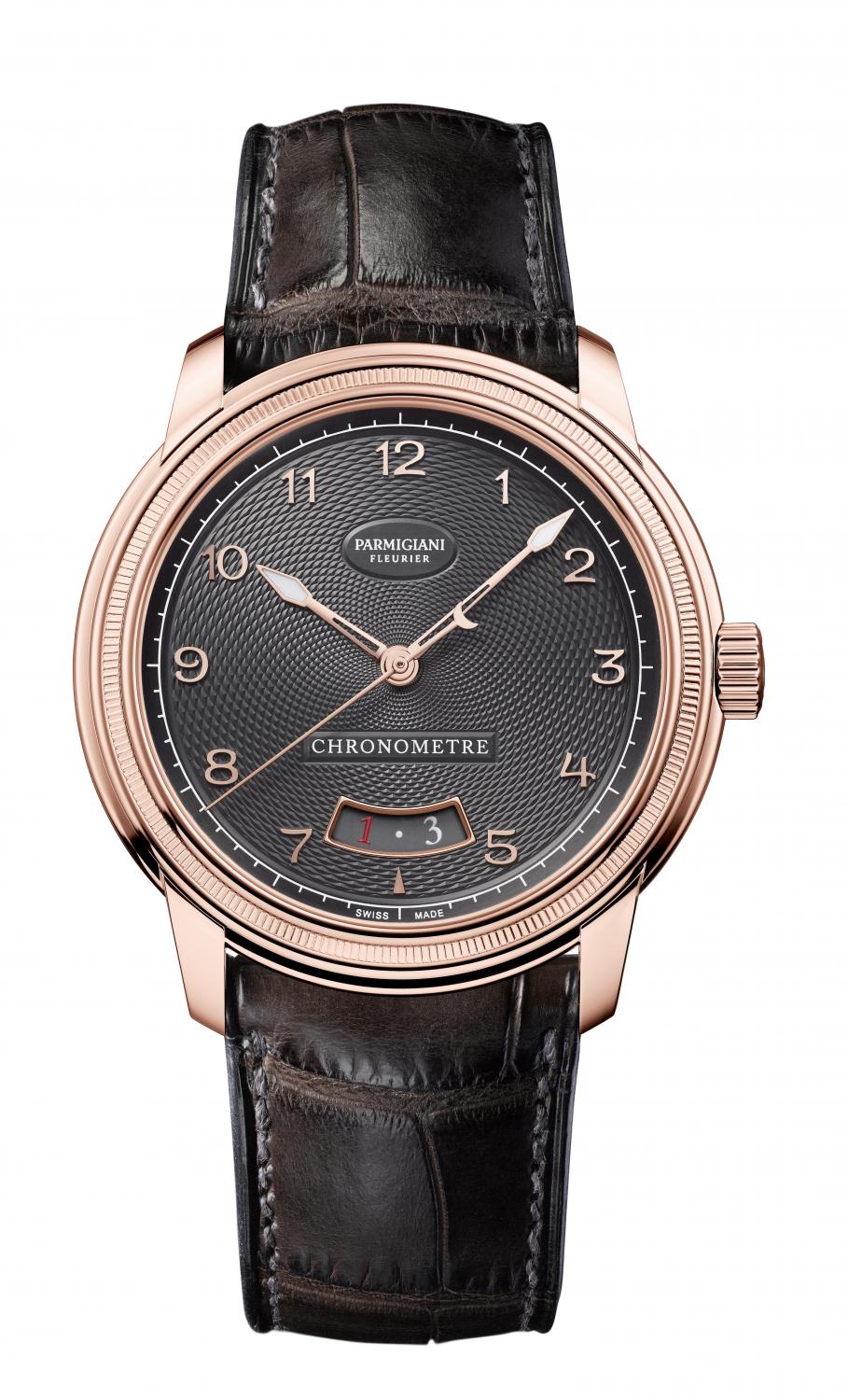
Guilloche is another meticulous artisanal technique, of which the material is engraved to produce a repeating decorative pattern.
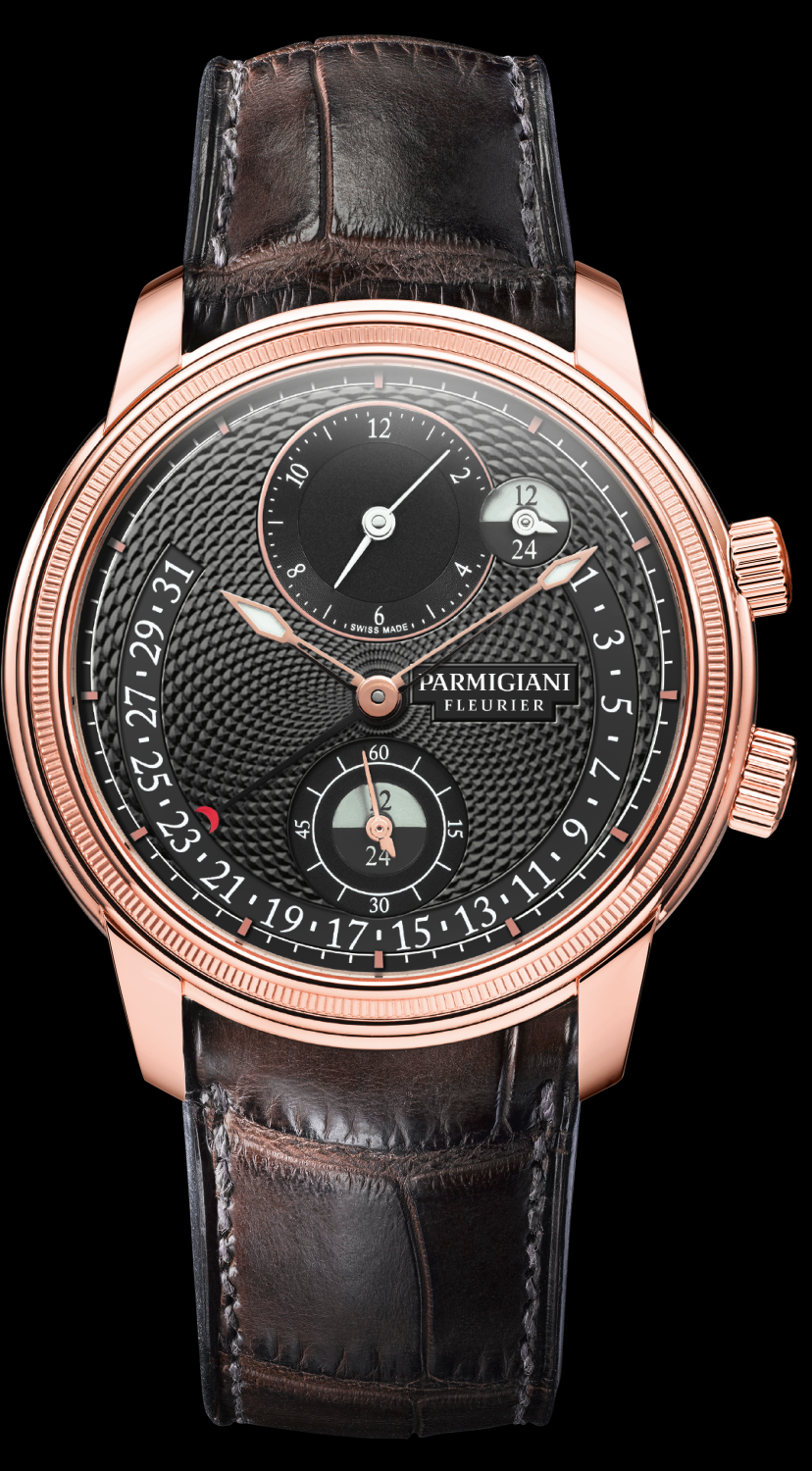
On the Toric Hémisphères Rétrograde Slate, the decoration stops at 12 o'clock to accommodate the second time zone indicator, at 6 o'clock for the main time zone day/night indicator, and around the lower edge of the dial for the retrograde date display.
By pulling out the small crown at 2 o'clock, a module is disengaged from the main movement, allowing the independent adjustment of the second time zone. The time of the two paired time zones and date are set by the main crown at 4 o'clock, also used to wind the movement.
This model is a sequel to the watch, which won the first prize in the "Travel Time" category at the Grand Prix d'Horlogerie de Genève 2017.
The haute horlogerie heightens in 42.5mm red gold Toric Quantième Perpétuel Rétrograde, whose two versions differ with a white grained face or a slate-coloured guilloche dial.
The pattern is interrupted around the top edge, to highlight the semicircular retrograde date cartouche, and in the centre, where the day and month are shown in two separate apertures.
At 6 o'clock, the moon phase is displayed on an aventurine disc. The device governing the moon calendar is integrated into the same module as the date calendar. Through a complex gear system, it tracks the moon phases accurately, with only one correction needed every 122 years.
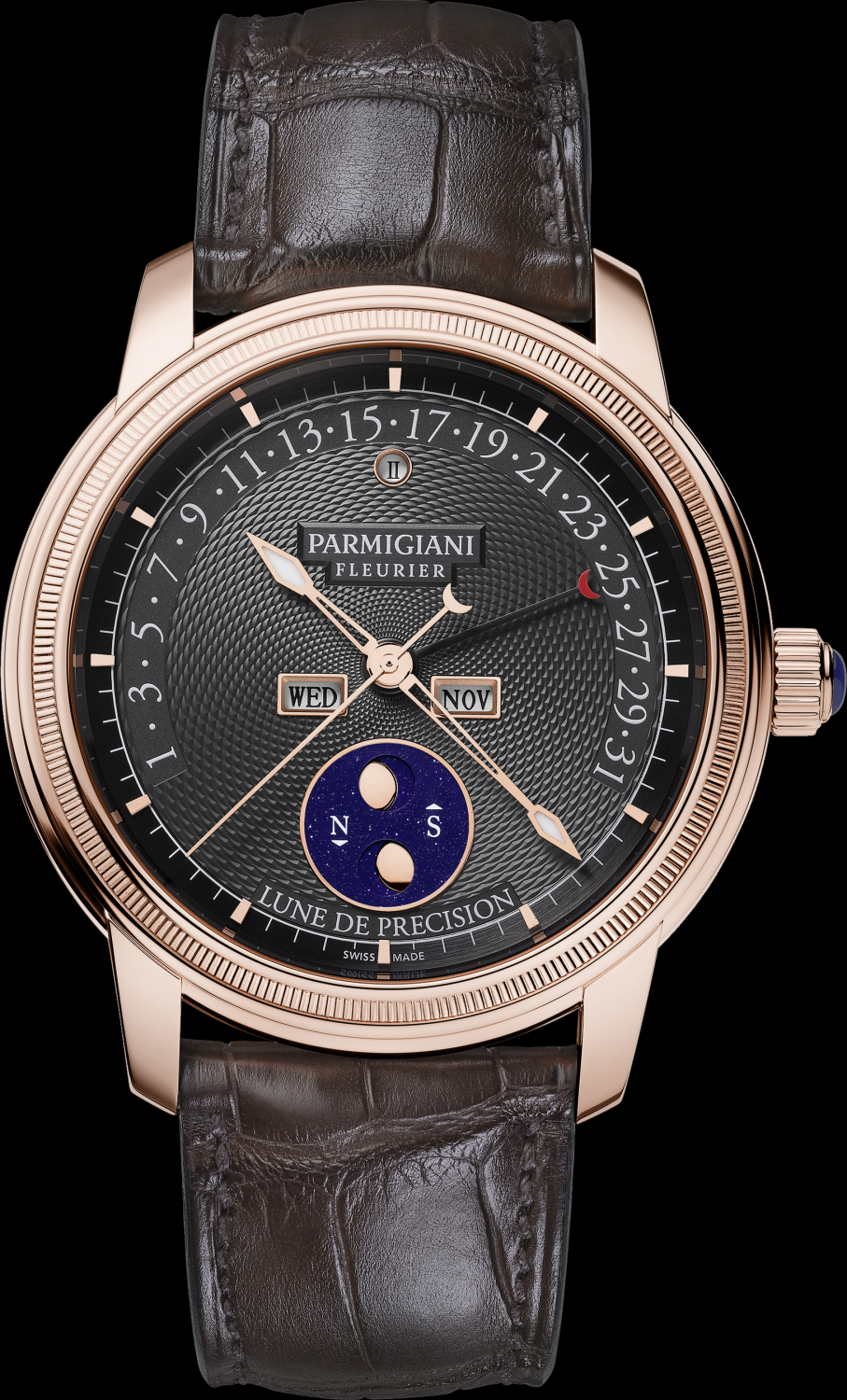
Likewise, the perpetual date function automatically adjusts the date to precisely the number of days in each month, including February over the course of the leap year cycles.