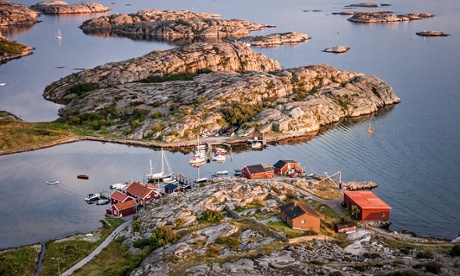
When Swedish people want to chill out, they go west. Specifically to the Bohuslän coast north of Gothenburg, stretching 170km to the Norwegian border, and its archipelago of islands. Here they find tiny fishing villages, toy box-pretty towns, clean beaches, smooth waters for sailing, narrow fjords, uninhabited islands and an abundance of seafood that practically leaps out of the clean, mineral-rich waters.
You could join the locals and sail along the coastline, pottering between the islands, but hiring a car and driving will get you to equally quiet and secretive places; most of the islands are linked by bridges or ferry crossings. Places worth stopping at include the island of Orust - the third largest in Sweden – with its pastel-painted wooden houses; Tjörn, a short drive over the Skåpesund bridge from Orust and home to the Nordic Watercolour Museum. The museum is worth a visit for the beautiful array of watercolours it houses as much as its dramatic architecture, which sees the building ‘hanging’ over the sea. Make time to visit Marstrand island with its ornate wooden houses and impressive fortress, Carlstens Fastning and Gullholmen, a classic example of an unspoilt fishing islet with its huddle of red-and-white wooden homes beneath its church.
Further north there’s a interesting museum of marine life, Havets Hus, at the coastal town of Lysekil while Fjällbacka, with its sorbet-coloured houses, was the favoured home of actress Ingrid Bergman. Her statue looks out to sea on the island where she had a summer house. Fjällbacka is also the setting for Camilla Läckberg’s famous crime novels and fans can enjoy themed tours of the fictitious crime scenes, finished with a Läckberg-inspired three-course meal.
If you, too, want to get away from it all, take the ferry to the tiny Koster Islands, part of Sweden’s only maritime national park, populated by more birds than people. With no cars, the islands are perfect for hiking or cycling among wildflower meadows and discovering empty beaches. This is where you come to live out your dream of camping and cooking fresh fish on a campfire in specially designated areas, and forgetting the rest of the world.
Be sure to visit Kosters Trädgårdar. This restaurant sums up what makes the Koster islands so unique, everything cooked at this organic restaurant is either caught that day or harvested from their own gardens, epitomising the naturally laid-back atmosphere of the islands.
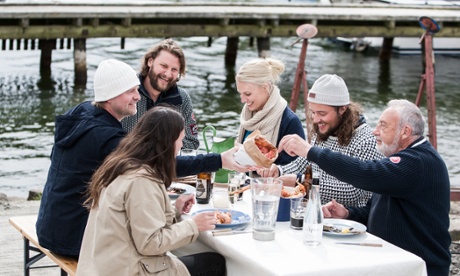
With all this talk of wildness and water, you’ll be itching to know what’s on the menu on this coast. Name a northern-waters fish or shellfish and it’s a fair bet you’ll find it here: crayfish, oysters, langoustines, mussels, lobsters, crab, shrimps, mackerel and herring. To enjoy them like a local, there are certain traditions you should know about. Langoustines, for example, should be drunk with schnapps while prawns are best eaten from a paper cone on the pier or harbour wall and washed down with a cold beer. Shrimp are delicious in a sandwich or try them smoked and eaten out of a bag as you stroll the boardwalk of pretty Smögen.
One of the joys of this coast is that you can join a seafood safari and not only see fishermen at work, but have a go yourself and then learn how to prepare and cook – and eat – your catch on a Shellfish Journey. Please The best seasons are spring or autumn and, much like a land safari, you are on the look-out for the Big Five: oyster, lobster, langoustine, prawn and mussel.
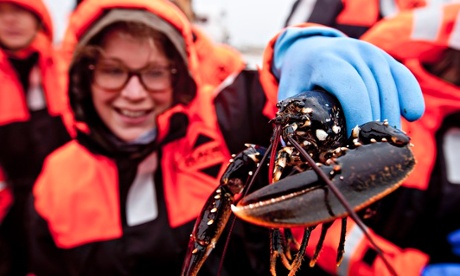
You could, for example, sail out of Smögen in search of lobster, cook them on board the boat and stop off at an isolated island to eat them in peace. At Lysekil and the village of Grebbestad, you can sail on traditional wooden fishing boats to find oyster beds, learn how to pick them and then shuck and cook them. Unlike farmed oysters these native oysters, or ostrea edulis, are meatier and have a mineral-y flavour. Or you could go on a mussel safari up the Hafstens Fjord, help harvest your lunch and cook then them in salty water and white wine over an open fire.
And what about the black gold of the ocean? Lobsters! On a lobster safari in Fjällbacka join the crew of one of the lobster boats and study the sea charts together. Depending on the currents and the weather, you then head to one of the lobster beds and help the fishermen haul in the lobster pots. The odd crab might have crept in, too. Back on the pier, you will help cook them while enjoying a glass of wine before indulging in a four-course lobster dinner. As with most “safari packages”, a night at a comfortable hotel, such as Stora Hotellet Bryggan, is included.
The west coast is not about glitz and glamour; it’s about slowing down and getting back in touch with nature. You will leave with a sparkle in your eye and a definite date in your diary to return.
To find out more, please visit westsweden.com, facebook.com/GothenburgWestSweden or @WestSwedenTB on Twitter