When Nevin Caple travels to college campuses as a consultant to talk about LGBT inclusion, she usually finds well-meaning administrators who just aren't sure how to broach the topic.
"It's always hard to get that conversation started," Caple said.
Caple, who played basketball at Fairleigh Dickinson, teamed with former Nebraska football player Eric Lueshen to found the LGBT SportSafe Inclusion Program. They are starting conversations at colleges that lead to policy and programs that aim to make athletic departments LGBT-friendly in more ways than just talk.
Northwestern is the first of three schools, with Nebraska and Oregon, to join SportSafe. Caple has received interest from 20 other schools in the two weeks since the program launched.
But credit Northwestern for a proactive approach in creating an inclusive environment for lesbian, gay, bisexual and transgender athletes that goes beyond lip service. Frankly, more athletic programs need to back up their words.
SportSafe is the rare program that puts the onus on administrators to learn and to make changes. The program hosts workshops that spark dialogue among coaches, administrators and student-athletes and works with administrators to provide inclusive policies.
Athletic departments that work with SportSafe receive a gold medallion emblem for their websites, indicating to recruits and prospective coaches that they are welcoming.
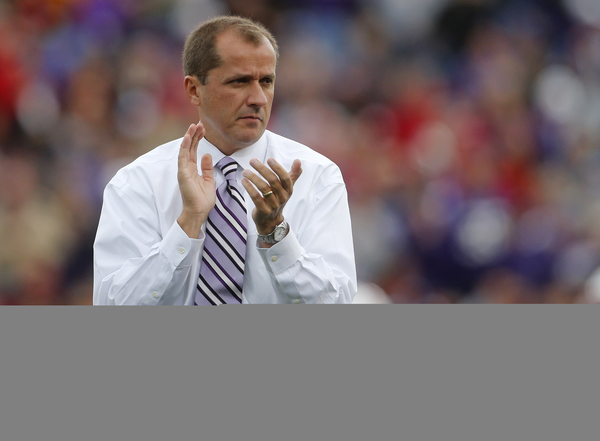
"Maybe you have a student-athlete in the LGBT group, but what training do we have as administrators and coaches and support staff?" Northwestern athletic director Jim Phillips said. "We're supposed to be caring for these student-athletes. That was one area I felt we needed to jump in and where we needed (to be) educated. It's easy to talk about being inclusive and building a safe space but how do you do that? What ways do you make a stronger connection to your student-athlete groups? Nevin has pushed us to be in a position to be a leader nationally in this particular area."
The workshops SportSafe provides address issues, Caple said, like "dating on teams, finding common ground between religion and LGBT inclusion and topics that seem basic such as how a coach responds to an LGBT athlete who comes out. We have many administrators with good intentions but fear saying or doing the wrong thing."
Stories of support for gay athletes have abounded lately, especially since former NBA player Jason Collins in 2013 and former Missouri football player Michael Sam in 2014 publicly disclosed they are gay.
But biases against LGBT athletes remain. Work needs to be done to normalize LGBT athletes. Among gay male athletes, homosexuality is seen as an anomaly, Caple said, while in women's sports if a player comes out publicly as a lesbian it often can label the whole team.
"Part of the challenge is trying to change these narratives," she said. "What does it mean to be gay or lesbian? And why do we view it as a bad thing? It should be celebrated. When we think of one of the most significant changes when someone comes out to you is really your perception of the situation. It's the same person you've always known and loved and respected and played with and won with, but now you know they've invited you to know more about who they are."
Phillips said he wants Northwestern to be synonymous with inclusivity.
"This is a family here at Northwestern and it doesn't matter where you came from or what your beliefs are or what your sexual orientation is," he said. "This is a safe place and a place that really promotes the idea of being supportive of one another."