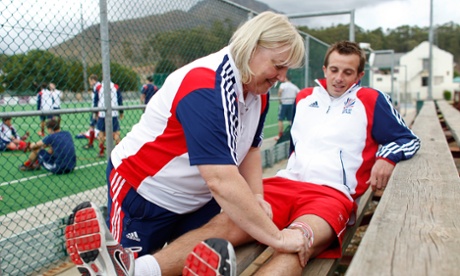
When Laura Hanna first landed her job as a physiotherapist for England’s hockey teams, she admits she didn’t know much about the game. But 14 years’ pitchside watching the hockey elite play has remedied that.
Hanna is now physiotherapy manager for England and GB hockey – the sport’s governing bodies – and works five days a week alongside top athletes as they prepare for major tournaments such as this June’s qualifiers for the Rio 2016 Olympics. “It’s a demanding job physically and mentally,” she says. “Every day is different and you are expected to put in the time and effort. You do miss things, such as reunions and weddings, but the upside is that you might be missing them because you’re in Australia travelling with the squad.” Hanna’s job at the Bisham Abbey National Sports Centre, Berkshire, is a mix of treating and helping injured athletes with their rehabilitation and working with other professionals, such as nutritionists, to ensure players perform at their peak. “I get a great sense of achievement when I’ve been working with an athlete in rehab for a long time to see them do well,” she says.
Hanna gained experience by helping out with her local sports team – in her case rugby. Lisa Kerry, executive member of the Association of Chartered Physiotherapists in Sports and Exercise Medicine, says this is a great route in for would-be full-time sports physiotherapists, numbers of whom have increased since the onset of National Lottery funding.
Kerry’s career included a stint at the Beijing Olympics, but it’s not all glamour, she says: “Going to big events is hard work. The athletes have trained hard, but physios have done their training too.”